White-bellied sea eagle fact sheet – burrumering | Field of Mars EEC
What are white-bellied sea eagles?
White-bellied sea eagles are large birds of prey that live near coastlines, rivers, lakes and estuaries. Their scientific name is Haliaeetus leucogaster. The Darug people of the Sydney region use the name burrumering for an eagle. These powerful raptors are often seen soaring high above waterways with their broad wings spread wide as they search for fish and other prey below.
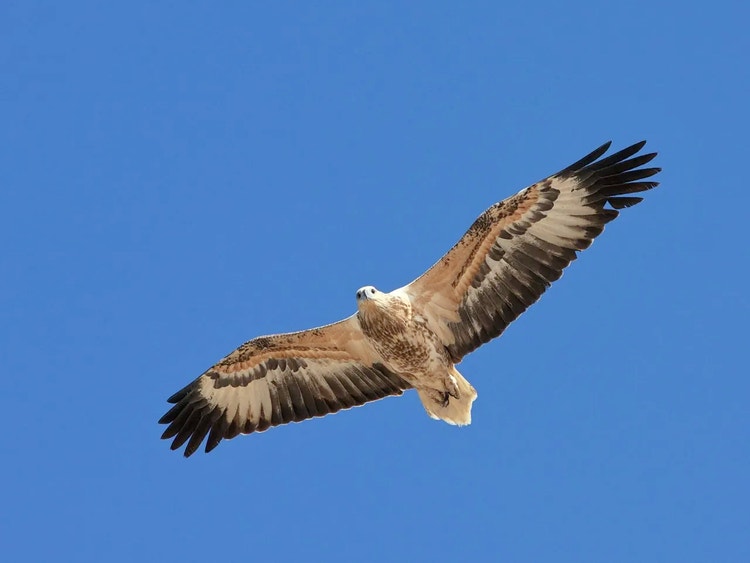
Adult white-bellied sea eagles are easy to recognise because of their bright white head, chest and belly, contrasting with dark grey wings and back. Juvenile birds are mostly brown and gradually develop their white adult feathers as they mature. Their hooked beak, sharp talons and excellent eyesight help them hunt and survive in coastal and freshwater habitats.
White-bellied sea eagles are apex predators, meaning they sit at the top of the food web. They play an important role in maintaining healthy ecosystems by helping control populations of fish, reptiles and other animals. In Sydney, they may sometimes be seen soaring above waterways around the Hawkesbury River, Pittwater, Botany Bay and coastal bushland.

Fast facts – White-bellied sea eagle
Scientific name – Haliaeetus leucogaster
Scientific group – White-bellied sea eagles are large raptor birds that hunt other animals.
Appearance – Adults have a white head, chest and belly with dark grey wings and back.
Size – Adults grow about 75–85 centimetres tall with a wingspan of up to 2 metres.
Diet – They mainly eat fish, waterbirds, reptiles, carrion and other animals found near waterways.
Habitat – They live near coastlines, estuaries, rivers, lakes and other large waterways across Australia and nearby countries.
Life cycle – White-bellied sea eagles usually breed from May to October, lay about 2 eggs and raise chicks that stay in the nest for about 65–85 days.
Special behaviour – White-bellied sea eagles soar on warm air currents to search for prey while using very little energy.

Where do white-bellied sea eagles live?
White-bellied sea eagles live along the coasts of mainland Australia and Tasmania and near large inland waterways. They are commonly found around estuaries, beaches, mangroves, lakes, rivers and coastal cliffs where there is plenty of food and tall trees for nesting. They are also found across New Guinea, Indonesia, south-east Asia and parts of India.
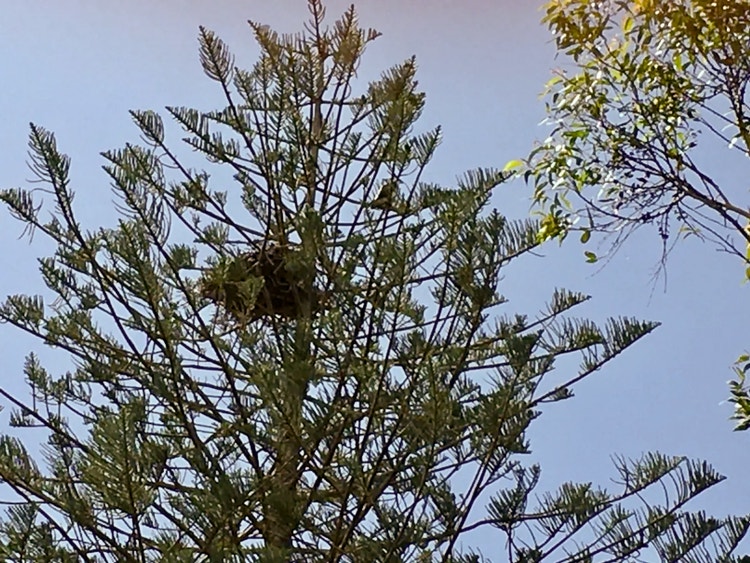
These eagles usually live alone or as breeding pairs that defend large territories. They build large stick nests high in tall trees near water, sometimes reusing the same nest for many years. In the Sydney region, white-bellied sea eagles are sometimes seen around estuaries, harbours and bushland waterways connected to the coast.
What do white-bellied sea eagles eat?
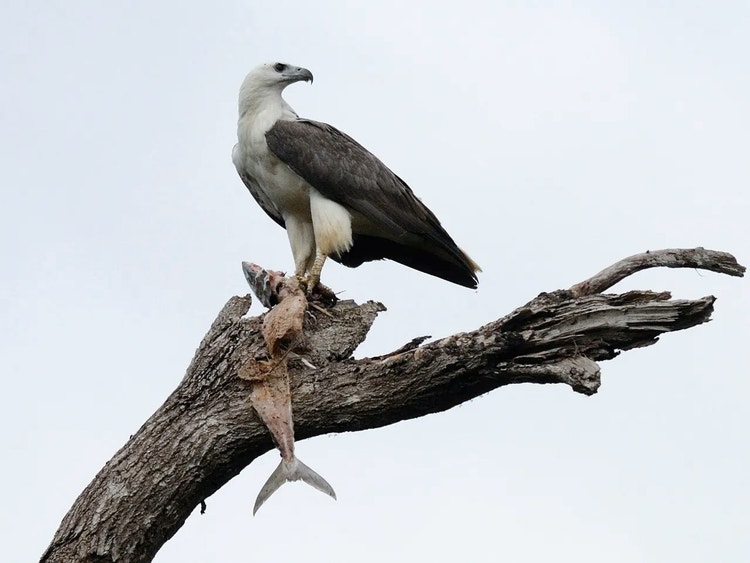
White-bellied sea eagles are carnivores that mainly hunt fish and other animals living near water. Their prey includes fish, waterbirds, sea snakes, freshwater turtles and small mammals. They also feed on carrion, which is the remains of dead animals.
These eagles hunt using their sharp eyesight to spot prey while flying or perched high above the water. Once they find food, they swoop down and grab it with their powerful talons before carrying it to a perch to eat. White-bellied sea eagles sometimes steal food from other birds by chasing them until they drop their catch.
What do white-bellied sea eagles sound like?
White-bellied sea eagles make loud goose-like honking calls, especially during the breeding season. Breeding pairs often call together in a duet while perched near their nest territory.
Their calls can carry long distances across waterways and coastal bushland. Juvenile birds also make repeated begging calls when waiting for food from their parents.

What is the life cycle of white-bellied sea eagles?
White-bellied sea eagles usually breed between May and October. Pairs build huge nests from sticks and driftwood high in tall trees near waterways. The nests are lined with leaves, grass and seaweed to protect the eggs and chicks. Some nests become very large because the birds continue adding material each year.
The female usually lays 2 white eggs and incubates them for about 40 days while the male helps provide food. Chicks remain in the nest for around 65–85 days before learning to fly. Juvenile birds stay near their parents for several months while developing hunting skills. Young birds are mostly brown and gradually develop adult white plumage over several years.
What adaptations do white-bellied sea eagles have to help them survive?
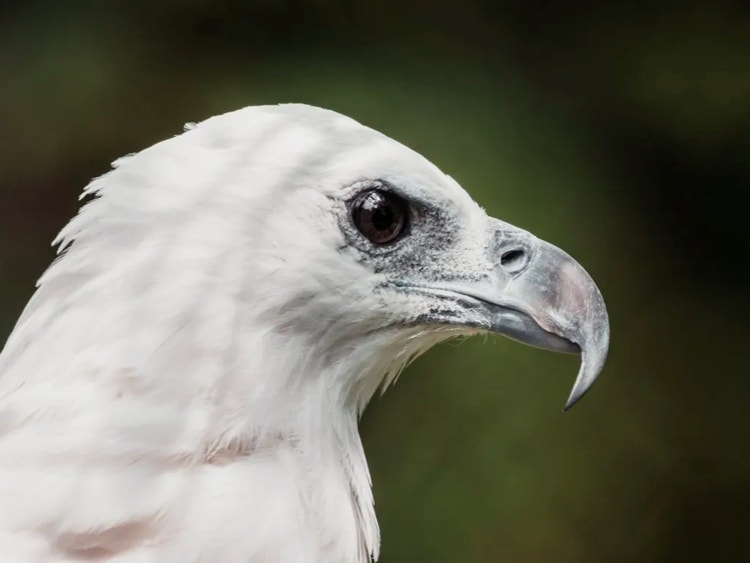
White-bellied sea eagles have excellent eyesight that helps them spot prey from high above the ground or water. Their strong feet and long curved talons are designed for catching slippery fish and carrying heavy prey. They also have a powerful hooked beak that tears food into smaller pieces.
Their large broad wings allow them to soar for long periods while using very little energy. They often ride thermal air currents high above the landscape instead of constantly flapping their wings. Their contrasting white and dark plumage may also help other sea eagles recognise breeding adults from a distance.

Why are white-bellied sea eagles important?
As apex predators, white-bellied sea eagles help keep ecosystems balanced by controlling populations of fish, reptiles and other animals. They are also scavengers that help clean waterways and shorelines by feeding on dead animals.
White-bellied sea eagles are important indicators of environmental health because they rely on clean waterways, healthy fish populations and large nesting trees. Declines in sea eagle numbers can signal problems such as habitat destruction, pollution or declining water quality.
The NSW BioNet profile lists the white-bellied sea eagle as Vulnerable in NSW and identifies threats including habitat clearing, disturbance near nest sites, loss of coastal foraging habitat, discarded fishing gear and pollution.
How can you help white-bellied sea eagles?
People can help white-bellied sea eagles by protecting waterways, wetlands and large nesting trees. Reducing litter and fishing waste near waterways also helps prevent birds becoming tangled in fishing line or swallowing plastic.
White-bellied sea eagles are listed as vulnerable in NSW, so protecting nesting areas, reducing disturbance and keeping waterways clean are important ways to help them survive.
Students can help by caring for local bushland and waterways, reporting wildlife sightings to citizen science projects such as the Atlas of Living Australia and learning about how healthy ecosystems support top predators like sea eagles.

Related fact sheets
More bird fact sheets
- Birds fact sheet – Learn about bird features, life cycles, adaptations and roles in ecosystems.
- Powerful owl fact sheet – Compare another top predator found in Australian forests.
- Wood duck fact sheet – Explore another bird that uses waterways and tree hollows.
Habitats and ecosystems
- Mangrove forest fact sheet – Discover tidal habitats that support fish, crabs and waterbirds.
- Coastal salt marsh fact sheet – Explore coastal wetlands connected to estuaries and tidal creeks.
- Field of Mars Reserve fact sheet – Learn more about local bushland, wetlands and waterways.
Animals that share this habitat
- Pacific black duck fact sheet – Find out about another bird that depends on healthy waterways.
- Australian white ibis fact sheet – Learn about a native wetland bird that feeds in mud, grass and shallow water.
- Dusky moorhen fact sheet – Discover a waterbird often seen around wetlands, ponds and creeks.
Food webs and ecological relationships
- Australian raven fact sheet – Explore a native scavenger that helps recycle nutrients in food webs.
- Pied currawong fact sheet – Learn about another bird that eats fruit, insects and small animals.
Attributions
References
Australian Museum. White-bellied Sea-Eagle. [online] Available at: https://australian.museum/learn/animals/birds/white-bellied-sea-eagle/
BirdLife Australia. White-bellied Sea-Eagle. [online] Available at: https://birdlife.org.au/bird-profiles/white-bellied-sea-eagle/
BirdLife Australia. Watching Australia’s White-bellied Sea-Eagles: EagleCAM. [online] Available at: https://birdlife.org.au/discover-birds/watching-birds/eagle-cam/
Debus, S.J.S. Biology and Diet of the White-bellied Sea-Eagle Haliaeetus leucogaster Breeding in Northern Inland New South Wales. [online] Available at: https://afo.birdlife.org.au/afo/index.php/afo/article/download/573/559
Debus, S.J.S., Baker, G., Owner, D. and Nottidge, B. Responses of nesting White-bellied Sea-Eagles Haliaeetus leucogaster to encroaching human activities at nest sites. [online] Available at: https://rune.une.edu.au/bitstreams/ec289bc3-4d15-40e4-9551-f94b24ae7038/download
Dharug and Dharawal Resources. Dharug and Dharawal Resources – eagle. [online] Available at: https://dharug.dalang.com.au/language/view_word/414
NSW Department of Climate Change, Energy, the Environment and Water. White-bellied Sea-Eagle – profile. [online] Available at: https://threatenedspecies.bionet.nsw.gov.au/profile?id=20322
NSW National Parks and Wildlife Service. White-bellied sea eagle. [online] Available at: https://www.nationalparks.nsw.gov.au/plants-and-animals/white-bellied-sea-eagle
O’Donnell, W.B. and Debus, S.J.S. Nest-sites and foraging of the White-bellied Sea-Eagle Haliaeetus leucogaster on the subtropical eastern coast of Australia. [online] Available at: https://afo.birdlife.org.au/afo/index.php/afo/article/view/412
The Peregrine Fund. White-bellied Sea-eagle. [online] Available at: https://peregrinefund.org/explore-raptors-species/eagles/white-bellied-sea-eagle
Image attributions
A white-bellied sea eagle. – Field of Mars EEC (original illustration).
An adult white-bellied sea eagle perched above a coastal waterway. – ‘White-bellied Sea-Eagle (Haliaeetus leucogaster)’ by Dominic Sherony. Creative Commons Attribution-ShareAlike 2.0 Generic licence. Available at: https://flic.kr/p/PHug8d
A juvenile white-bellied sea eagle soaring above a coastal estuary. – ‘White-bellied sea eagle’ by Sascha Wenninger. Creative Commons Attribution-ShareAlike 2.0 Generic licence. Available at: https://flic.kr/p/87KXmH
White-bellied sea eagles feed on fish and other animals. – ‘CSIRO ScienceImage 11000 Whitebellied SeaEagle Mission Beach Queensland.jpg’ by John Manger, CSIRO. Creative Commons Attribution 3.0 Unported licence. Available at: https://commons.wikimedia.org/wiki/File:CSIRO_ScienceImage_11000_Whitebellied_SeaEagle_Mission_Beach_Queensland.jpg

A pair of white-bellied sea eagles calling near their nesting territory. – ‘White-bellied Sea-eagle: Duet’ by I Am birdsaspoetry.com. Creative Commons CC0 1.0 Universal public domain dedication. Available at: https://www.flickr.com/photos/birdsaspoetry/52794900633
A large white-bellied sea eagle nest built high in a coastal tree. – Field of Mars EEC (original image).
A white-bellied sea eagle stretching out its talons to catch prey. – ‘WB Sea Eagle Pounce.jpg’ by Mdk572. Creative Commons Attribution-ShareAlike 3.0 Unported licence. Available at: https://commons.wikimedia.org/wiki/File:WB_Sea_Eagle_Pounce.jpg

White-bellied sea eagles have sharp eyesight for hunting prey and strong hooked beaks for tearing prey. – ‘Close up with white bellied sea eagle’ by Krishna. Creative Commons CC0 licence. Available at: https://pixahive.com/photo/close-up-with-white-bellied-sea-eagle/
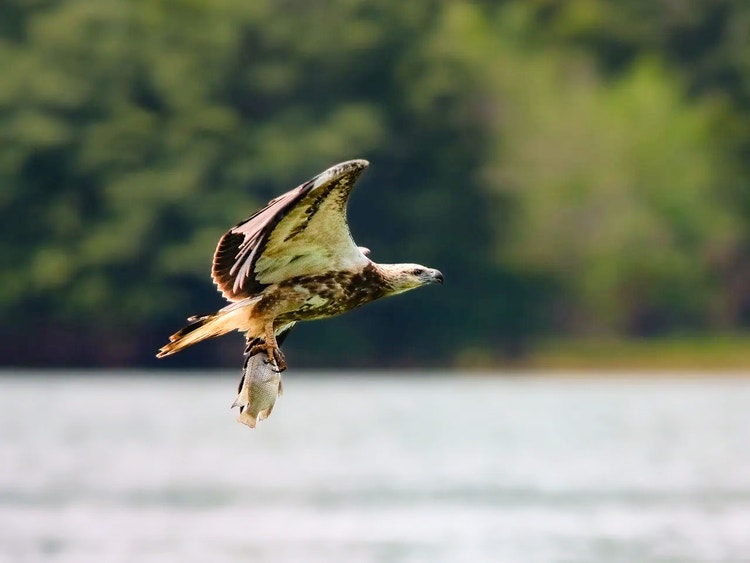
White-bellied sea eagles rely on healthy waterways and coastal habitats. – ‘White bellied sea eagle juvenile catching a fish.jpg’ by Roliwansyah Ananta. Creative Commons Attribution-ShareAlike 4.0 International licence. Available at: https://commons.wikimedia.org/wiki/File:White_bellied_sea_eagle_juvenile_catching_a_fish.jpg

Protecting waterways and bushland helps white-bellied sea eagles survive. – White-bellied sea eagle spotted at Cowan Creek by Kathy Griffith. Used with permission.
Learn with us

Book now
Book a water environment, geography or curriculum-aligned program where students investigate birds of prey, waterways, coastal habitats and food webs.

Learning programs
Explore Field of Mars EEC programs that support learning about white-bellied sea eagles, waterway food webs, predator adaptations and ecosystem connections.

Learning resources
Use the white-bellied sea eagle fact sheet to support classroom learning about raptors, sharp talons, hooked beaks, fish, coastal waters and nesting trees.

Flora and fauna fact sheets
Explore related fact sheets about birds of prey, water habitats, estuaries, marine environments, river and creek environments and coastal ecosystems.
Related programs
Water in the world excursion
Investigate water resources, water quality, catchment processes and management through geographical fieldwork along the Lane Cove River.
Environmental change and management excursion
Investigate environmental change, habitat condition and management strategies in river and estuary environments through geographical fieldwork.