Dusky moorhen fact sheet | Field of Mars EEC
What are dusky moorhens?
Dusky moorhens are medium-sized waterbirds that live around wetlands, ponds, creeks, swamps and urban waterways across eastern Australia. Their scientific name is Gallinula tenebrosa. These birds are often seen walking along the edges of lakes or swimming slowly through reeds while searching for food.
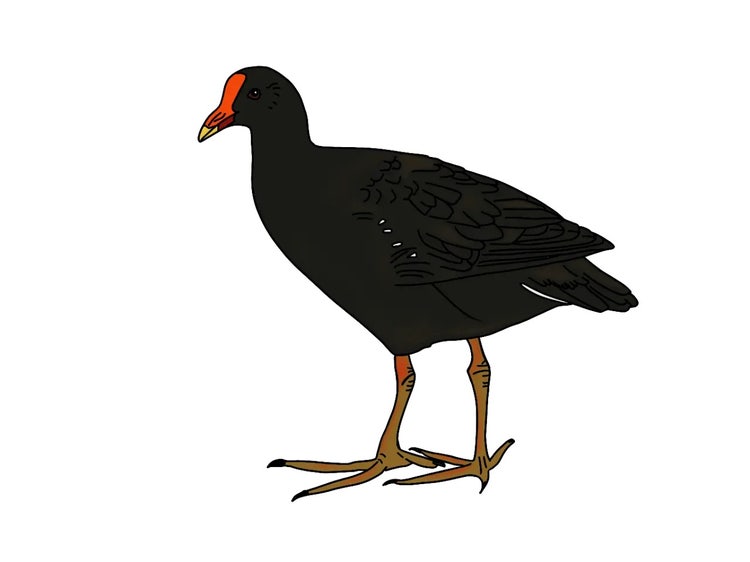
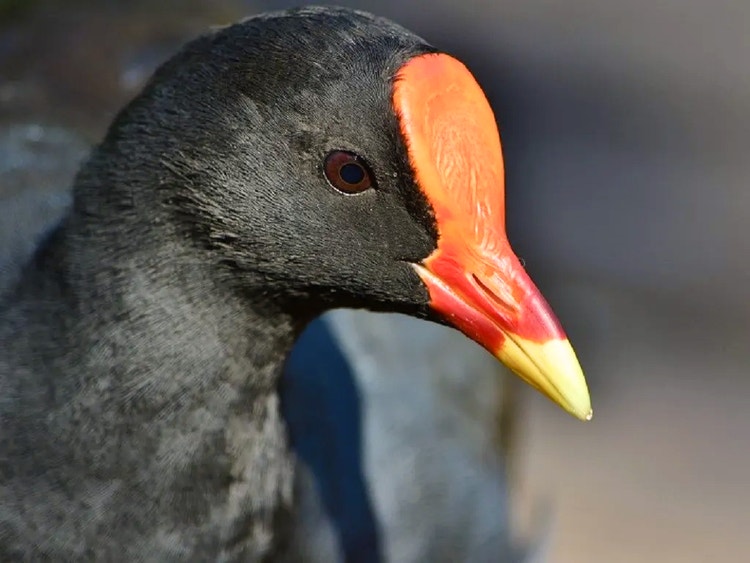
Dusky moorhens have dark grey to black feathers, a bright red bill with a yellow tip, long greenish legs and a white stripe under the tail. They are strong swimmers and can also walk across floating vegetation using their large feet and long toes. Students visiting wetlands in Sydney may notice them bobbing their tails as they move or calling noisily from reeds near the water.
Dusky moorhens are common in parks, stormwater ponds and bushland wetlands around Sydney, including waterways connected to Lane Cove National Park and the Field of Mars Reserve. They often live in family groups and work together to protect nesting areas and raise chicks.
Fast facts – Dusky moorhen
Scientific name – Gallinula tenebrosa
Scientific group – Dusky moorhens are waterbirds in the rail family.
Appearance – Dusky moorhens have dark feathers, a red bill with a yellow tip, long green legs and white feathers under the tail.
Size – Adult dusky moorhens grow to about 35–40 centimetres long.
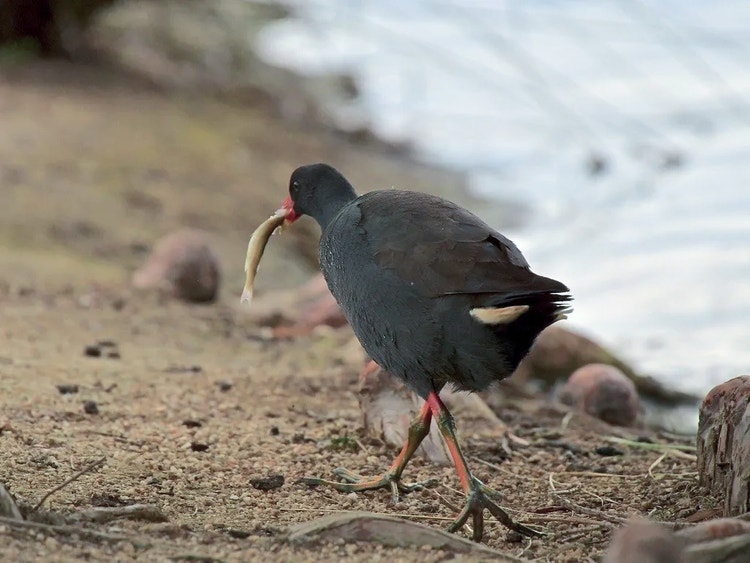
Diet – Dusky moorhens eat water plants, grass, seeds, insects, snails and small aquatic animals.
Habitat – Dusky moorhens live near freshwater wetlands, ponds, creeks, marshes and slow-moving waterways.
Life cycle – Dusky moorhens hatch from eggs in floating or hidden nests and young birds can feed themselves soon after hatching. They usually live for several years in the wild.
Special behaviour – Dusky moorhens flick their tails while walking and use their large feet to move across soft mud and floating plants.
Where do dusky moorhens live?
Dusky moorhens live in freshwater wetlands across eastern and south-eastern Australia. They are commonly found around ponds, dams, marshes, creeks, rivers and lakes with reeds or dense waterside plants. These birds prefer calm water where they can hide from predators and build nests among vegetation.
In Sydney, dusky moorhens are often seen in urban parks, school ponds, stormwater wetlands and bushland reserves. Students visiting wetlands near the Field of Mars Reserve or Lane Cove National Park may spot them swimming close to reeds, feeding on grassy banks or resting beside the water. Their ability to live in both natural and urban wetlands has helped them remain common in many areas.

What do dusky moorhens eat?
Dusky moorhens are omnivores, which means they eat both plant and animal material. Much of their diet includes aquatic plants, grass shoots, seeds and algae. They also eat insects, worms, snails, tadpoles and other small animals found around wetlands.
These birds usually feed while walking slowly through shallow water or along muddy edges of ponds and creeks. They pick food from the ground, pull apart soft plants and sometimes forage in groups. Dusky moorhens play an important role in wetland food webs because they help recycle plant material and provide food for larger predators.
What do dusky moorhens sound like?
Dusky moorhens make a range of croaks, squawks, chuckling calls and sharp alarm sounds. They are often noisy when defending territory, warning family groups about danger or competing for food. Their calls can echo across wetlands, especially during the breeding season.
Young dusky moorhens make softer peeping sounds to stay in contact with adults. Students exploring wetlands may hear these birds calling from dense reeds before they see them.
What is the life cycle of dusky moorhens?
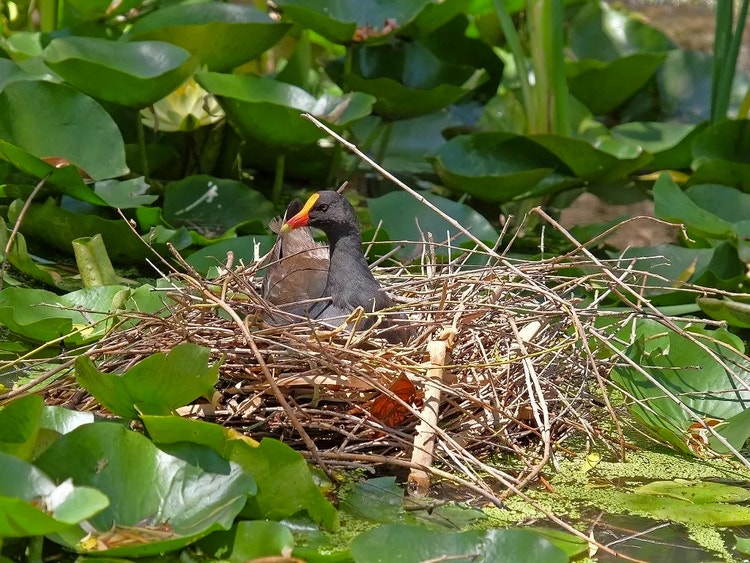
Dusky moorhens usually breed during wetter months when food and nesting sites are plentiful. They build nests from reeds, grasses and other wetland plants in dense vegetation close to water. Females lay several eggs, and both parents help incubate them and protect the nest.
After hatching, the black fluffy chicks leave the nest quickly and begin following adults through the wetland. Young birds learn to feed themselves soon after hatching but continue receiving protection from adults. Family groups sometimes include older juveniles helping to care for younger chicks.
What adaptations do dusky moorhens have to help them survive?
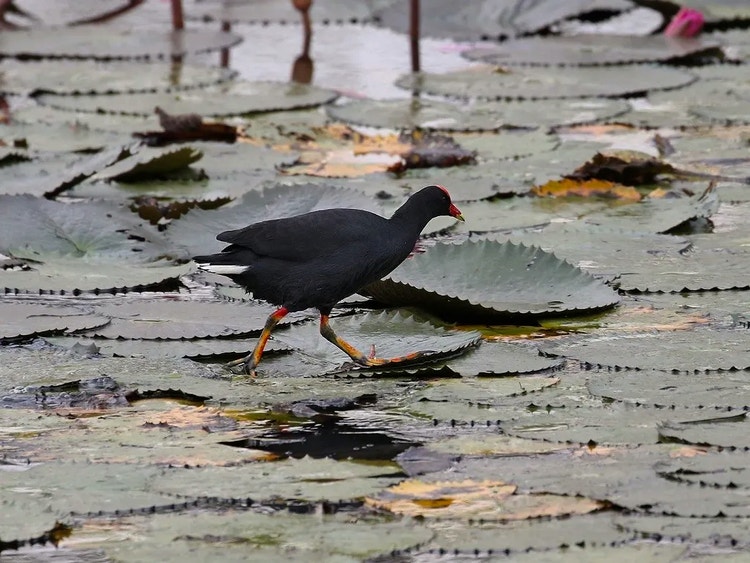
Dusky moorhens have several adaptations that help them survive in wetland environments. Their large feet and long toes spread their weight across soft mud and floating plants, helping them walk through wetlands without sinking. Their waterproof feathers help keep them warm and dry while swimming.
These birds also use behaviour to stay safe. Their dark feathers help camouflage them in shadowy reeds and wetland vegetation. When threatened, dusky moorhens may hide quietly among reeds or run quickly across the water’s edge. They also use loud alarm calls and group behaviour to warn family members about danger.
Why are dusky moorhens important?
Dusky moorhens are an important part of wetland ecosystems. They help spread plant seeds, recycle nutrients and control populations of insects and other small animals. Their nests and feeding behaviour also influence wetland plant growth and habitat structure.
These birds are also part of the food web. Eggs and young birds may be eaten by snakes, large fish, foxes and birds of prey. Healthy populations of dusky moorhens can indicate that wetlands still provide food, clean water and shelter for wildlife.

How can you help dusky moorhens?
People can help dusky moorhens by protecting wetlands and keeping waterways healthy. Rubbish, pollution and habitat clearing can damage the places these birds need for nesting and feeding. Native wetland plants provide important shelter and food for wildlife.
Students can help by staying on tracks near wetlands, keeping rubbish out of waterways and observing wildlife from a distance. Pet dogs should be kept under control near nesting areas so birds and chicks are not disturbed.

Related fact sheets
More bird fact sheets
- Bird fact sheets – Browse bird species found in bushland, wetlands and urban habitats.
- Pacific black duck fact sheet – Compare another common waterbird that uses creeks, ponds and wetlands.
- Australian white ibis fact sheet – Learn about another native wetland bird found around Sydney waterways.
Habitats and ecosystems
- Water habitats fact sheet – Discover freshwater habitats where waterbirds feed, shelter and breed.
- Mangrove forest fact sheet – Explore a tidal waterway habitat connected to the Field of Mars Reserve.
- Coastal salt marsh fact sheet – Learn about another wetland environment used by waterbirds.
Animals that share this habitat
- Eastern snake-necked turtle fact sheet – Find out about a freshwater reptile that lives in ponds, creeks and wetlands.
- Eastern water dragon fact sheet – Explore a reptile often found near freshwater habitats.
Field of Mars habitats and wildlife
- Field of Mars Reserve fact sheet – Learn about local bushland, wetland and waterway habitats.
Attributions
References
BirdLife Australia. Dusky Moorhen. [online] Available at: https://birdlife.org.au/bird-profiles/dusky-moorhen
Birds in Backyards. Dusky Moorhen. [online] Available at: https://www.birdsinbackyards.net/species/Gallinula-tenebrosa
Atlas of Living Australia. Gallinula tenebrosa. [online] Available at: https://bie.ala.org.au/species/Gallinula_tenebrosa
Museums Victoria Collections. Gallinula tenebrosa, Dusky Moorhen. [online] Available at: https://collections.museumsvictoria.com.au/species/8255
Centennial Parklands. Dusky Moorhen. [online] Available at: https://www.centennialparklands.com.au/visit/environment/birds/dusky-moorhen
Ecolinc. Dusky Moorhen. [online] Available at: https://bwvp.ecolinc.vic.edu.au/fieldguide/fauna/dusky-moorhen
Australian Bird Study Association. Dusky Moorhen. [online] Available at: https://absa.asn.au/wp-content/uploads/2018/01/Dusky-Moorhen.pdf
Pywell, S. Breeding biology of the Dusky Moorhen in a suburban habitat. [online] Available at: https://absa.asn.au/wp-content/uploads/2021/06/Cor-Vol-27-Pg24-30_Breeding_BiologyDuskyMoorhen.pdf
Image attributions
A dusky moorhen. – Field of Mars EEC (original illustration).
Dusky moorhens have a red face shield which grows brighter in the warmer months. – “Dusky Moorhen” by anthonykaton778. Creative Commons Attribution 2.0. Available at: https://www.flickr.com/photos/134131572@N08/33328592206
Dusky moorhens live around calm wetlands with dense waterside plants. – “Dusky Moorhen” by 0ystercatcher. Creative Commons Attribution-NonCommercial-ShareAlike 2.0. Available at: https://www.flickr.com/photos/49828152@N00/5521772807
Dusky moorhens feed on plants and small animals found around wetlands. – “Dusky Moorhen ( take - away Dinner )” by friendsintheair. Creative Commons Attribution-ShareAlike 2.0. Available at: https://www.flickr.com/photos/131084213@N07/46904084971
A dusky moorhen on its nest. – A floating nest amongst the lily pads - "Dusky Moorhen (Gallinula tenebrosa) - Hunter Valley Gardens.01" by Geoff Whalan. CC BY-NC-ND 2.0 (cropped)
The large feet of dusky moorhens help them move across soft wetland surfaces. – “Dusky Moorhen (Gallinula tenebrosa)” by Brendan A Ryan. Creative Commons Attribution-NonCommercial-ShareAlike 2.0. Available at: https://www.flickr.com/photos/52799999@N06/29674438367
Dusky moorhens are part of complex wetland food webs. – “Dusky Moorhen (Gallinula tenebrosa)” by darrylkirby. Creative Commons Attribution-NonCommercial-ShareAlike 2.0. Available at: https://www.flickr.com/photos/137506587@N06/47411178701
Healthy wetlands provide shelter and food for dusky moorhens and other wildlife. – “Dusky Moorhen Water Lilies.jpg” by Toby Hudson. Creative Commons Attribution-ShareAlike 3.0. Available at: https://commons.wikimedia.org/wiki/File:Dusky_Moorhen_Water_Lilies.jpg

Learn with us

Book now
Book a water environment or curriculum-aligned program where students investigate waterbirds, ponds, creeks, wetlands and aquatic food webs.

Learning programs
Explore Field of Mars EEC programs that support learning about dusky moorhens, wetland habitats, aquatic plants, water quality and biodiversity.

Learning resources
Use the dusky moorhen fact sheet to support classroom learning about swimming birds, red bills, floating nests, aquatic plants and wetland habitats.

Flora and fauna fact sheets
Explore related fact sheets about birds, water habitats, freshwater wetlands, river and creek environments, aquatic plants and invertebrates.
Related programs
Water environments excursion
Explore creeks, wetlands and river environments, observe aquatic life and investigate how people care for waterways.
Water in the world excursion
Investigate water resources, water quality, catchment processes and management through geographical fieldwork along the Lane Cove River.