
Science fieldwork incursion | Stage 6 Biology
Program overview
Science fieldwork is a Stage 6 Biology incursion that develops the fieldwork and data collection skills required for ecological investigations. Using specialised fieldwork equipment, students investigate terrestrial ecosystems at or near their school and apply ecological sampling and abiotic measurement methods to collect primary data.
Students compare sampling techniques, examine relationships between biotic and abiotic factors, and evaluate the validity, reliability and accuracy of their data. The program supports the Biology 11–12 Syllabus (2025), implemented for Year 11 from 2027, and can help students prepare practical investigations, depth studies and school-based assessment tasks. This program requires access to significant natural environments within or near the school grounds. Access to a suitable nature reserve near the school will provide the richest learning experiences.
This fieldwork incursion is also available for Stage 6 Geography.
Fieldwork inquiry
- Which ecological sampling methods are suitable for investigating distribution and abundance of organisms in a local ecosystem?
- What are the biotic and abiotic conditions of a local ecosystem?
- What fieldwork instruments and methods are used to collect accurate and reliable ecological data?
Jump to: Program and curriculum | Essential information | Prepare for fieldwork| Location | Extend learning | Related programs


Program and curriculum information
Fieldwork activities
Activities may change to suit student needs, timing and weather conditions.
Fieldwork preparation and inquiry
Students examine the selected study site, identify suitable locations for data collection and discuss the purpose of the investigation. They review safe fieldwork procedures, variables, sampling methods and consistent approaches to recording qualitative and quantitative data.
Ecological sampling
Students use quadrats, line transects and belt transects to investigate the distribution, abundance and diversity of vegetation and invertebrate species. They record and organise qualitative and quantitative data and compare random and systematic sampling and the suitability of different techniques for particular organisms and inquiry questions. Students identify possible sampling limitations and evaluate the validity, reliability and accuracy of their data before drawing conclusions.
Abiotic measurements
Students use specialised fieldwork instruments to measure environmental variables that characterise the terrestrial ecosystem. Equipment may include thermometers, hygrometers, anemometers, light meters, soil-moisture meters and soil pH testing kits. Students record and process the measurements, compare them with their biotic sampling data and identify patterns and relationships that may explain the distribution, abundance and diversity of organisms.
Water-quality investigation – optional
Where a suitable local waterway is available, students investigate aquatic ecosystem conditions using water-quality testing equipment. They may measure dissolved oxygen, turbidity, water temperature, pH and phosphate concentration and use their results to identify relationships between water quality, ecosystem functioning, human activity and surrounding land use.
Water-quality testing must be discussed with Field of Mars EEC during program planning and may replace or modify another fieldwork activity.
Worksheet and supporting resources
Student worksheet
The Stage 6 Science fieldwork student worksheet is coming soon.
Secondary worksheets are password protected and available to teachers after booking. Contact Field of Mars EEC to request the password.
Schools are responsible for printing one worksheet for each student before the incursion.
Teacher and student resources
View the Fieldwork techniques learning resource.
Suggested timetable
Time |
Classes A and B |
Classes C and D |
| 9.00–10.00 | Ecological sampling | Abiotic testing |
| 10.00–11.00 | Abiotic testing | Ecological sampling |
Time |
Classes E and F |
Classes G and H |
| 11.30–12.30 | Ecological sampling | Abiotic testing |
| 12.30–1.30 | Abiotic testing | Ecological sampling |
The recommended program length is two hours. Activities may run in either order, and two or more classes rotate between activities.
Include the school’s bell times in the notes section of the booking form. The program may require some classes to adjust recess or lunch times. More than eight classes will require an additional booking day.
Where water quality testing is requested, the activity sequence will be negotiated according to suitable waterway access, site conditions and the available timetable.
Syllabus outcomes and content
Students will learn to
- conduct ecological fieldwork using appropriate sampling techniques
- collect and process qualitative and quantitative biotic and abiotic data
- compare random and systematic ecological sampling methods
- compare quadrats, line transects and belt transects for different organisms and inquiry questions
- investigate the distribution, abundance and diversity of organisms
- measure environmental variables using scientific instruments
- analyse combined biotic and abiotic data to identify patterns and relationships
- explain how biotic and abiotic factors influence the distribution, abundance and diversity of organisms
- evaluate the validity, reliability and accuracy of ecological sampling data
Biology 11–12 Syllabus (2025)
Year 11 focus area
Evolution and ecosystems
Working Scientifically outcomes
- BI-11WS-03 – conducts scientific investigations to collect data and information
- BI-11WS-04 – selects and processes qualitative and quantitative data and information
Content
Ecosystem dynamics
Students:
- Conduct a practical investigation to collect and analyse abiotic and biotic data, to discuss the features of an ecosystem
- Explain how abiotic and biotic factors influence the abundance, distribution and diversity of species in an ecosystem
- Compare sampling techniques to estimate distribution and abundance of organisms
- Conduct a practical investigation to examine the distribution and abundance of a plant or animal using belt transect, line transect or quadrat sampling techniques
- Evaluate the validity, reliability and accuracy of ecological sampling data when drawing conclusions about ecosystem dynamics
Biology 11–12 Syllabus (2025) © NSW Education Standards Authority for and on behalf of the Crown in right of the State of New South Wales, 2025.
Vocabulary
Essential information
Cost, class numbers and booking
Cost
DoE school $20 per student – GST free
Non-government school $26 per student – GST free, minimum charge $750 per class
Schools outside Greater Sydney – minimum charge $750 per class
Program length
Recommended program length of two hours.
Maximum two sessions per day.
Classes
Recommended maximum eight classes per day, with up to 30 students per class.
Program costs
Program costs may change. If program costs change after you book, you will be charged at the original cost.
Booking policy
Confirm final student numbers and classes 7 working school days before the program.
Include the school’s bell times, preferred fieldwork activities and any request for water quality testing in the notes section of the booking form.
Risk assessment and accessibility
View incursion risk assessments
School grounds and local natural areas vary in terrain, facilities and accessibility. The school should select a study site that is safe and appropriate for participating students and the proposed fieldwork methods.
If local bushland or another natural area outside the school is used, all participating teachers should visit the site before the incursion and be familiar with the walking route between the school and study area.
Classroom teachers are expected to attend and actively supervise students throughout the incursion. Schools should maintain an adult-to-student supervision ratio of at least 1:15.
Students who are unwell should not participate.
Notify Field of Mars EEC before the incursion about medical, mobility, sensory, communication or other support needs so reasonable adjustments can be considered.
What to bring and prepare
School preparation
- Identify a suitable natural study area within the school grounds or walking distance of the school.
- Confirm permission and access requirements for any offsite study area.
- Ensure participating teachers have inspected offsite locations and walking routes.
- Review the available fieldwork activities and nominate preferred activities on the booking form.
- Include school bell times in the booking form.
- Organise students into suitable fieldwork groups.
- Ensure students bring writing materials and a clipboard.
- Print one worksheet for each student when the worksheet becomes available.
- Advise Field of Mars EEC of learning, medical or access requirements.
- Provide the school’s first aid kit and first aid officer.
Students should bring
If leaving the school grounds, students should bring school sports uniform, backpack, medication, water bottle, sunscreen, raincoat, hat, sturdy closed shoes, pencils, clipboard and a reusable name tag.
Weather, cancellations and rescheduling
The program may be modified, postponed or cancelled because of predicted extreme temperatures, bush fire danger, heavy rainfall, high winds or dust storms.
Cancellation or rescheduling with less than 30 school days’ notice before the booking date – $650
Cancellation with less than 14 school days’ notice before the booking date – full program cost
Cancellation due to unsafe weather or fire danger – $0
Prepare for secondary fieldwork

Preparing for your off-site incursion
Find information about clothing, equipment, transport, arrival procedures, safety and preparing students for outdoor fieldwork.
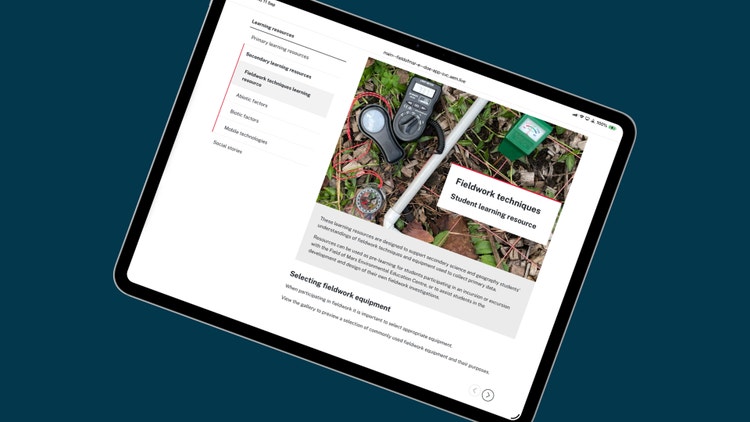
Fieldwork techniques
Help students prepare to use scientific equipment, sampling methods, observations and field data-recording techniques.
Location

School incursions
Planning information for incursions delivered at your school, including learning spaces, accessibility, risk management and staff access.
Extend student learning
Use these student-friendly fact sheets before or after the Science fieldwork incursion to support ecological sampling, abiotic measurements, water-quality testing and local ecosystem investigations.
- Habitat fact sheet – Learn how living and non-living features create places where organisms can survive.
- Water habitat fact sheet – Explore ponds, creeks, wetlands and damp places that can support water-quality investigations.
- River and creek environments fact sheet – Learn how water flow, banks, vegetation, animals, water quality and human activities are connected.
- Invertebrate fact sheets – Explore small animals that can be observed, identified and used as evidence in ecological investigations.
- Eucalypt forest ecosystems fact sheet – Learn about ecosystem structure, abiotic conditions, habitats, food webs and fieldwork evidence.
- Field of Mars Reserve environment fact sheet – Use a Sydney sandstone bushland example to compare with ecosystem features found at or near the school.
Learn with us
Book this incursion
Book this Stage 6 Biology fieldwork incursion using our online booking form.
Supporting resources
Use Science fieldwork learning resources to support ecological sampling, abiotic measurements, water-quality testing and data analysis.
Related Stage 6 Science programs
Ecosystem dynamics excursion
Stage 6 Biology students collecting ecological field data in a Sydney sandstone forest ecosystem.
Human impacts and introduced species excursion
Investigate introduced species, compare affected ecosystem sites and evaluate environmental impacts and management strategies.