Red wattlebird fact sheet | Field of Mars EEC
What are red wattlebirds?
Red wattlebirds are large native honeyeaters found across eastern and south-eastern Australia. Their scientific name is Anthochaera carunculata. These noisy birds are often seen feeding in flowering eucalyptus trees, banksias and bottlebrushes where they drink nectar using a brush-tipped tongue. They also eat insects and fruit.
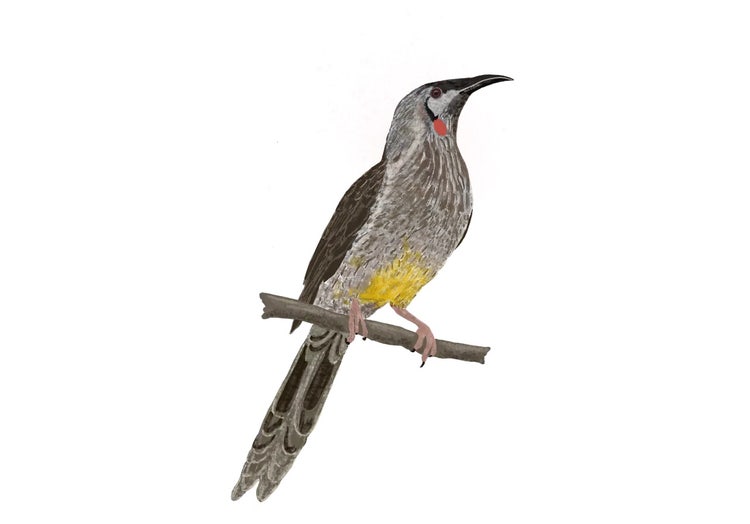
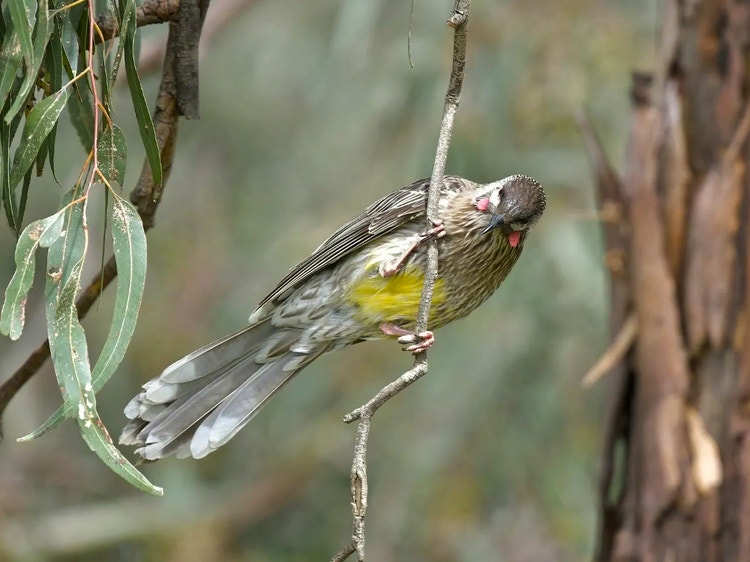
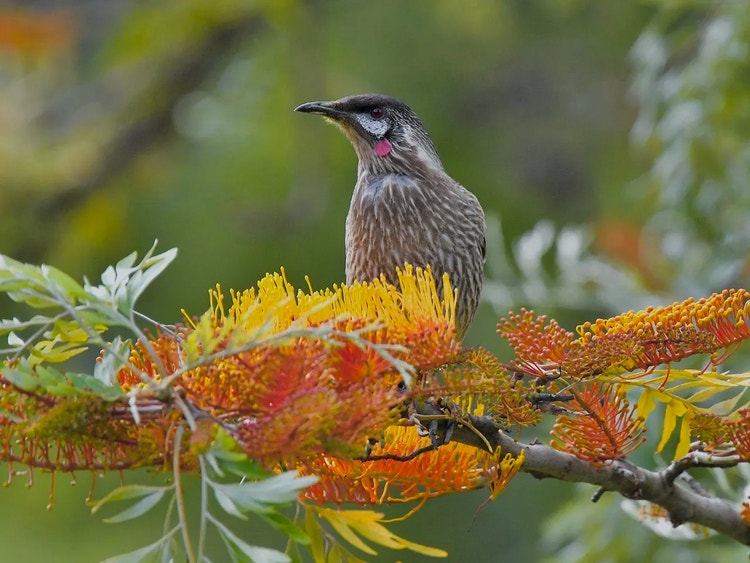
Red wattlebirds are easy to recognise because of their streaky brown feathers, yellow belly patch and the red fleshy wattles hanging on the sides of their neck. They are active birds that move quickly through trees and shrubs, often calling loudly while chasing away other birds from flowering plants.
Students visiting bushland around Sydney may hear red wattlebirds before they see them. They are common in open forests, coastal heath, parks, gardens and bushland reserves, including areas around Field of Mars Reserve and Lane Cove National Park where flowering native plants provide food throughout the year.
Fast facts – Red wattlebird
Scientific name – Anthochaera carunculata
Scientific group – Red wattlebirds are large honeyeaters in the family Meliphagidae.
Appearance – Red wattlebirds have brown streaked feathers, a yellow belly patch and red wattles on the sides of the neck.
Size – Adult red wattlebirds are usually about 33–37 cm long.
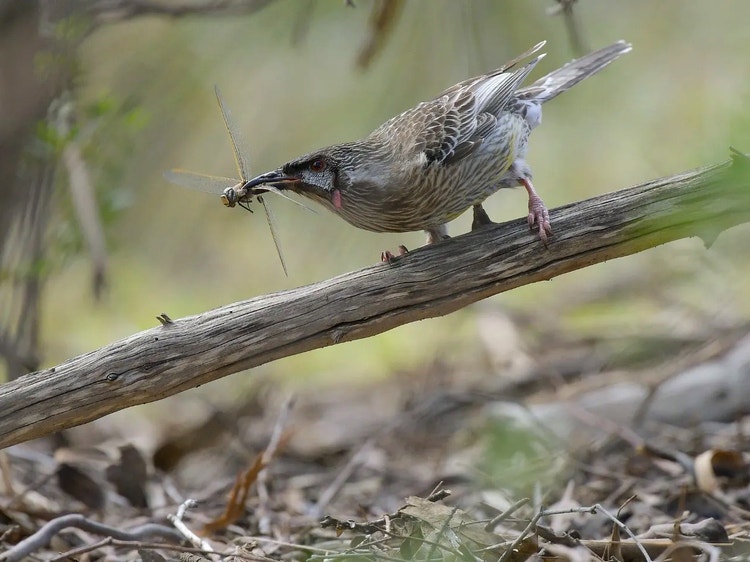
Diet – They feed on nectar, insects, spiders and soft fruit.
Habitat – Red wattlebirds live in forests, woodlands, heath, parks and gardens with flowering plants.
Life cycle – Females lay 1–3 eggs in a cup-shaped nest and chicks usually leave the nest after about two weeks. Wild birds can live for more than 10 years.
Special behaviour – Red wattlebirds defend flowering trees loudly and aggressively from other nectar-feeding birds.
Where do red wattlebirds live?
Red wattlebirds live across eastern and south-eastern Australia from southern Queensland through New South Wales and Victoria into South Australia. They are common in coastal and nearby inland areas where flowering trees and shrubs provide nectar throughout the year.
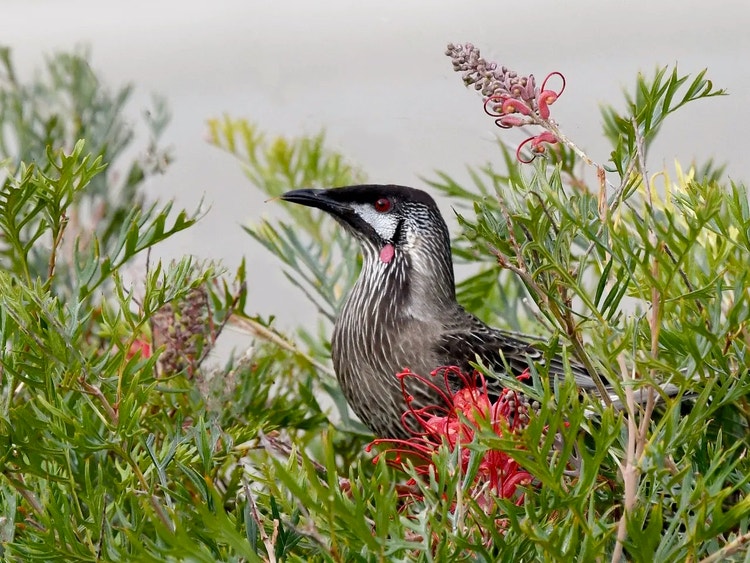
These birds are often found in eucalyptus forests, heathland, wetlands, suburban gardens and urban parks. In Sydney, students may spot red wattlebirds around flowering gums, banksias and grevilleas in bushland reserves such as Field of Mars Reserve and Lane Cove National Park. They usually perch high in trees but regularly fly into gardens to feed.
What do red wattlebirds eat?
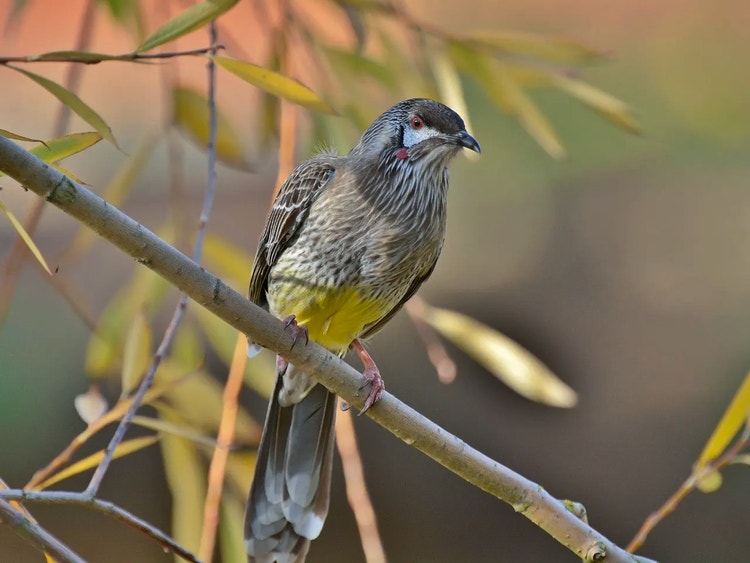
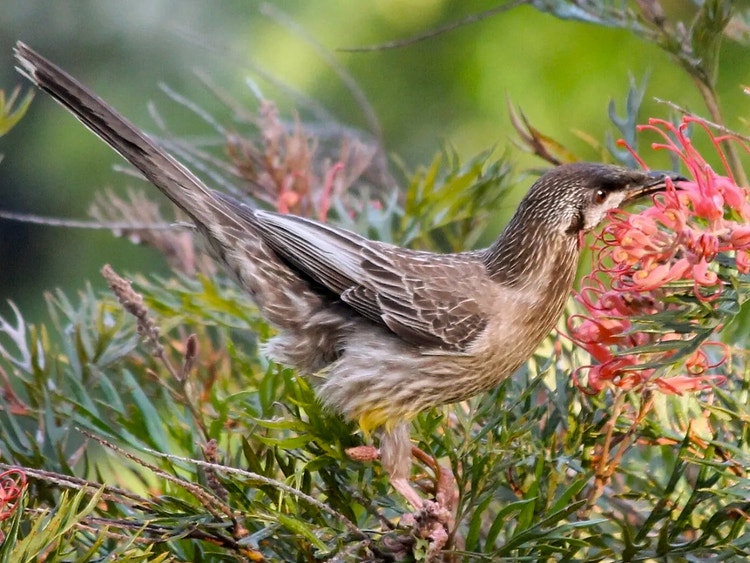
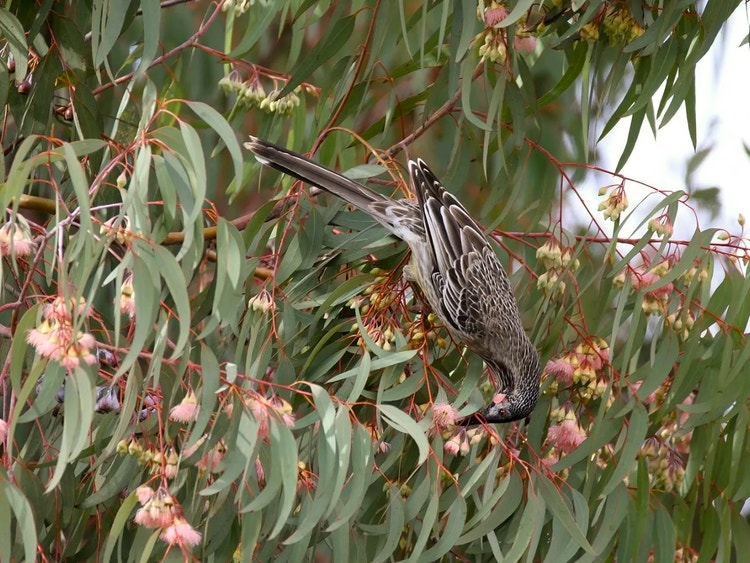
Red wattlebirds mainly feed on nectar from flowering plants. Their long curved beaks and brush-like tongues help them reach deep inside flowers to collect sugary nectar. They particularly feed from eucalyptus blossoms, banksias, grevilleas and bottlebrush flowers.
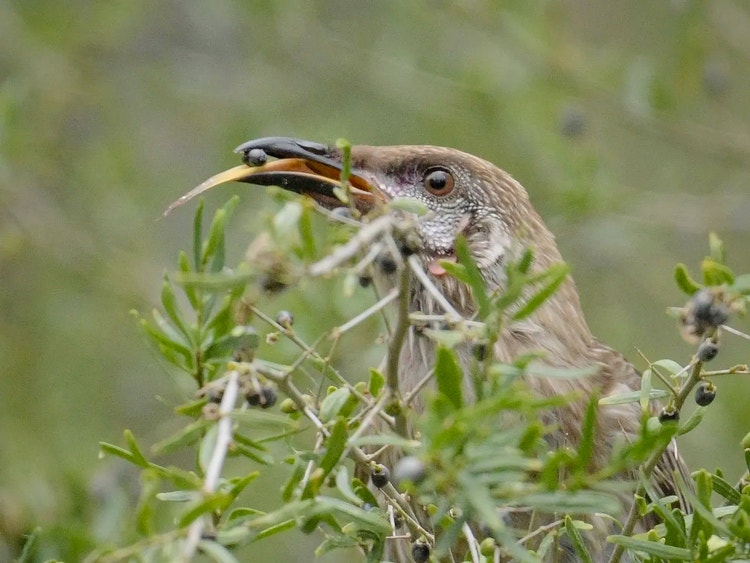
They also eat insects, spiders and small fruits. Insects provide important protein, especially during the breeding season when adults are feeding growing chicks. While searching for food, red wattlebirds help pollinate flowers by carrying pollen between plants.

What do red wattlebirds sound like?
Red wattlebirds are loud and noisy birds with harsh coughs, squawks, rattles and chattering calls. Their calls can sound rough and scratchy compared with the more musical songs of some other Australian birds.
They often call while flying, feeding or chasing away other birds from flowering trees. Students exploring bushland may hear their loud warning calls before spotting the bird moving quickly through the canopy.

What is the life cycle of red wattlebirds?
Red wattlebirds usually breed during spring and summer when flowering plants and insects are abundant. The female builds a cup-shaped nest from twigs, bark, grass and spider webs, usually hidden in a dense shrub or tree.
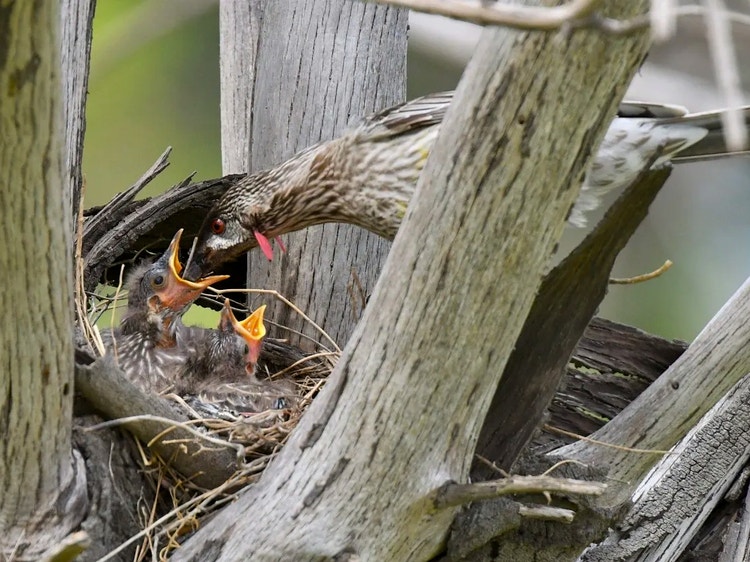
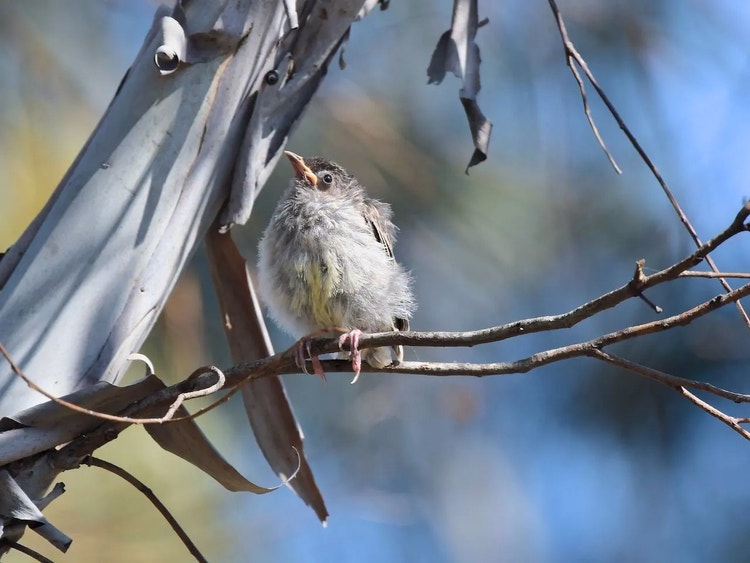
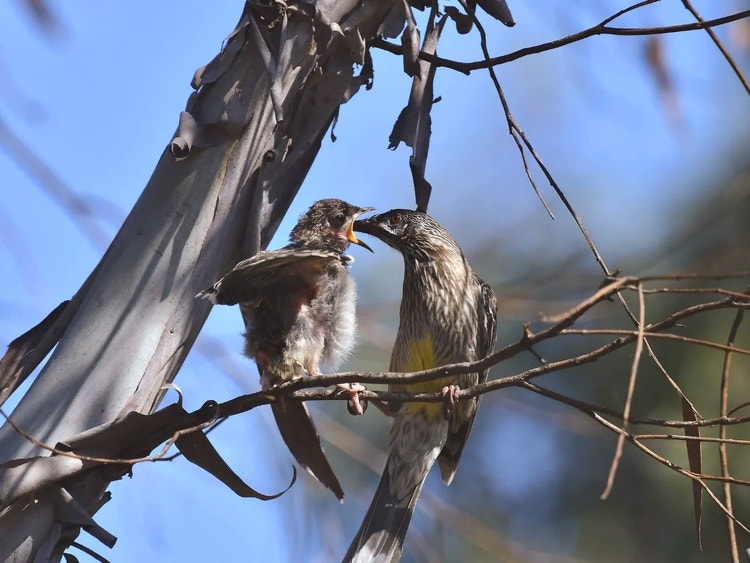
Females normally lay between one and three eggs. Both parents help care for the chicks after they hatch. Young birds grow quickly and leave the nest after about two weeks, although the adults continue feeding them for some time afterwards. Juvenile birds are duller in colour and gradually develop adult markings as they mature.
What adaptations do red wattlebirds have to help them survive?
Red wattlebirds have several adaptations that help them feed on nectar. Their curved beaks and specialised brush-tipped tongues allow them to collect nectar from deep flowers. Strong feet help them cling to branches while feeding among blossoms.
Their streaky brown feathers help camouflage them among bark and branches. Red wattlebirds are also highly territorial and use loud calls and aggressive behaviour to defend rich food sources from other birds. This helps them secure enough food, especially during breeding season.
Why are red wattlebirds important?
Red wattlebirds are important pollinators in Australian ecosystems. As they move between flowers feeding on nectar, they transfer pollen from one plant to another. This helps native plants produce seeds and reproduce.
They also help control insect populations by feeding on insects and spiders. Red wattlebirds are part of complex food webs and provide food for larger predators such as birds of prey and snakes. Their presence can also help scientists understand the health of local habitats and flowering plant communities.
How can you help red wattlebirds?
People can help red wattlebirds by protecting native bushland and planting local native flowering plants in gardens, schools and parks. Native grevilleas, bottlebrushes and banksias provide important food for honeyeaters throughout the year.
Students can also help by keeping cats indoors, reducing litter and protecting natural habitats from pollution and clearing. Leaving old trees standing where safe to do so can provide nesting and shelter sites for many native birds.
Related fact sheets
More bird fact sheets
- Birds fact sheet – Explore Australian bird groups, features and adaptations.
- Eastern spinebill fact sheet – Learn about another nectar-feeding bird found near flowering shrubs.
- Rainbow lorikeet fact sheet – Discover another colourful bird that feeds on nectar and pollen.
- Noisy miner fact sheet – Compare another honeyeater that lives in open forests, parks and gardens.
Habitats and ecosystems
- Field of Mars Reserve fact sheet – Learn about the local bushland habitat that supports native birds.
Plants that support red wattlebirds
- Hairpin banksia fact sheet – Discover a native plant that provides nectar for birds and insects.
- Sydney red gum fact sheet – Learn about a flowering eucalypt that supports nectar-feeding animals.
- Spider flowers fact sheet – Explore native grevilleas that provide food for pollinating animals.
Food webs and ecological relationships
- Insects fact sheet – Explore the insects that many birds eat.
- Flowering plants fact sheet – Learn how flowering plants support nectar-feeding animals and food webs.
Attributions
References
Australian Museum. Red Wattlebird Anthochaera carunculata. [online] Available at: https://australian.museum/learn/animals/birds/red-wattlebird-anthochaera-carunculata/
BirdLife Australia. Red Wattlebird. [online] Available at: https://birdlife.org.au/bird-profiles/red-wattlebird/
Birds in Backyards. Red Wattlebird. [online] Available at: https://www.birdsinbackyards.net/species/Anthochaera-carunculata
Museums Victoria Collections. Anthochaera carunculata (Shaw, 1790), Red Wattlebird. [online] Available at: https://collections.museumsvictoria.com.au/species/3366
Atlas of Living Australia. Anthochaera carunculata: Red Wattlebird. [online] Available at: https://bie.ala.org.au/species/Red%2BWattlebird
State Library of New South Wales. Red wattle-bird (Anthochaera carunculata), 1790s. [online] Available at: https://www2.sl.nsw.gov.au/archive/curio/exhibit/815/index3c3c.html?from_collection=10&page=5
Image attributions
A red wattlebird. – Field of Mars EEC (original illustration).
Red wattlebirds use their brush-tipped tongues to drink nectar from flowers. – ‘Anthochaera carunculata with tail up’ by JarrahTree. Creative Commons Attribution 2.5 Australia licence. Available at: https://commons.wikimedia.org/wiki/File:Anthochaera_carunculata_with_tail_up.jpg

Red wattlebirds live in forests, heathland and gardens with flowering native plants. – ‘Red wattle bird’ by Jean and Fred Hort. Creative Commons Attribution 2.0 Generic licence. Available at: https://www.flickr.com/photos/jean_hort/15548194502/
Red wattlebirds feed on nectar as well as insects and fruit. – ‘Red wattlebird’ by Melindra12. Creative Commons Attribution-Share Alike 4.0 International licence. Available at: https://commons.wikimedia.org/wiki/File:Red_wattlebird.jpg

Red wattlebirds also feed on soft fruit and berries. – ‘Red wattlebird’ by Dorothy Jenkins. Creative Commons Attribution-Share Alike 2.0 Generic licence. Available at: https://www.flickr.com/photos/ozjulian/51005697912/
Red wattlebirds are known for their loud and harsh calls. – ‘Red Wattlebird: YarkaYarka-Yak’ by I am birdsaspoetry. Creative Commons Attribution 2.0 Generic licence. Available at: https://www.flickr.com/photos/birdsaspoetry/52921553572/
A red wattlebird feeding its young in their nest. – ‘Red wattlebird feeding time’ by Dorothy Jenkins. Creative Commons Attribution-Share Alike 2.0 Generic licence. Available at: https://www.flickr.com/photos/ozjulian/51006499036/
A juvenile red wattlebird still covered in downy feathers. – ‘Red wattlebird’ by Dorothy Jenkins. Creative Commons Attribution-Share Alike 2.0 Generic licence. Available at: https://www.flickr.com/photos/ozjulian/51006496291/
Juvenile red wattlebirds are fed for two to three weeks after leaving the nest. – ‘Red wattlebirds’ by Dorothy Jenkins. Creative Commons Attribution-Share Alike 2.0 Generic licence. Available at: https://www.flickr.com/photos/ozjulian/51006493071/
A red wattlebird’s curved beak and tongue help it feed. – ‘Red wattlebird: a fine taste’ by I am birdsaspoetry. Creative Commons Attribution 2.0 Generic licence. Available at: https://www.flickr.com/photos/birdsaspoetry/52921670485/
Red wattlebirds have strong feet that provide excellent grip. – ‘Red wattlebird’ by Dorothy Jenkins. Creative Commons Attribution-Share Alike 2.0 Generic licence. Available at: https://www.flickr.com/photos/ozjulian/51005699307/
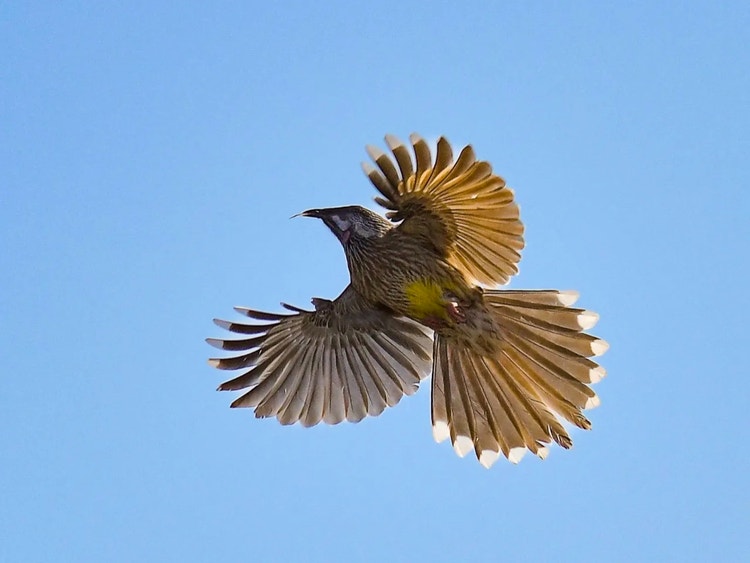
Red wattlebirds use strong wings and broad flight feathers to move quickly between flowering trees. – ‘Red Wattlebird: Contre-Jour’ by I am birdsaspoetry. Creative Commons Attribution 2.0 Generic licence. Available at: https://www.flickr.com/photos/birdsaspoetry/52922703293/
Red wattlebirds are part of healthy bushland environments. – ‘Red wattlebird’ by Dorothy Jenkins. Creative Commons Attribution-Share Alike 2.0 Generic licence. Available at: https://www.flickr.com/photos/ozjulian/51005698517/
Red wattlebirds are capable of pollinating bushland plants. – ‘Red wattlebird’ by Dorothy Jenkins. Creative Commons Attribution-Share Alike 2.0 Generic licence. Available at: https://www.flickr.com/photos/ozjulian/51006495721/
Native flowering plants provide food and shelter for red wattlebirds. – ‘Red wattlebird’ by Dorothy Jenkins. Creative Commons Attribution-Share Alike 2.0 Generic licence. Available at: https://www.flickr.com/photos/ozjulian/51005696977/
Learn with us

Book now
Book a birdwatching or curriculum-aligned excursion where students investigate honeyeaters, flowering plants, bird calls, habitats and food webs.

Learning programs
Explore Field of Mars EEC programs that support learning about red wattlebirds, nectar-feeding birds, pollination, territorial behaviour and local ecosystems.

Learning resources
Use the red wattlebird fact sheet to support classroom learning about wattles, strong calls, nectar, insects, flowering shrubs and tree habitats.

Flora and fauna fact sheets
Explore related fact sheets about birds, native plants, shrub habitats, tree habitats, eucalypt forests, insects and pollination.
Related programs
Ecosystem explorers excursion
Investigate bushland habitats, observe animals and explore food chains and interactions between living and non-living parts of ecosystems.
Field guide HPGE enrichment program
Work as a field naturalist using close observation, photography and digital illustration to document living things and their habitats.