Noisy miner fact sheet | Field of Mars EEC
What are noisy miners?
Noisy miners are small native Australian birds known for their loud calls, busy social groups and bold behaviour. Their scientific name is Manorina melanocephala. They belong to the honeyeater family, a group of birds that mainly feed on nectar, insects and fruit. Noisy miners are common across eastern Australia and are often seen in parks, gardens, school grounds and open forests around Sydney.
These birds are easy to recognise because of their grey body, black head, yellow beak and bright yellow skin around the eyes. Noisy miners are highly social and usually live in large groups called colonies. They work together to defend food sources and nesting areas from other birds, sometimes chasing away much larger species.
Students visiting bushland areas such as Field of Mars Reserve or Lane Cove National Park may hear noisy miners before they see them. Their loud alarm calls, constant chatter and group behaviour make them one of the most noticeable birds in urban bushland and suburban environments.

Fast facts – Noisy miner
Scientific name – Manorina melanocephala
Scientific group – Noisy miners are native Australian birds in the honeyeater family.
Appearance – They have grey feathers, a black head, a yellow beak and bright yellow skin around the eyes.
Size – Adult noisy miners are about 24–28 centimetres long.
Diet – They eat nectar, insects, fruit and sugary foods from flowering plants.
Habitat – They live in open forests, woodlands, parks, gardens and suburban areas across eastern Australia.
Life cycle – Females build cup-shaped nests and lay 2–4 eggs. Chicks hatch after about two weeks and are cared for by several colony members. Noisy miners can live for more than 10 years in the wild.
Special behaviour – Noisy miners live in large colonies and work together to defend their territory from other birds.

Where do noisy miners live?
Noisy miners live across eastern and south-eastern Australia. They prefer open woodlands with scattered trees, grassy ground layers and plenty of flowering plants. They are especially common in urban areas where bushland has been partly cleared, including parks, school grounds, golf courses and suburban gardens.
In Sydney, noisy miners are common in places such as Field of Mars Reserve and Lane Cove National Park, particularly around open forest edges and picnic areas. Students may notice them calling loudly from tree branches, gathering in groups on lawns or chasing other birds away from flowering trees.

What do noisy miners eat?
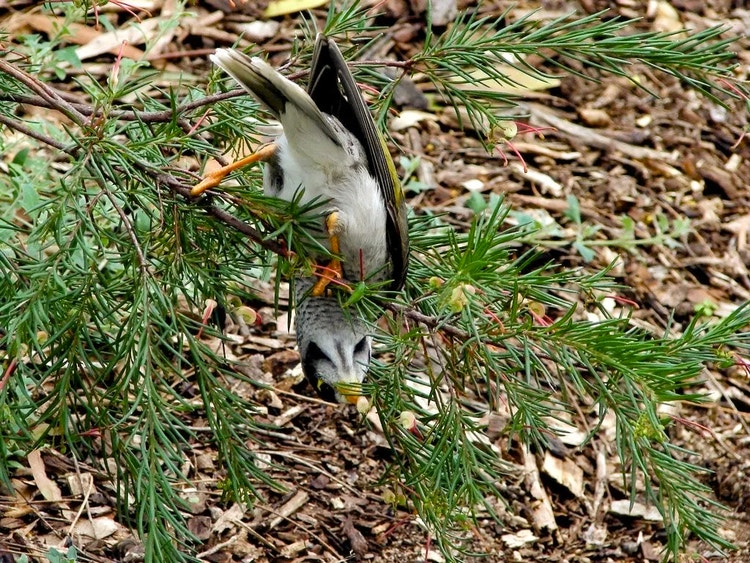
Noisy miners mainly feed on nectar from flowering trees and shrubs. Their brush-tipped tongues help them collect nectar from flowers such as eucalyptus blossoms and bottlebrush plants. They also eat insects, spiders and small fruits, especially during the breeding season when young birds need extra protein.
These birds often feed in groups and defend rich food sources from other nectar-feeding birds. Their aggressive behaviour can affect local ecosystems because smaller birds may avoid areas where noisy miners are abundant. In urban areas, noisy miners sometimes feed on sugary human foods left in parks and picnic areas.
What do noisy miners sound like?
Noisy miners are named for their loud and varied calls. They constantly communicate with other members of their colony using alarm calls, warning calls and chatter. Their sounds help the group stay connected and alert each other to predators or intruders.
Students walking through bushland may hear noisy miners making sharp “chip-chip” alarm calls when people or animals move nearby. Colonies often call together when defending food or nesting areas from other birds.
What is the life cycle of noisy miners?
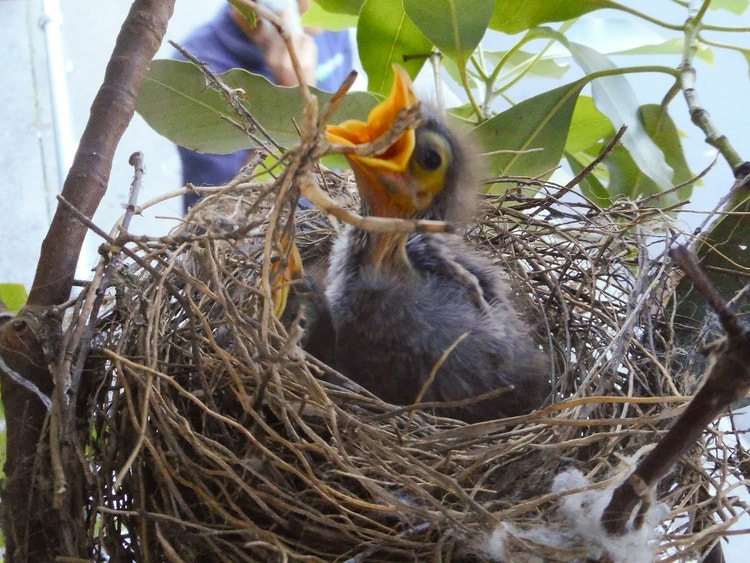
The breeding season for noisy miners usually occurs from winter to summer when food is plentiful. Females build small cup-shaped nests from grasses, bark and spider webs, usually hidden among dense leaves. They lay between 2 and 4 eggs which hatch after about two weeks.
Young noisy miners grow quickly and are fed by both parents as well as other colony members. This cooperative breeding behaviour helps chicks survive and allows the colony to protect nests from predators. Juvenile birds gradually learn colony calls and social behaviours as they mature.

What adaptations do noisy miners have to help them survive?
Noisy miners have several adaptations that help them survive in changing environments. Their strong legs and agile flight help them move quickly through trees and across open ground. Their brush-tipped tongues are specially adapted for feeding on nectar from flowers.
Behaviour is also an important adaptation. Noisy miners live in cooperative colonies where birds warn each other about danger and defend feeding areas together. Their loud calls and group defence strategies help protect nests and food sources from predators and competing birds.

Why are noisy miners important?
Noisy miners play an important role in ecosystems as pollinators and insect predators. When they feed on nectar, pollen sticks to their feathers and is carried between flowers. This helps native plants reproduce and supports healthy bushland ecosystems.
They are also part of local food webs. Noisy miners eat insects and are prey for larger birds of prey, snakes and mammals. Scientists also study noisy miners because their behaviour can show how urban development changes bird communities and biodiversity.

How can you help noisy miners?
People can help noisy miners and other native birds by protecting bushland habitats and planting native flowering plants. Gardens with native shrubs and trees provide food and shelter for birds throughout the year.
Students can also help by keeping parks and bushland clean, avoiding feeding birds processed human food and respecting nesting areas during breeding season. Healthy bushland with a variety of plant species supports balanced bird communities and helps many native animals survive.

Related fact sheets
More bird fact sheets
- Birds fact sheet – Learn about bird features, life cycles, habitats and adaptations.
- Rainbow lorikeet fact sheet – Explore another noisy nectar-feeding bird found in trees and gardens.
- Red wattlebird fact sheet – Learn about another honeyeater that feeds on nectar and insects.
- Superb fairy-wren fact sheet – Compare a small bushland bird affected by noisy miner behaviour.
Habitats and ecosystems
- Tree habitats fact sheet – Explore how tree canopies, flowers, branches and hollows support birds.
- Shrub habitats fact sheet – Learn how shrubs provide shelter and feeding places for small birds.
- Eucalypt forest fact sheet – Discover a forest habitat with flowering trees, insects and bird life.
- Field of Mars Reserve fact sheet – Learn about local bushland habitats where noisy miners may be seen.
Food webs and ecological relationships
- Insects fact sheet – Explore animals that provide food for noisy miners and many other birds.
- Plant fact sheets – Learn about native plants that provide nectar, fruit and habitat for birds.
Attributions
References
BirdLife Australia. Noisy Miner. [online] Available at: https://birdlife.org.au/bird-profiles/noisy-miner/
Birds in Backyards. Noisy Miner. [online] Available at: https://www.birdsinbackyards.net/species/Manorina-melanocephala
Birds in Backyards. Birds Behaving Badly – Noisy Miner. [online] Available at: https://www.birdsinbackyards.net/Birds-Behaving-Badly-Noisy-Miner
Australian Museum. Noisy Miner. [online] Available at: https://australian.museum/learn/animals/birds/noisy-miner/
Museums Victoria Collections. Manorina melanocephala, Noisy Miner. [online] Available at: https://collections.museumsvictoria.com.au/species/8171
Atlas of Living Australia. Manorina melanocephala. [online] Available at: https://bie.ala.org.au/species/https://biodiversity.org.au/afd/taxa/Manorina_melanocephala
Image attributions
A noisy miner. – Field of Mars EEC (original illustration).
Noisy miners often feed on nectar from flowering eucalyptus trees. – ‘Noisy miner feeding in Eucalyptus crebra 7th Brigade Park Chermside P1100058.jpg’ by John Robert McPherson. Creative Commons Attribution-Share Alike 4.0 International licence. Available at: https://commons.wikimedia.org/wiki/File:Noisy_miner_feeding_in_Eucalyptus_crebra_7th_Brigade_Park_Chermside_P1100058.jpg

Noisy miners are common in open forests, parks and suburban bushland. – ‘Noisy Miner Feeding 03.jpg’ by Sardaka. Creative Commons Attribution-Share Alike 4.0 International licence. Available at: https://commons.wikimedia.org/wiki/File:Noisy_Miner_Feeding_03.jpg

Noisy miners eat insects as well as nectar from flowers. – ‘Acrobatic Noisy Miner’ by Tatters ✾. Creative Commons Attribution 2.0 Generic licence. Available at: https://www.flickr.com/photos/62938898@N00/3870108563
Adult noisy miners work together to care for chicks. – ‘(1)Noisy miner nest 015.jpg’ by Sardaka. Creative Commons Attribution-Share Alike 4.0 International licence. Available at: https://commons.wikimedia.org/wiki/File:(1)Noisy_miner_nest_015.jpg
Noisy_miner_nest_015.jpg)
A noisy miner chick in its nest. – ‘(1)Noisy miner nest 016.jpg’ by Sardaka. Creative Commons Attribution-Share Alike 4.0 International licence. Available at: https://commons.wikimedia.org/wiki/File:(1)Noisy_miner_nest_016.jpg
Noisy_miner_nest_016.jpg)
Noisy miners bathe and gather together in social groups. – ‘Noisy Miners bathing.jpg’ by Mdk572. Creative Commons Attribution-Share Alike 3.0 Unported licence. Available at: https://commons.wikimedia.org/wiki/File:Noisy_Miners_bathing.jpg

Noisy miners help pollinate flowering plants. – ‘Noisy Miner on flowers.jpg’ by Bilby. Creative Commons Attribution 3.0 Unported licence. Available at: https://commons.wikimedia.org/wiki/File:Noisy_Miner_on_flowers.jpg

Native gardens provide food and shelter for noisy miners and other wildlife. – Field of Mars EEC (original image).
Learn with us

Book now
Book a birdwatching or curriculum-aligned excursion where students investigate honeyeaters, bird behaviour, urban wildlife, habitats and food webs.

Learning programs
Explore Field of Mars EEC programs that support learning about noisy miners, bird communication, territorial behaviour, flowering trees and urban ecosystems.

Learning resources
Use the noisy miner fact sheet to support classroom learning about honeyeaters, bird calls, group behaviour, nectar feeding and habitat change.

Flora and fauna fact sheets
Explore related fact sheets about birds, urban environments, eucalypt forests, tree habitats, flowering plants, insects and local food webs.
Related programs
Environmental change and management excursion
Use fieldwork to investigate environmental change, habitat condition and management strategies in an urban river environment.
Junior birder HPGE enrichment program
Observe bird behaviour, habitat use and identification features through guided birdwatching and field investigation.