Laughing kookaburra fact sheet – guganigine | Field of Mars EEC
What are laughing kookaburras?
Laughing kookaburras (Dacelo novaeguineae) are large kingfishers that live in forests, woodlands, parks and gardens across eastern Australia. Laughing kookaburras are called guganigine by the Darug people of the Sydney Basin. Kookaburras are famous for their loud laughing calls, which sound like a group of people laughing together. These calls help kookaburras defend their territory and communicate with family members.
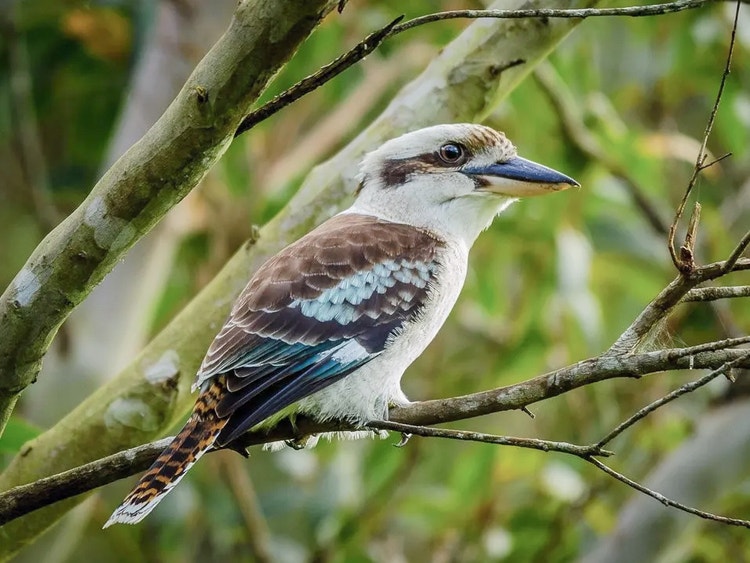
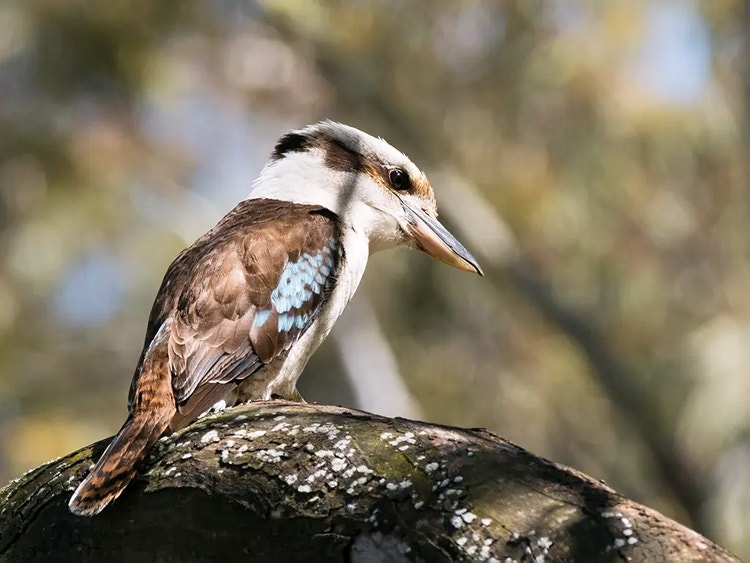
Laughing kookaburras have a large head, strong beak and sturdy body. Their feathers are mostly brown, cream and white, helping them blend into tree branches and bushland. Even though they are called kingfishers, they often hunt on land instead of catching fish in water.
Students may spot laughing kookaburras sitting quietly on branches, fences or powerlines while searching for food. They suddenly swoop down to catch insects, reptiles or small animals. Laughing kookaburras are common around Sydney, including bushland areas such as Field of Mars Reserve and Lane Cove National Park.

Fast facts – Laughing kookaburra
Scientific name – Dacelo novaeguineae
Scientific group – Laughing kookaburras are birds in the kingfisher family.
Appearance – Laughing kookaburras have brown and cream feathers, a large head and a strong pointed beak.
Size – Adults usually grow about 40–45 centimetres long.
Diet – Laughing kookaburras eat insects, reptiles, small mammals, birds and other small animals.
Habitat – They live in forests, woodlands, parks, gardens and bushland across eastern Australia.
Life cycle – Laughing kookaburras hatch from eggs laid in tree hollows and stay with family groups for several years. They can live for more than 15 years in the wild.
Special behaviour – Laughing kookaburras use loud laughing calls to defend their territory and communicate with family members.
Where do laughing kookaburras live?
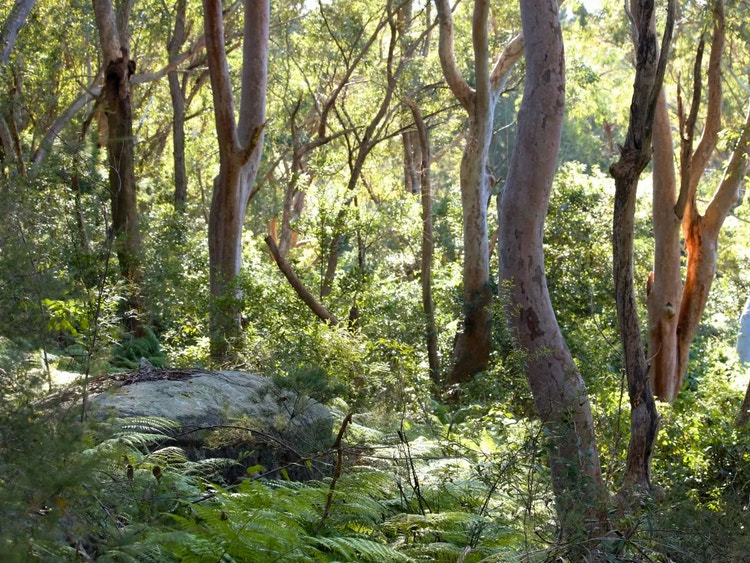
Laughing kookaburras live in eastern Australia from northern Queensland to Victoria. They are commonly found in eucalyptus forests, woodlands, open bushland, parks, school grounds and suburban gardens. They need trees for nesting, shelter and hunting.
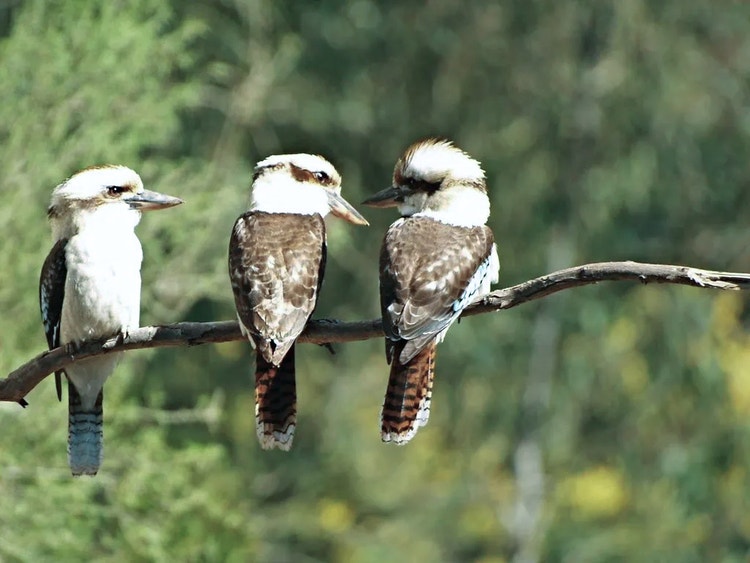
In Sydney, laughing kookaburras are often seen around Field of Mars Reserve, Lane Cove National Park and nearby suburban bushland. Students may notice them perched high in trees or sitting still on fences and powerlines before swooping down to catch prey. They usually live in family groups and defend territories throughout the year.
What do laughing kookaburras eat?
Laughing kookaburras are carnivores. They mainly eat insects, worms, snakes, lizards, frogs, mice and small birds. They hunt by sitting quietly on a branch and carefully watching the ground below. When they spot movement, they swoop down quickly to grab their prey with their strong beak.
Kookaburras often hit larger prey against branches or rocks before swallowing it whole. Their hunting helps control populations of insects and small animals in bushland and gardens. Although they are kingfishers, they rarely catch fish.

What do laughing kookaburras sound like?
Laughing kookaburras are well known for their loud laughing calls. Family groups often call together at dawn and dusk to warn other kookaburras that a territory is occupied. Their calls begin with short chuckles and build into loud laughing sounds that can carry long distances through the bush.
These calls also help family members stay connected. Young kookaburras learn the group call by listening to adults. The laughing call has become one of the most recognised bird sounds in Australia.

What is the life cycle of laughing kookaburras?
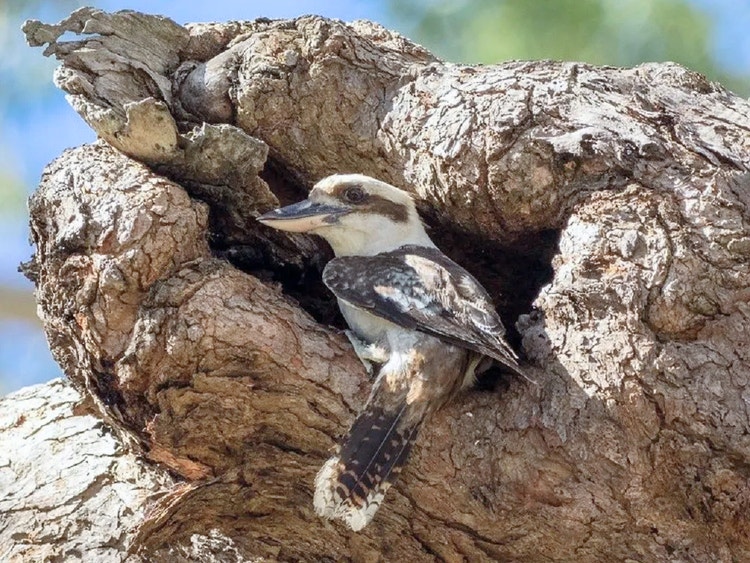
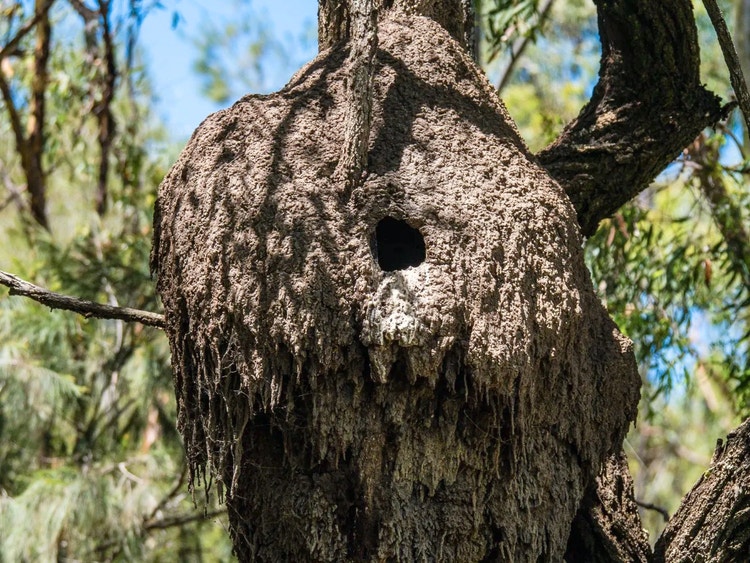
Laughing kookaburras usually breed during spring and summer. They nest in tree hollows, termite mounds or sometimes holes in soft wood. The female lays several white eggs, and both parents help incubate the eggs and care for the chicks after they hatch.
Young kookaburras often stay with their family group for several years and help raise younger chicks. This behaviour is called cooperative breeding. Family groups work together to protect the nest and defend their territory. Laughing kookaburras can live for many years in the wild when food and habitat are available.
What adaptations do laughing kookaburras have to help them survive?
Laughing kookaburras have strong beaks that help them catch and handle prey. Their sharp eyesight allows them to spot movement from high perches, even when prey is partly hidden in grass or leaf litter. Their brown and cream feathers help camouflage them against tree bark and branches.
Their loud territorial calls help family groups protect feeding and nesting areas from other kookaburras. They also have strong feet for gripping branches while hunting. Sitting still and watching carefully before swooping helps them save energy and surprise prey.

Why are laughing kookaburras important?
Laughing kookaburras are important predators in Australian ecosystems. By eating insects, rodents and reptiles, they help keep animal populations balanced. They are part of local food webs and help maintain healthy bushland ecosystems.
Their calls are also an important part of the soundscape of Australian forests and parks. Many people recognise and value kookaburras as iconic Australian birds. Protecting bushland habitat helps ensure kookaburras continue to survive in urban and natural environments.
How can you help laughing kookaburras?
People can help laughing kookaburras by protecting native bushland and planting local native trees that provide shelter and nesting sites. Old trees with hollows are especially important because kookaburras rely on them for nesting.
Students can help by keeping bushland clean, staying on walking tracks and observing birds quietly without disturbing nests. Pet cats and dogs should be controlled around wildlife areas. Providing healthy habitats helps kookaburras and many other native animals survive in cities and suburbs.
Related fact sheets
More bird fact sheets
- Birds fact sheet – Learn about bird features, life cycles, adaptations and ecological roles.
- Butcherbird fact sheet – Compare another bird with a strong beak used for hunting.
- Australian raven fact sheet – Explore another intelligent bird that lives in bushland and urban habitats.
- Channel-billed cuckoo fact sheet – Learn about a large bird that shares tall forest and suburban tree habitats.
Habitats and ecosystems
- Field of Mars Reserve fact sheet – Discover local bushland habitats that support kookaburras and other native animals.
- Eucalypt forest fact sheet – Explore forest habitats where kookaburras perch, nest and hunt.
- Tree habitats fact sheet – Learn how trees provide hollows, perches and shelter for wildlife.
Food webs and ecological relationships
- Insects fact sheet – Explore an important food source for kookaburras and many other birds.
- Leaf litter habitats fact sheet – Discover the small animals and decomposers that support bushland food webs.
Attributions
References
Australian Museum. Laughing Kookaburra. [online] Available at: https://australian.museum/learn/animals/birds/laughing-kookaburra/
BirdLife Australia. Laughing Kookaburra. [online] Available at: https://birdlife.org.au/bird-profiles/laughing-kookaburra/
Animal Diversity Web. Dacelo novaeguineae laughing kookaburra. [online] Available at: https://animaldiversity.org/accounts/Dacelo_novaeguineae/
BirdLife International. Laughing Kookaburra Dacelo novaeguineae species factsheet. [online] Available at: https://datazone.birdlife.org/species/factsheet/laughing-kookaburra-dacelo-novaeguineae
Dharug and Dharawal Resources. Dharug dictionary. [online] Available at: https://dharug.dalang.com.au/language/dictionary
City of Ryde. Field of Mars Reserve. [online] Available at: https://www.ryde.nsw.gov.au/Recreation/Parks-and-Sportsgrounds/Find-a-Park-or-Sportsground/Field-of-Mars-Reserve
City of Ryde. Protection of wildlife at Field of Mars Reserve. [online] Available at: https://www.ryde.nsw.gov.au/Environment-and-Waste/Bushland-and-Wildlife/Urban-Wildlife/Protection-of-wildlife-at-Field-of-Mars-Reserve
Field of Mars Environmental Education Centre. Field of Mars Reserve fact sheet. [online] Available at: https://fieldofmar-e.schools.nsw.gov.au/fact-sheets/environments/field-of-mars-reserve-fact-sheet
Image attributions
A laughing kookaburra. – Field of Mars EEC (original illustration).
Laughing kookaburras often sit quietly while watching for prey. – “Laughing Kookaburra” by kuribo. Creative Commons Attribution-Share Alike 2.0 Generic. Available at: https://www.flickr.com/photos/39776840@N00/2354157424
Laughing kookaburras live in forests, bushland and suburban parks across eastern Australia. – Field of Mars EEC (original image).
Laughing kookaburras use their strong beaks to catch and handle prey. – “20160411-Caught-its-lunch” by Degilbo on flickr. Creative Commons Attribution-NonCommercial-NoDerivatives 2.0 Generic. Available at: https://www.flickr.com/photos/7977365@N08/26360213455
Laughing kookaburras use loud calls to communicate and defend their territory. – “Laugh Kookaburra, laugh kookaburra..” by Fimb. Creative Commons Attribution 2.0 Generic. Available at: https://www.flickr.com/photos/48573253@N00/2558305498
Laughing kookaburras nest in tree hollows. – “Laughing Kookaburra” by Duncan McCaskill. Creative Commons Attribution-NonCommercial 2.0 Generic. Available at: https://www.flickr.com/photos/148286771@N02/45841044574
Laughing kookaburras sometimes create nesting hollows in termite nests. – Field of Mars EEC (original image).
Camouflage, sharp eyesight and a strong beak help laughing kookaburras hunt successfully. – “Dacelo novaeguineae waterworks.jpg” by JJ Harrison. Creative Commons Attribution-Share Alike 3.0 Unported. Available at: https://commons.wikimedia.org/wiki/File:Dacelo_novaeguineae_waterworks.jpg

Laughing kookaburras help maintain balance in Australian food webs. – Field of Mars EEC (original image).
Protecting native trees helps provide nesting sites for laughing kookaburras. – “Family of Kookaburras” by Parks Victoria. Creative Commons Attribution-NonCommercial 2.0 Generic. Available at: https://www.flickr.com/photos/56027284@N03/5977188402
Learn with us

Book now
Book a birdwatching or curriculum-aligned excursion where students investigate kookaburras, bird calls, hunting adaptations and food webs.

Learning programs
Explore Field of Mars EEC programs that support learning about laughing kookaburras, predator-prey relationships, tree habitats and Australian bird behaviour.

Learning resources
Use the laughing kookaburra fact sheet to support classroom learning about laughing calls, strong beaks, sharp eyesight, insects, reptiles and nesting hollows.

Flora and fauna fact sheets
Explore related fact sheets about birds, reptiles, invertebrates, tree habitats, eucalypt forests, woodland ecosystems and food webs.
Related programs
Junior birder HPGE enrichment program
Observe bird calls, hunting behaviour, movement and habitat use and identify species using field evidence.
Documentary in a day excursion
Plan, film and edit a short nature documentary using bushland observations, purposeful camera techniques and digital storytelling.