
Life cycles excursion | Stage 1 Science and Technology
Program overview
Life cycles is a Stage 1 Science and Technology excursion where students investigate how plants and animals grow and change over time in the bushland environments of Field of Mars Reserve.
Students observe living things and evidence of different life stages during a guided bushwalk, collect and record simple data, investigate invertebrates using scientific equipment and construct a model representing a chosen life stage.
This program is also available as a Life cycles incursion.
Learning intentions
- We are learning to identify living things at different stages of their life cycle.
- We are learning to describe how living things change as they grow.
Jump to: Program and curriculum | Essential information | Plan and prepare | Location | Related excursions


Program and curriculum information
Program activities
Activities may change to suit student needs, timing and weather conditions.
Bushwalk and plant life-cycle investigation
Students follow a guided bushwalk to search for plants, animals and evidence of living things at different stages of growth. They use observation and simple recording to identify external features and describe how living things change over time.
Using fallen natural materials, students sequence the stages of a native plant from seed to seedling and adult plant, which produces new seeds to continue the life cycle.
Invertebrate investigation
Students use leaf-litter searches, tree shakes or sweep nets to collect and observe small invertebrates. They use magnifiers, identification charts and life-stage prompts to record external features and identify stages such as egg, juvenile and adult.
Students create a clay model of an invertebrate they observed. They add key external features, identify the life stage represented and explain how the animal changes as it grows.
Suggested timetable
Time |
Classes A, B and C |
Classes D, E and F |
| 9.45–10.30 | Introduction, toilets, crunch and sip or recess | Introduction, toilets, crunch and sip or recess |
| 10.30–12.00 | Bushwalk | Invertebrate investigation |
| 12.00–12.30 | Lunch and toilets | Lunch and toilets |
| 12.30–2.00 | Invertebrate investigation | Bushwalk |
| 2.00–2.15 | Pack up, toilets and depart | Pack up, toilets and depart |
Syllabus outcomes and content
Students will learn to
- collect and record simple data about plants and animals
- identify living things at different stages of their life cycles
- describe how plants and animals change as they grow
- use scientific models to represent stages of growth and change
The excursion directly supports the Science and Technology K–6 Syllabus (2024) through observation, data recording and modelling of changes in plants and animals.
Investigations of changes provide knowledge and understanding
Outcome
- ST1-SCI-01 – Measures and describes changes in living things, materials, movement, Earth and the sky
Living things change over time
Students:
- Describe the changes in a plant as it grows using data and scientific models
- Describe the changes in an animal as it goes through its life cycle using data and scientific models
Science and Technology K-6 Syllabus (2024) © NSW Education Standards Authority (NESA) for and on behalf of the Crown in right of the State of New South Wales, 2024
Tier 2 and 3 vocabulary
Essential information
Cost, class numbers and booking
Cost
DoE $27 per student – GST free
Non-government school $37 per student – GST free, minimum charge $750 per class
Term 1 non-government weeks 3 to 5 – DoE cost, GST free, minimum charge $750
Classes
Recommended maximum 6 classes at Field of Mars Reserve, with up to 30 students per class.
More than 6 classes will require multiple locations. Please contact us to discuss suitable options.
Program costs
Program costs may change. If program costs change after you book, you will be charged at the original cost.
Booking policy
Confirm final student numbers and classes 7 working school days before the program.
Risk assessment and accessibility
Field of Mars Reserve risk assessment and location information – main location
Buffalo Creek Reserve risk assessment and location information – alternative location
The program includes bushwalking on uneven natural tracks. Some program areas at Field of Mars Reserve may be wheelchair accessible. Buffalo Creek Reserve is not wheelchair accessible.
Students who are unwell should not attend.
Classroom teachers are expected to attend and actively supervise students throughout the excursion.
Notify Field of Mars EEC before the visit about medical, mobility, sensory, communication or other support needs so reasonable adjustments can be considered.
What students should bring
School sports uniform, backpack, medication, low-waste food, water bottle, sunscreen, raincoat, hat, sturdy shoes and a reusable name tag.
Bring one tote tray per class to transport clay models back to school.
Weather, cancellations and rescheduling
The program may be modified, postponed or cancelled because of predicted extreme temperatures, bush fire danger, heavy rainfall, high winds or dust storms.
Cancellation or rescheduling with less than 30 school days’ notice before the booking date – $650
Cancellation with less than 14 school days’ notice before the booking date – full program cost
Cancellation due to unsafe weather or fire danger – $0
Plan and prepare for your visit

Life cycles social story
Help Stage 1 students understand where they will go, what they may experience and how to participate safely during their visit.

Preparing for your excursion
Find information about what students should wear and bring, transport, arrival procedures, safety and preparing classes for outdoor learning.
Location options
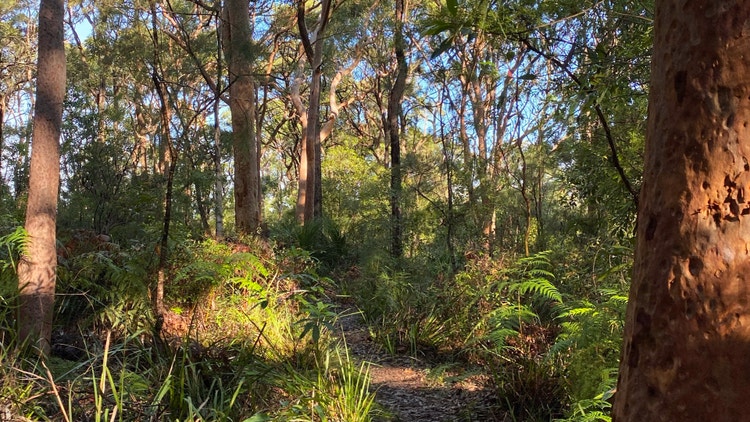
Field of Mars Reserve
Main location
Find risk assessment information, risk management advice, bus access details and walking track information for Field of Mars Reserve.

Buffalo Creek Reserve
Alternative location
Find risk assessment information, risk management advice, bus access details and walking track information for Buffalo Creek Reserve.
Extend student learning
Use these student-friendly fact sheets before or after the Life cycles excursion to explore plant and animal growth, insect metamorphosis, marsupial development and the habitats where different life stages may be found.
- Hairpin banksia fact sheet – Follow a native plant as it grows from a seed into a mature plant that produces flowers and new seeds.
- Phasmid fact sheet – Learn how stick insects and leaf insects hatch from eggs and grow through a series of nymph stages.
- Insects fact sheet – Compare insect life cycles that include egg, nymph, larva, pupa and adult stages.
- Brush turkey fact sheet – Discover how brush-turkey eggs develop inside nesting mounds and how independent chicks begin life.
- Swamp wallaby fact sheet – Explore how a marsupial joey develops in its mother’s pouch before becoming independent.
- Leaf litter habitat fact sheet – Investigate the habitat where invertebrates, eggs, young animals and decomposers may be found.
Learn with us

Book this excursion
Book this Stage 1 Science and Technology excursion using our online booking form.

Watch it grow learning resource
Use Watch it grow learning resources to introduce growth, change, plant life cycles and animal life cycles before or after the excursion.
Related Stage 1 excursions
Bushland adventure excursion
Build movement skills, teamwork and confidence through outdoor games, challenges and guided bushland exploration.
Water environments excursion
Investigate creeks, ponds, rivers and mangroves, observe living things and explore how people use and care for waterways.