Red-bellied black snake fact sheet – djirrabidi | Field of Mars EEC
What are red-bellied black snakes?
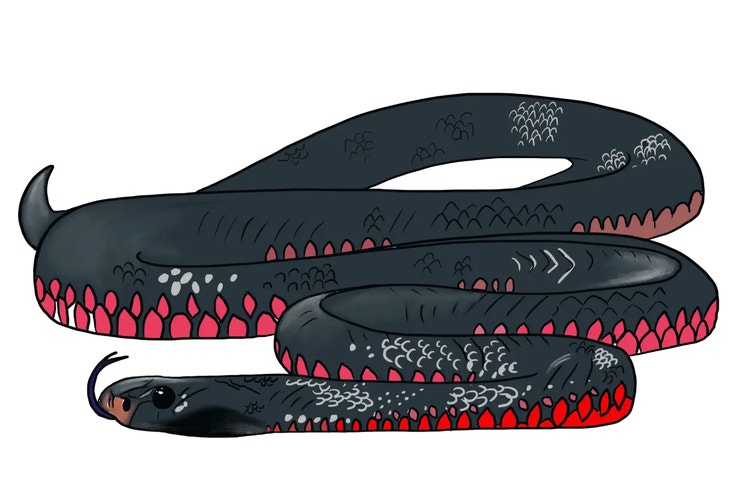
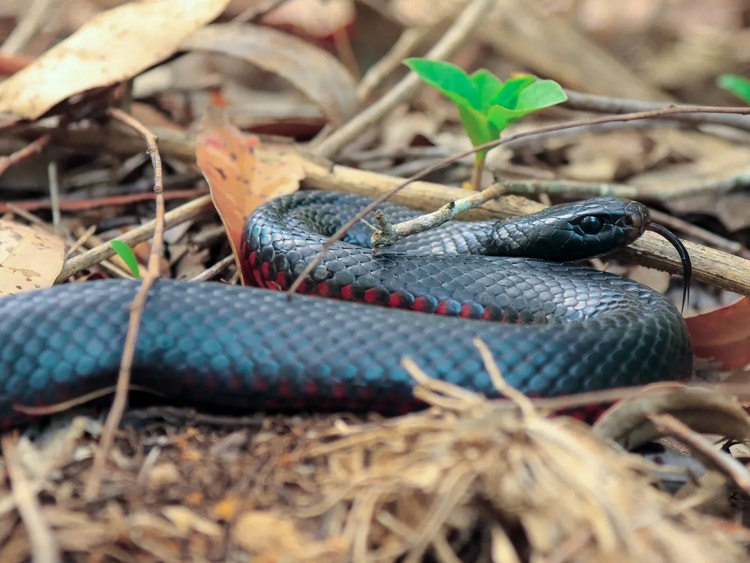
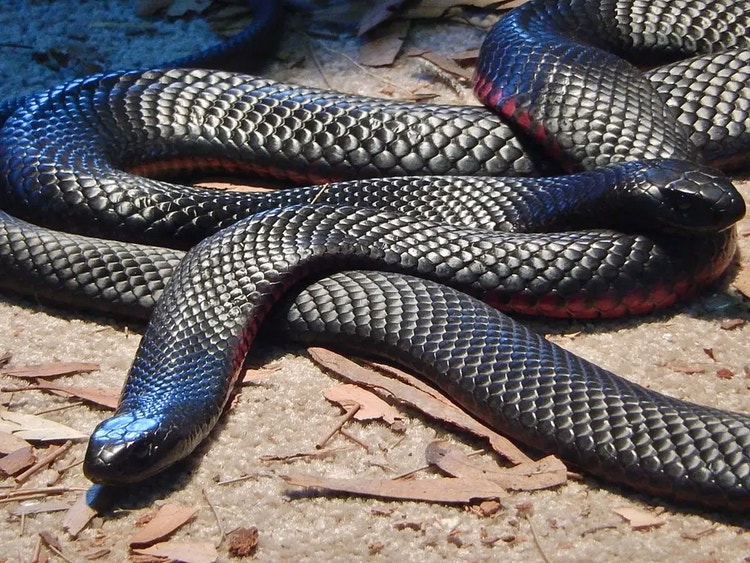
Red-bellied black snakes are large venomous snakes found across eastern Australia. Their scientific name is Pseudechis porphyriacus. The traditional Darug name for red-bellied black snakes is djirrabidi. These snakes are well known for their glossy black scales, pale snout and bright red or pink belly.
Red-bellied black snakes live in a wide range of habitats, especially near creeks, wetlands, swamps and damp bushland. They are commonly seen in Sydney bush reserves, including areas connected to Lane Cove National Park and the Field of Mars Reserve, where permanent water and shelter provide good hunting habitat.
Although they are venomous, red-bellied black snakes are usually shy and avoid people when given space. Students and bushwalkers may notice them basking in sunlight beside tracks, swimming through water or sheltering beneath logs and rocks. These snakes play an important role in controlling frogs, reptiles and small animals in Australian ecosystems.
Fast facts – Red-bellied black snake
Scientific name – Pseudechis porphyriacus
Scientific group – Red-bellied black snakes are reptiles in the elapid snake family.
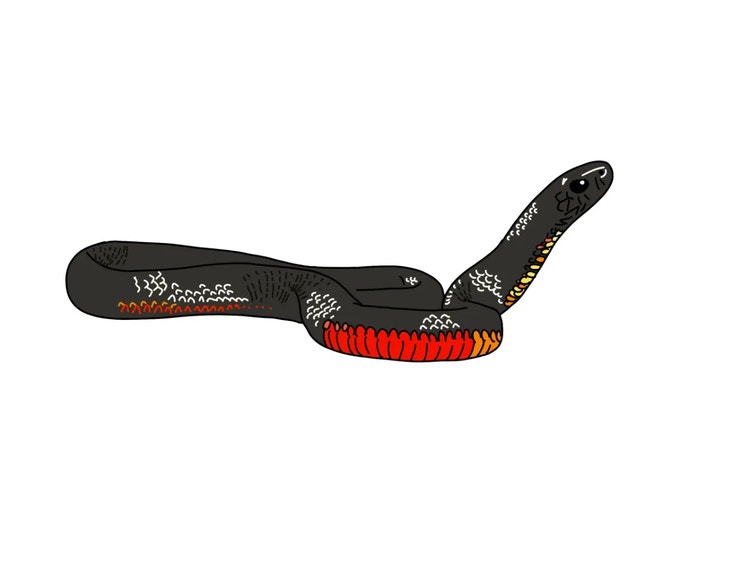
Appearance – They have glossy black scales, a pale snout and a bright red or pink belly.
Size – Adults are usually 1.2–2 metres long.
Diet – They eat frogs, lizards, snakes, fish and small mammals.
Habitat – They live near wetlands, creeks, swamps, forests and damp bushland across eastern Australia.
Life cycle – Females give birth to live young in summer, usually producing 5–18 baby snakes that are independent from birth. Wild snakes may live for more than 10 years.
Special behaviour – Red-bellied black snakes flatten their bodies and raise their heads when threatened, but usually prefer to escape rather than bite.
Where do red-bellied black snakes live?
Red-bellied black snakes are found along the east coast of Australia from southern Queensland through New South Wales and into eastern Victoria. They are especially common near wetlands, creeks, lagoons and swampy bushland where water and shelter are available throughout the year.
In Sydney, these snakes are often found in national parks, reserves and bushland corridors with healthy frog populations. They may shelter beneath fallen logs, thick grass, rocks or dense vegetation during hot weather. Students exploring bush tracks near wetlands in the Field of Mars Reserve or Lane Cove National Park may occasionally spot one basking in sunlight during cooler parts of the day.
What do red-bellied black snakes eat?
Red-bellied black snakes are carnivores that hunt a wide range of animals. Frogs are one of their favourite foods, especially around wetlands and waterways, but they also eat fish, tadpoles, lizards, small mammals and other snakes. Young snakes usually eat smaller prey than adults.
These snakes use venom to help subdue prey before swallowing it whole. They are active hunters and often search through wet vegetation, shallow water and leaf litter while flicking their tongues to detect chemical scents in the environment. Their feeding habits help control populations of frogs, rodents and reptiles in local ecosystems.
What is the life cycle of red-bellied black snakes?
Red-bellied black snakes breed during spring and early summer. Males may compete for females by raising the front parts of their bodies and wrestling each other without biting. After mating, females carry developing young inside their bodies rather than laying eggs.
Female red-bellied black snakes usually give birth to live young during summer or early autumn. Baby snakes are fully formed and able to hunt small prey soon after birth. Young snakes grow slowly and shed their skin regularly as they increase in size. In the wild, these snakes may live for more than a decade if they avoid predators, habitat loss and road traffic.

What adaptations do red-bellied black snakes have to help them survive?
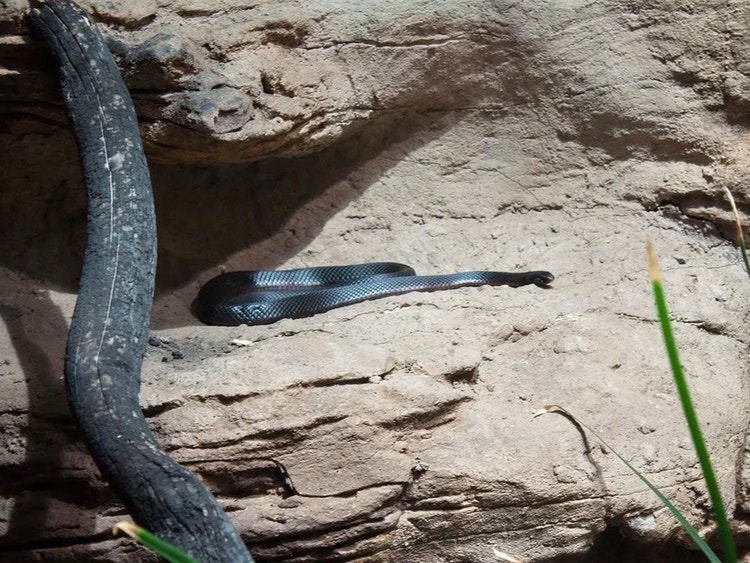
Red-bellied black snakes have several adaptations that help them survive in Australian environments. Their dark scales absorb heat from sunlight, helping them warm their bodies during cool mornings. Their forked tongue collects scent particles from the air, allowing them to track prey and detect danger.
These snakes are also strong swimmers and are well adapted to life around water. When threatened, they flatten their bodies and raise their heads to appear larger, but they usually prefer to escape into vegetation or water instead of fighting. Their venom helps them capture prey and defend themselves from predators.
Why are red-bellied black snakes important?
Red-bellied black snakes are important predators in Australian ecosystems. They help control populations of frogs, rodents and other reptiles, which helps maintain balanced food webs in wetland and bushland habitats.
These snakes are also part of the diet of larger predators such as birds of prey. Healthy snake populations are often a sign of healthy bushland and wetland ecosystems because snakes rely on clean water, shelter and stable food sources. In Sydney bushland, protecting waterways and native vegetation helps support reptiles such as the red-bellied black snake.

How can you help red-bellied black snakes?
People can help red-bellied black snakes by protecting wetlands, creeks and bushland habitats. Leaving fallen logs, rocks and native vegetation in place provides shelter for snakes and the animals they hunt. Reducing pollution in waterways also helps protect frog populations, which are an important food source.
If you see a snake in the wild, the safest action is to stay calm, keep a safe distance and allow the snake to move away on its own. Never try to catch, touch or harm a snake. Drivers can also help protect wildlife by slowing down near bushland roads where reptiles may cross, especially during warmer months.

Related fact sheets
More reptile fact sheets
- Reptiles fact sheet – Learn about Australian reptile groups and adaptations.
- Eastern water dragon fact sheet – Discover another reptile that lives near waterways.
- Eastern snake-necked turtle fact sheet – Explore a freshwater reptile found in wetlands and ponds.
- Eastern water skink fact sheet – Learn about another reptile found near creeks, gardens and wetland edges.
- Eastern blue-tongue lizard fact sheet – Learn about a reptile commonly seen in gardens and bushland.
Habitats and ecosystems
- Field of Mars Reserve fact sheet – Learn about this important Sydney bushland environment.
Animals that share this habitat
- Common eastern froglet fact sheet – Explore a frog species often hunted by red-bellied black snakes.
- Striped marsh frog fact sheet – Learn about another wetland animal found in Sydney bushland.
- Grey-headed flying-fox fact sheet – Find out about another native animal that depends on healthy habitats.
Attributions
References
Australian Museum. Red-bellied Black Snake. [online] Available at: https://australian.museum/learn/animals/reptiles/red-bellied-black-snake/
Australian Reptile Park. Red-bellied Black Snake. [online] Available at: https://www.reptilepark.com.au/about/meet-our-animals/red-bellied-black-snake
Northern Beaches Council. Red Bellied Black Snake. [online] Available at: https://www.northernbeaches.nsw.gov.au/environment/species/red-bellied-black-snake
Sydney Olympic Park. Have You Seen a Red-bellied Black Snake? [online] Available at: https://www.sydneyolympicpark.nsw.gov.au/news/red-bellied-black-snakes
Dharug and Dharawal Resources. Dharug and Dharawal dictionary. [online] Available at: https://dharug.dalang.com.au/language/dictionary?dialect=All&numeric=R&query=None&type=English
Atlas of Living Australia. Pseudechis porphyriacus occurrence records. [online] Available at: https://bie.ala.org.au/species/https://biodiversity.org.au/afd/taxa/Pseudechis_porphyriacus
Australian Geographic. Red-bellied black snake. [online] Available at: https://www.australiangeographic.com.au/fact-file/red-bellied-black-snake/
Dharawal Stories. Bah’naga and Mun’dah. [online] Available at: https://dharawalstories.com/wp-content/uploads/2018/06/bahnag-and-mundah-2-3mb.pdf
Image attributions
A red-bellied black snake. – Field of Mars EEC (original illustration).
Red-bellied black snakes have a shiny black body, red sides and a cream or pink belly. – Field of Mars EEC (original image).
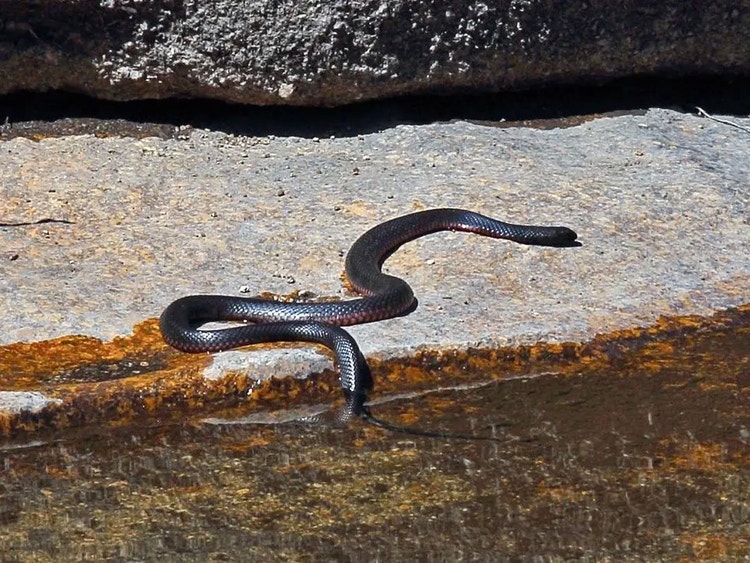
Wetlands and creeks provide important habitat for red-bellied black snakes. – “Red Belly Black Snake” by ChrisRyan_Oz. Creative Commons Attribution-NonCommercial-ShareAlike 2.0 Generic licence. Available at: https://www.flickr.com/photos/125619280@N07/15657811895
A red-bellied black snake eating a frog. – “Lunchtime” by lricho. Creative Commons Attribution-NonCommercial-NoDerivatives 2.0 Generic licence. Available at: https://www.flickr.com/photos/40662996@N00/11925849753
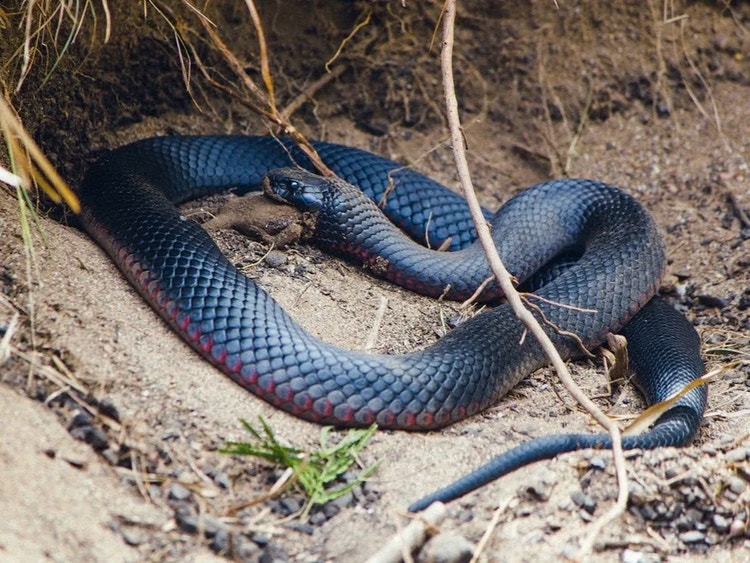
Red-bellied black snakes breed during spring and early summer. – “Red Bellied Black Snakes” by mikecogh. Creative Commons Attribution-ShareAlike 2.0 Generic licence. Available at: https://www.flickr.com/photos/89165847@N00/15244683459
Red-bellied black snakes give birth to live young instead of laying eggs. – Field of Mars EEC (original image).
A juvenile red-bellied black snake. – Field of Mars EEC (original illustration).
A red-bellied black snake warming itself on a sunny rock. – “Red Bellied Black Snake” by Dennis Schrijnders. Creative Commons Attribution-NonCommercial-ShareAlike 2.0 Generic licence. Available at: https://www.flickr.com/photos/11047658@N07/5732891821
Red-bellied black snakes are predators in healthy wetland and bushland environments. – Field of Mars EEC (original image).
Red-bellied black snakes should be observed from a safe distance. – “Red-Bellied Black Snake” by Wilderness Kev. Creative Commons Attribution-NonCommercial-NoDerivatives 2.0 Generic licence. Available at: https://www.flickr.com/photos/14594926@N04/9516110556
Learn with us

Book now
Book a curriculum-aligned excursion or incursion where students investigate reptiles, wet habitats, food webs, safety and ecosystem relationships.

Learning programs
Explore Field of Mars EEC programs that support learning about snakes, frogs, water habitats, predator-prey relationships, biodiversity and safe behaviour outdoors.

Learning resources
Use the red-bellied black snake fact sheet to support classroom learning about snake adaptations, wetland habitats, frog prey, live birth and reptile safety.

Flora and fauna fact sheets
Explore related fact sheets about reptiles, amphibians, water habitats, freshwater wetlands, rivers, creeks and Field of Mars Reserve.
Related programs
Ecosystems excursion
Investigate a forest ecosystem, collect biotic and abiotic data and explore food webs and ecological relationships.
Mystery HPGE enrichment program
Solve a wildlife mystery by collecting and analysing field evidence, interpreting ecological relationships and constructing evidence-based explanations.