
Wild words excursion | Stage 1 English
Program overview
Wild words is a Stage 1 English excursion designed to strengthen oral language and vocabulary for EAL/D and multilingual learners through authentic, hands-on experiences in bushland. Students become park rangers, learning and using new words to describe places, living things and habitats, explain their observations and communicate how people care for environments.
Vocabulary is introduced, practised and revisited using visuals, gestures, sentence frames, sorting activities, games, a Ranger dictionary and structured talk. Students explore bushland investigation points before designing a mini national park and delivering a short spoken ranger report.
Learning intentions
- We are learning to use new vocabulary to describe places, living things and habitat features.
- We are learning to use spoken sentences to explain what we observe and how people care for environments.
Jump to: Program and curriculum | Essential information | Plan and prepare | Location | Related excursions


Program and curriculum information
Program activities
Activities may change to suit student needs, timing, excursion locations and weather conditions.
Ranger HQ
Students are introduced to the day’s ranger words using picture cards, objects, gestures and call-and-response games. They practise saying, sorting and using the words in simple descriptive sentences before beginning their bushland investigations.
Wild words
Students explore Field of Mars Reserve as park rangers, stopping at investigation points to observe plants, animals, habitats and evidence of living things. They use new vocabulary to describe what they see and record key words in their Ranger dictionary.
Students learn that the Wallumedegal of the Darug Nation are the Traditional Custodians of this Country. They discuss how Aboriginal Peoples care for Country and how park rangers and visitors can help protect natural environments.
Our park
Working in small groups, students design a mini national park containing habitat features such as food, water and shelter, visitor features such as paths, bins and signs, and ranger rules that protect the environment.
Each group delivers a short spoken ranger report using vocabulary from their Ranger dictionary and simple cause-and-effect explanations.
Suggested timetable
Time |
|
| 9.45–10.30 | Introduction, recess and toilets |
| 10.30–11.00 | Ranger HQ |
| 11.00–12.00 | Wild words |
| 12.00–12.30 | Lunch and toilets |
| 12.30–1.30 | Wild words |
| 1.30–2.00 | Our park |
| 2.00–2.15 | Pack up, toilets and depart |
Syllabus outcomes and content
Students will learn to
- understand and use taught Tier 2 and Tier 3 vocabulary
- select subject-specific vocabulary to describe places, habitats and living things
- use vocabulary to express cause and effect
- initiate, listen and respond during partner and group conversations
- organise ideas in a logical sequence
- deliver a short spoken report using taught vocabulary
The excursion directly supports the English K–10 Syllabus (2022) through explicit vocabulary instruction, structured interaction and a spoken presentation.
English K–10 Syllabus (2022)
Oral language and communication
Outcome
- EN1-OLC-01 – Communicates effectively by using interpersonal conventions and language to extend and elaborate ideas for social and learning interactions
Social and learning interactions
Students:
- Initiate, listen and/or respond in partner and group conversations
Understanding and using grammar when interacting: Oral language
Students:
- Organise key ideas in logical sequence
Vocabulary
Outcome
- EN1-VOCAB-01 – Understands and effectively uses Tier 1, taught Tier 2 and Tier 3 vocabulary to extend and elaborate ideas
Learning and using words
Students:
- Use vocabulary to express cause and effect
- Understand and intentionally choose subject-specific vocabulary to enhance precision and for effect
English K-10 Syllabus © NSW Education Standards Authority (NESA) for and on behalf of the Crown in right of the State of New South Wales, 2022
Tier 2 and 3 vocabulary
Essential information
Cost, class numbers and booking
Cost
DoE $27 per student – GST free
Non-government school $37 per student – GST free, minimum charge $750 per class
Term 1 non-government weeks 3 to 5 – DoE cost, GST free, minimum charge $750
Classes
Recommended maximum 6 classes at Field of Mars Reserve, with up to 30 students per class.
More than 6 classes will require multiple locations. Please contact us to discuss suitable options.
Program costs
Program costs may change. If program costs change after you book, you will be charged at the original cost.
Booking policy
Confirm final student numbers and classes 7 working school days before the program.
Risk assessment and accessibility
Field of Mars Reserve risk assessment and location information – main location
Buffalo Creek Reserve risk assessment and location information – alternative location
Some areas at Field of Mars Reserve are wheelchair accessible. Buffalo Creek Reserve is not wheelchair accessible.
The program includes bushwalking on uneven natural tracks.
Students who are unwell should not attend.
Classroom teachers are expected to attend and actively supervise students throughout the excursion.
Notify Field of Mars EEC before the visit about medical, mobility, sensory, communication or other support needs so reasonable adjustments can be considered.
What students should bring
Weather, cancellations and rescheduling
The program may be modified, postponed or cancelled because of predicted extreme temperatures, bush fire danger, heavy rainfall, high winds or dust storms.
Cancellation or rescheduling with less than 30 school days’ notice before the booking date – $650
Cancellation with less than 14 school days’ notice before the booking date – full program cost
Cancellation due to unsafe weather or fire danger – $0
Plan and prepare for your visit

Excursion location social story
Help Stage 1 students understand where they will go, what they may experience and how to participate safely during their visit.

Preparing for your excursion
Find information about what students should wear and bring, transport, arrival procedures, safety and preparing classes for outdoor learning.
Location options
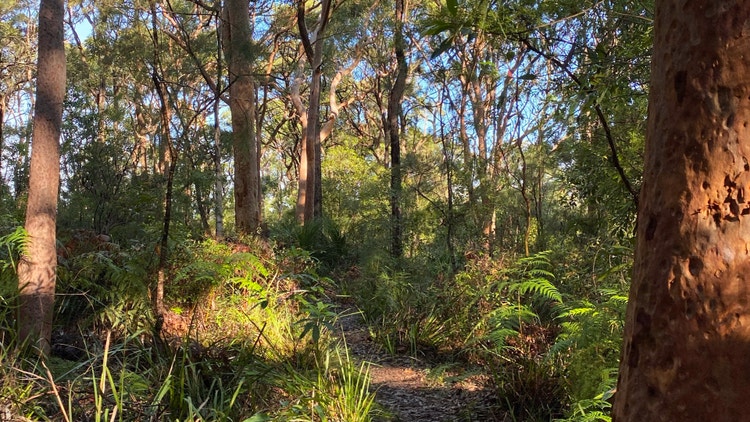
Field of Mars Reserve
Main location
Find risk assessment information, risk management advice, bus access details and walking track information for Field of Mars Reserve.

Buffalo Creek Reserve
Alternative location
Find risk assessment information, risk management advice, bus access details and walking track information for Buffalo Creek Reserve.
Extend student learning
Use these student-friendly fact sheets before or after the Wild words excursion to build nature vocabulary, introduce habitats and support classroom discussion about caring for places.
- Field of Mars Reserve environment fact sheet – Explore the bushland environment where students work as park rangers and learn nature words.
- Habitat fact sheet – Learn how food, water, shelter and space help living things survive.
- Leaf litter habitat fact sheet – Discover fallen leaves, bark and twigs where small animals shelter, feed and hide.
- Tree habitat fact sheet – Learn how trees provide flowers, leaves, bark, hollows and shelter for wildlife.
- Invertebrate fact sheets – Explore insects, spiders, worms, molluscs and other small animals found in bushland habitats.
- Eucalypt forest ecosystems fact sheet – Learn about forests containing trees, shrubs, leaf litter, animals and connected food webs.
Learn with us

Book this excursion
Book this Stage 1 English excursion using our online booking form.

Ranger for a day learning resource
Use the Ranger for a day lessons to introduce animal habitats, habitat health and ways people can care for local environments before or after the excursion.
Related Stage 1 excursions
Aboriginal connections to Country excursion
Explore Aboriginal Peoples’ continuing connections to Country, natural materials, significant places and caring for land and waterways.
Life cycles excursion
Investigate how plants and animals grow and change through bushland observations and hands-on invertebrate investigations.