Short-beaked echidna fact sheet - barrugin | Field of Mars EEC
What are short-beaked echidnas?
Short-beaked echidnas are unusual Australian mammals covered in sharp spines and coarse fur. They are one of only a few living monotremes, which means they are mammals that lay eggs instead of giving birth to live young. Their scientific name is Tachyglossus aculeatus – meaning “quick tongue” and “spiny”. They are called barrugin by the Darug Peoples of the Sydney basin.
These shy animals have a long snout and sticky tongue that help them search for ants, termites and other small invertebrates. Strong claws allow them to dig quickly into soil, leaf litter and rotting logs. When threatened, short-beaked echidnas curl into a ball or dig down into the ground, leaving only their sharp spines exposed.
Short-beaked echidnas live across most of Australia, including bushland, forests, heathlands and suburban reserves around Sydney. Students exploring places such as Field of Mars Reserve or Lane Cove National Park may notice digging marks, small cone-shaped holes or even an echidna slowly moving through leaf litter while searching for food.

A short-beaked echidna.
Fast facts – Short-beaked echidna
Scientific name – Tachyglossus aculeatus
Scientific group – A monotreme mammal that lays eggs.
Appearance – Covered in sharp cream and brown spines with coarse fur and a long snout.
Size – Adults usually grow between 30 and 45 centimetres long.
Diet – Mainly ants, termites and other small invertebrates.
Habitat – Bushland, forests, grasslands, heathlands and urban reserves across Australia.
Life cycle – Females lay a single soft-shelled egg into a pouch. The young puggle hatches after about 10 days and may stay with its mother for several months. Echidnas can live for more than 40 years.
Special behaviour – Echidnas can dig rapidly into soil and curl into a spiny ball for protection.
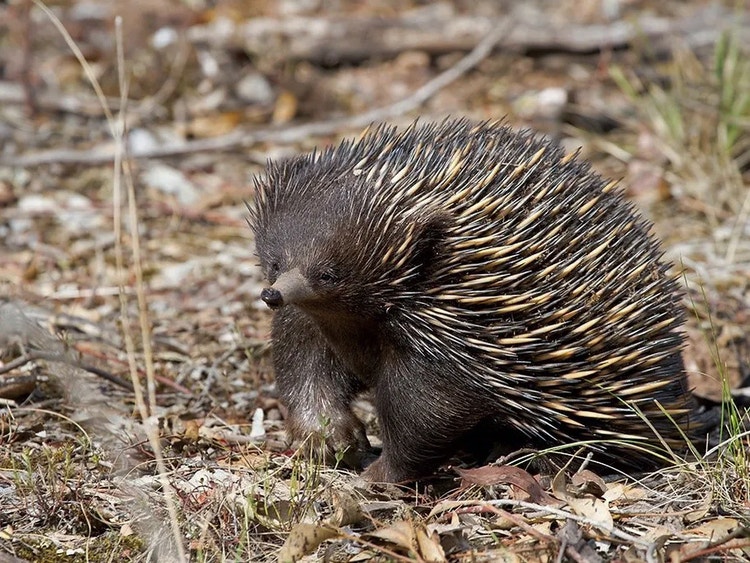
Where do short-beaked echidnas live?
Short-beaked echidnas live throughout most of Australia and are found in many different habitats. They can survive in forests, woodlands, heathlands, grasslands, deserts and mountain environments. Echidnas shelter in hollow logs, dense vegetation, burrows, rock crevices and leaf litter where they can stay cool and protected.
In Sydney, echidnas are sometimes seen in larger areas of connected bushland such as Lane Cove National Park and Field of Mars Reserve. They are most active during cooler parts of the day and may be difficult to spot because of their slow movements and camouflage. Students are more likely to notice scratch marks, disturbed soil or small digging holes left behind after feeding.
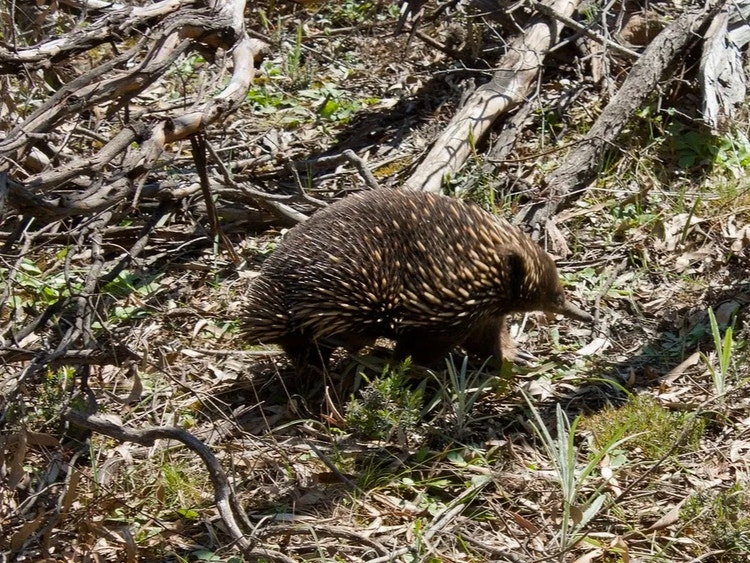
What do short-beaked echidnas eat?
Short-beaked echidnas mainly eat ants, termites and other small invertebrates. Their long sticky tongue can move quickly in and out of their snout to capture prey. Echidnas do not have teeth, so they crush food using hard pads inside their mouths.
These mammals play an important role in ecosystems by helping control insect populations and turning over soil while digging. Their feeding behaviour also helps aerate the soil and mix nutrients through the forest floor.

What is the life cycle of short-beaked echidnas?
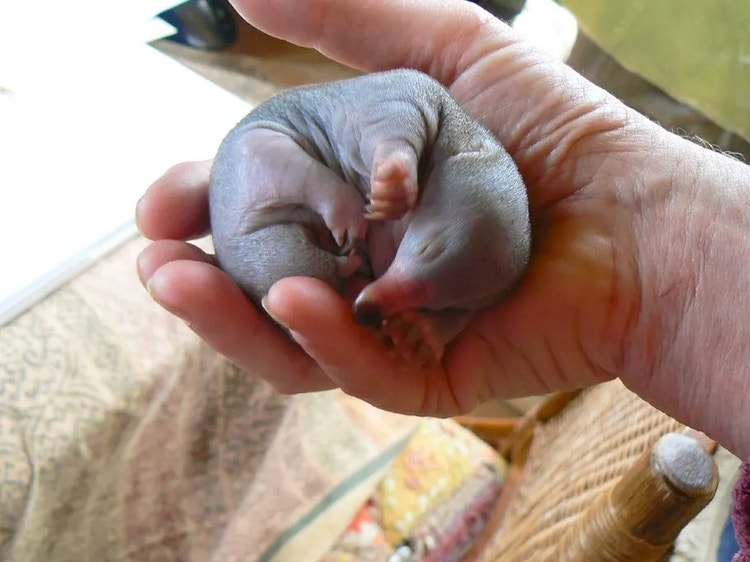
Short-beaked echidnas usually breed during winter. After mating, the female develops a temporary pouch where she lays a single leathery egg. About 10 days later, the egg hatches into a tiny young echidna called a puggle.
The puggle drinks milk from special patches on the mother’s skin rather than from teats. As the young echidna grows and develops spines, the mother leaves it safely in a nursery burrow while she searches for food. Young echidnas become independent after several months, but they grow slowly and may take years to fully mature.
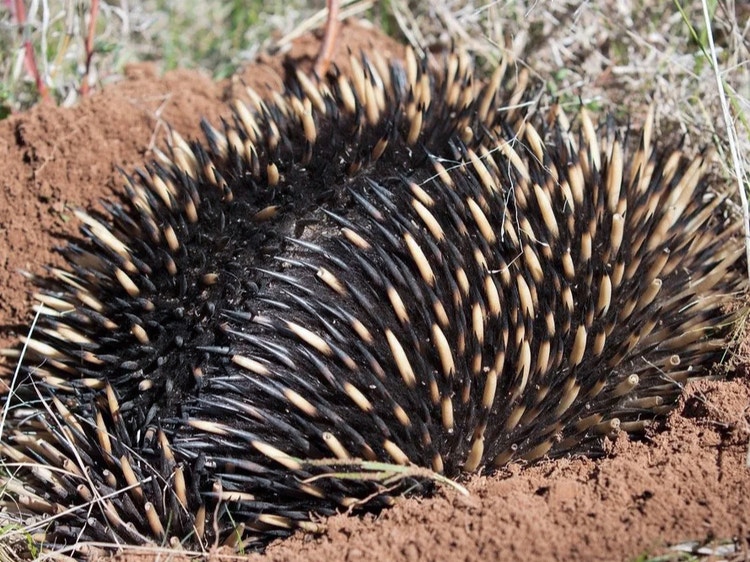
What adaptations do short-beaked echidnas have to help them survive?
Short-beaked echidnas have many adaptations that help them survive in different Australian environments. Their sharp spines protect them from predators such as dingoes and foxes. Powerful claws allow them to dig for food and quickly bury themselves in soil when threatened. Their long snout contains sensitive receptors that help detect prey underground.
Echidnas are also well adapted to changing temperatures. They can reduce activity during very hot or cold weather to conserve energy. Their coarse fur provides insulation, while behavioural adaptations such as sheltering under logs or inside burrows help them avoid extreme conditions.

Why are short-beaked echidnas important?
Short-beaked echidnas are important members of Australian ecosystems. By digging and turning over soil, they help improve soil health and nutrient cycling. Their feeding behaviour also helps control populations of ants, termites and other invertebrates.
Echidnas are significant animals in Australian culture and are recognised by many Aboriginal peoples across Australia. In the Sydney region, local Aboriginal knowledge connects native animals with seasonal changes, habitats and caring for Country. Echidnas also help people learn about biodiversity and the importance of protecting bushland habitats.
Echidna | Field of Mars EEC (0:48 min)
How can you help short-beaked echidnas?
People can help short-beaked echidnas by protecting bushland habitats and leaving logs, leaf litter and native vegetation in place. Dogs should be kept under control in bushland areas so wildlife is not disturbed. Slow driving near reserves and national parks also helps reduce wildlife injuries.
Planting native vegetation and caring for local bushland creates safer habitats for echidnas and the insects they feed on. Students can also help by learning about native wildlife and sharing ways to protect Australian ecosystems.

Related fact sheets
More mammal fact sheets
- Mammals fact sheet – Learn about Australia’s different mammal groups.
- Common brushtail possum fact sheet – Learn about another native mammal found in Sydney bushland.
- Common ringtail possum fact sheet – Discover another native mammal that shelters in bushland vegetation.
- Grey-headed flying-fox fact sheet – Explore another important native Australian mammal.
Habitats and ecosystems
- Field of Mars Reserve fact sheet – Learn more about this local bushland environment.
- Eucalypt forest fact sheet – Discover a forest habitat that supports native mammals.
Animals that share this habitat
- Eastern water dragon fact sheet – Find out about another animal that lives in Sydney bushland.
- Powerful owl fact sheet – Explore a forest predator that depends on healthy habitats.
- Common eastern froglet fact sheet – Discover another native animal found near bushland and waterways.
Food webs and ecological relationships
- Ants fact sheet – Explore one of the main food sources of echidnas.
- Termites fact sheet – Learn about social insects that echidnas dig for and eat.
- Insects fact sheet – Investigate how insects connect to Australian food webs.
Attributions
References
Australian Museum. Short-beaked echidna. [online] Available at: https://australian.museum/learn/animals/mammals/short-beaked-echidna/
Australian Wildlife Conservancy. Short-beaked echidna. [online] Available at: https://www.australianwildlife.org/wildlife/short-beaked-echidna/
Department of Climate Change, Energy, the Environment and Water. Short-beaked echidna. [online] Available at: https://www.dcceew.gov.au/environment/biodiversity/threatened/species/short-beaked-echidna
San Diego Zoo Wildlife Alliance. Short-beaked echidna. [online] Available at: https://animals.sandiegozoo.org/animals/echidna
NSW National Parks and Wildlife Service. Lane Cove National Park. [online] Available at: https://www.nationalparks.nsw.gov.au/visit-a-park/parks/lane-cove-national-park
Image attributions
A short-beaked echidna. – Field of Mars EEC (original illustration).
A short-beaked echidna showing its sharp spines, stocky body, short legs and long snout. – ‘Short-beaked Echidna (Tachyglossus aculeatus)’ by patrickkavanagh. Creative Commons Attribution 2.0 Generic licence. Available at: https://www.flickr.com/photos/63175631@N02/16299277295
Short-beaked echidnas shelter in bushland habitats with logs, rocks and leaf litter. – ‘Tachyglossus aculeatus (Short-beaked Echidna), Moora Track, Grampians National Park, Victoria Australia’ by Rexness. Creative Commons Attribution-ShareAlike 2.0 Generic licence. Available at: https://www.flickr.com/photos/25287507@N02/5044244556
Short-beaked echidnas pull apart termite mounds searching for their prey. – ‘Tachyglossus aculeatus (Short-beaked Echidna), Moora Track, Grampians National Park, Victoria Australia’ by Rexness. Creative Commons Attribution-ShareAlike 2.0 Generic licence. Available at: https://www.flickr.com/photos/25287507@N02/5044244556
A baby echidna is called a puggle. – ‘puggle3’ by Karen. Creative Commons Attribution-ShareAlike 2.0 Generic licence. Available at: https://www.flickr.com/photos/37233270@N00/1911396101
Short-beaked echidnas have strong sharp spines made of keratin. – ‘Tachyglossus aculeatus aculeatus (Short-beaked Echidna or Spiny Anteater)’ by Arthur Chapman. Creative Commons Attribution-NonCommercial-ShareAlike 2.0 Generic licence. Available at: https://www.flickr.com/photos/32005048@N06/3693525272
Short-beaked echidnas help keep bushland ecosystems healthy. – ‘Short-beaked Echidna, Tachyglossus aculeatus’ by Steve Bittinger. Creative Commons Attribution 2.0 Generic licence. Available at: https://www.flickr.com/photos/82727312@N00/6135537306
Healthy bushland helps short-beaked echidnas survive. – ‘Short-beaked echidna (Tachyglossus aculeatus setosus) near Scottsdale, Tasmania, Australia’ by JJ Harrison. Creative Commons Attribution-ShareAlike 4.0 International licence. Available at: https://commons.wikimedia.org/wiki/File:Short-beaked_echidna_(Tachyglossus_aculeatus_setosus)_Scottsdale.jpg
_Scottsdale.jpg)
Echidna video transcript
Echidnas are becoming a common occurrence around this area. We love it when we spot one moseying around, foraging for ants in amongst the dead wood on the forest floor, but did you know just how beneficial these cute little creatures are to the forest?
Echidnas act as little engineers of the soil, digging furrows, pits and depressions in the forest floor while they search for ants. This improves the soil health, with their digging trapping leaves and seeds in the soil, boosting plants growth, and maintaining carbon in the soil (rather than it escaping into the atmosphere and adding to global warming).
How amazing is it to think these gorgeous, spiky little monotremes could have such a profound positive impact on climate change!
Learn with us

Book now
Book a curriculum-aligned excursion or incursion where students investigate mammals, adaptations, invertebrate prey, shelter and food webs.

Learning programs
Explore Field of Mars EEC programs that support learning about echidnas, animal features, feeding adaptations, habitats and ecosystem connections.

Learning resources
Use the short-beaked echidna fact sheet to support classroom learning about monotremes, spines, claws, sticky tongues, ants, termites and egg-laying mammals.

Flora and fauna fact sheets
Explore related fact sheets about mammals, insects, ants, termites, leaf litter habitats, rock and log habitats and eucalypt forests.
Related programs
Ecosystem explorers excursion
Investigate bushland habitats, animal evidence, food chains and interactions between living things and the non-living environment.
Field guide HPGE enrichment program
Become a field naturalist, closely observe living and non-living things and create a digital field guide combining science and creative representation.