Grey-headed flying fox fact sheet – ngununy | Field of Mars EEC
What are grey-headed flying foxes?
Grey-headed flying-foxes are large native bats that live in forests, wetlands, mangroves, rainforests and urban bushland across eastern Australia. Their scientific name is Pteropus poliocephalus. Unlike smaller insect-eating microbats, flying-foxes mainly eat nectar, pollen and fruit. They are important pollinators and seed dispersers for many Australian plants.
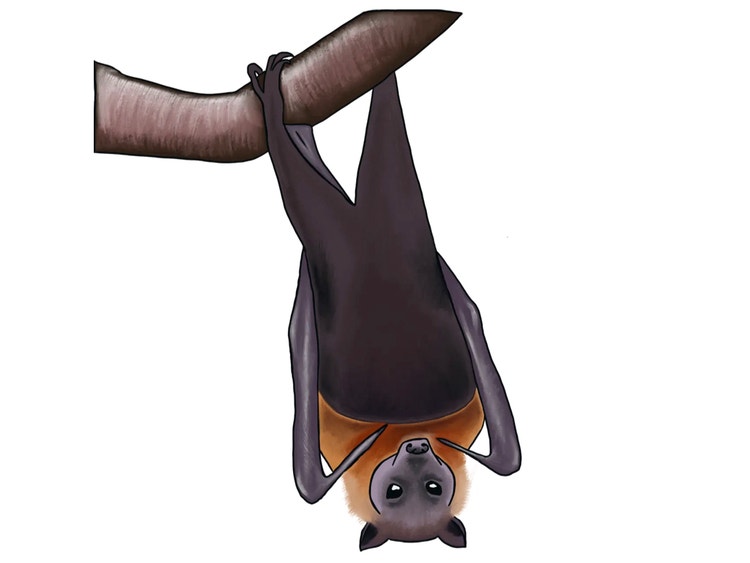
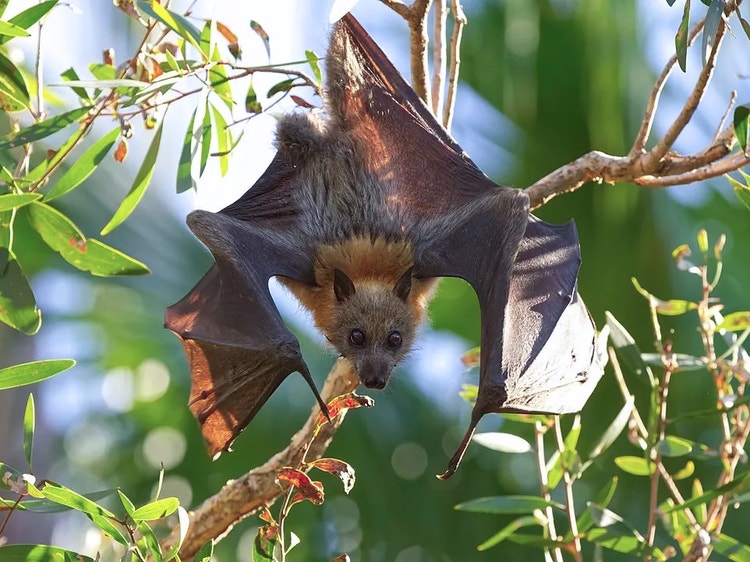
Grey-headed flying-foxes have dark grey fur, a fox-like face, large eyes and long wings built for gliding flight. Adults have a rusty-brown collar around their neck and a furry body that helps them stay warm during cool weather. Their wings are made from thin skin stretched across long finger bones, allowing them to fly long distances while searching for food.
Students may notice grey-headed flying-foxes flying overhead at dusk, feeding in flowering trees or hanging upside down in noisy daytime camps called roosts. Flying-foxes are commonly seen around Sydney, including in bushland near Field of Mars Reserve and along waterways connected to Lane Cove National Park. Their loud calls, strong smell and large colonies can make them easy to spot. The Darug name for flying foxes is ngununy. Darug Peoples also refer to bats as wirambi.
Fast facts – Grey-headed flying fox
Scientific name – Pteropus poliocephalus
Scientific group – Grey-headed flying-foxes are large fruit bats in the megabat group.
Appearance – They have grey fur, a rusty-brown collar and large dark eyes.
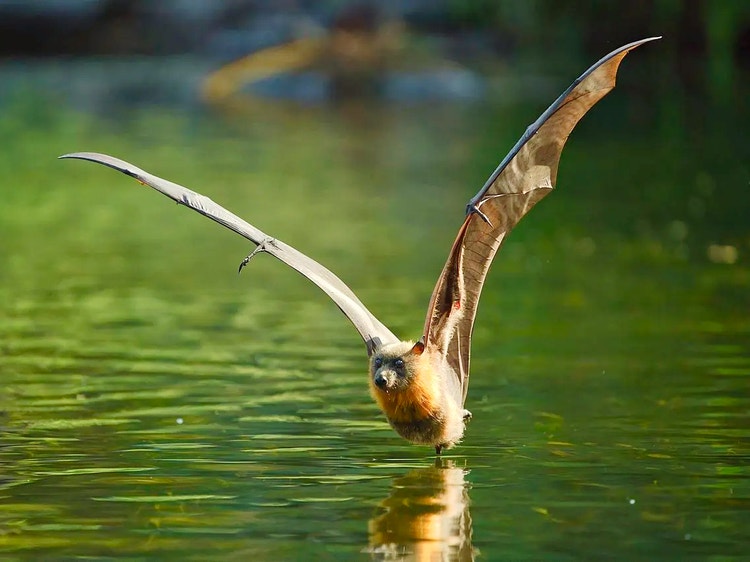
Size – Adults can have a wingspan of more than 1 metre.
Diet – They feed on nectar, pollen, flowers and fruit.
Habitat – They live in forests, mangroves, wetlands and urban bushland along eastern Australia.
Life cycle – Females usually give birth to one pup each year in spring. Young flying-foxes cling to their mother before forming nursery groups. Wild flying-foxes may live for more than 15 years.
Special behaviour – Grey-headed flying-foxes can travel long distances at night to find flowering trees.
Where do grey-headed flying foxes live?
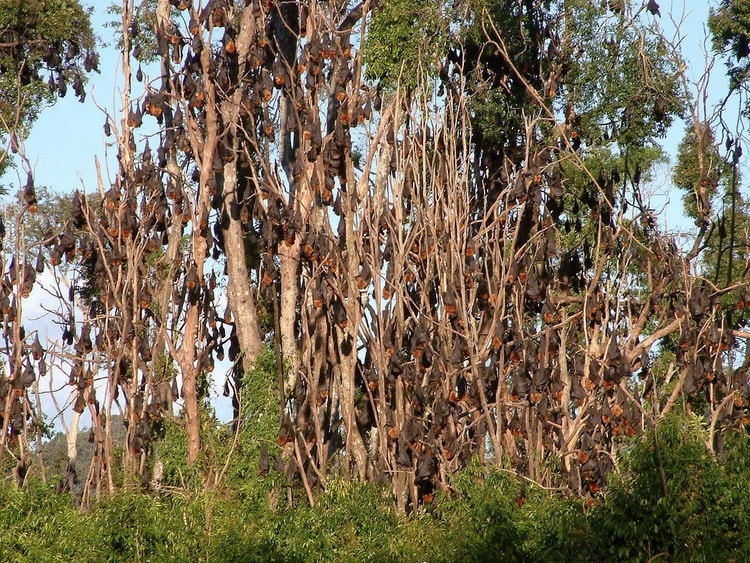
Grey-headed flying-foxes live along the eastern coast of Australia from Queensland to Victoria. They roost in large groups called camps, usually near water and close to reliable food sources. Camps are often found in tall trees within forests, mangroves, wetlands and urban bushland. Camps are noisy places where thousands of animals may rest together while grooming, sleeping or caring for young.
In Sydney, grey-headed flying-foxes are commonly seen travelling between bushland areas, parks and flowering street trees. They may feed on native eucalypts, paperbarks, figs and banksias when these plants are flowering. Flying-foxes sometimes travel many kilometres in one night to find food.
What do grey-headed flying foxes eat?
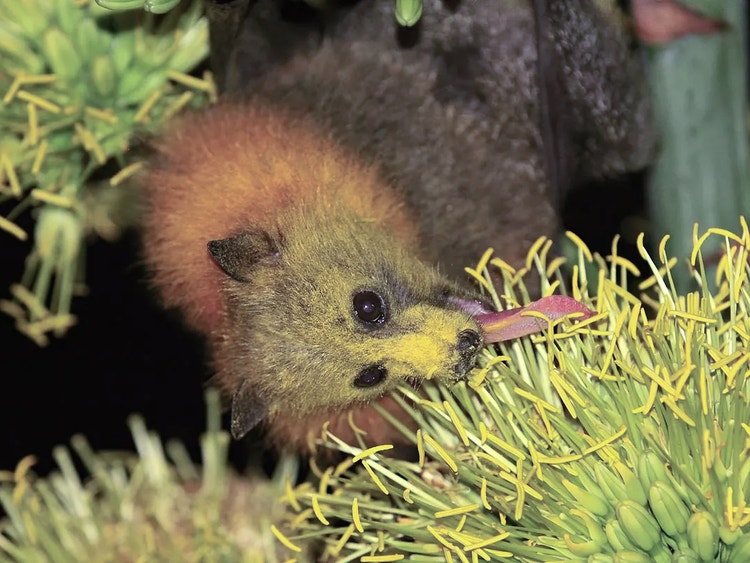
Grey-headed flying-foxes mainly feed on nectar, pollen, flowers and soft fruit. They play an important role in pollinating native plants as pollen sticks to their fur while they feed. When they travel between trees, they spread pollen and seeds across large areas of bushland.
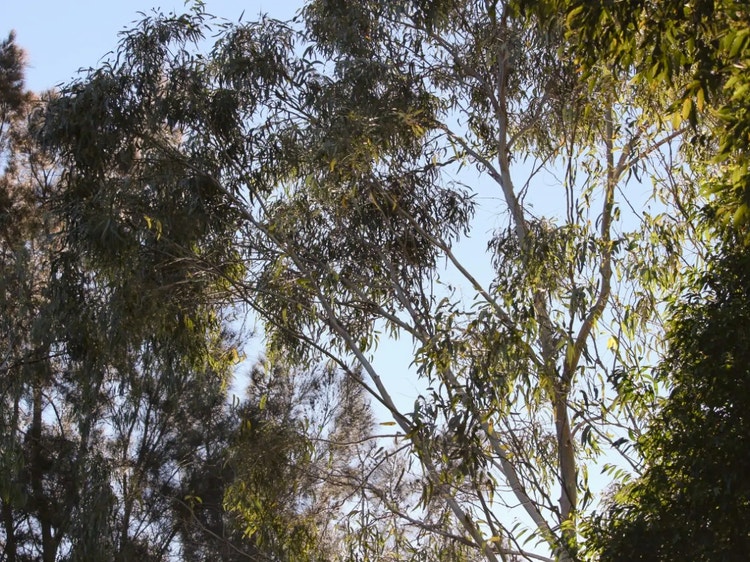
Flying-foxes are especially important for pollinating eucalyptus forests. Some flowering trees open at night and produce large amounts of nectar that attract flying-foxes from long distances. Their strong sense of smell and good eyesight help them find flowering trees in the dark.
Although they sometimes feed on cultivated fruit, most of their diet comes from native forests. Flying-foxes are also prey for large birds of prey, snakes and other predators.
What do grey-headed flying foxes sound like?
Grey-headed flying-foxes are noisy animals, especially when resting in large camps. They make high-pitched screeches, squawks and chattering sounds to communicate with each other. These sounds help them defend space, find family members and warn other flying-foxes about disturbances.
At dusk, camps become especially loud as flying-foxes wake up and prepare to leave for nighttime feeding. Students near bushland camps may hear thousands of calls coming from the trees before the animals fly out across the landscape.
What is the life cycle of grey-headed flying-foxes?
Grey-headed flying-foxes usually breed in autumn, with females giving birth to a single pup in spring or early summer. Young flying-foxes are born without fur and depend completely on their mother. For the first few weeks, the pup clings to its mother while she flies and feeds at night.
As the young flying-fox grows, it is left behind in a nursery group while adults search for food. Juveniles slowly learn to climb, glide and eventually fly. Young animals continue developing their flying and feeding skills over many months.
Flying-foxes can live for more than 15 years in the wild if they avoid predators, disease and extreme heat events. Large heatwaves can be dangerous for flying-fox colonies because the animals can quickly become dehydrated.
What adaptations do grey-headed flying-foxes have to help them survive?
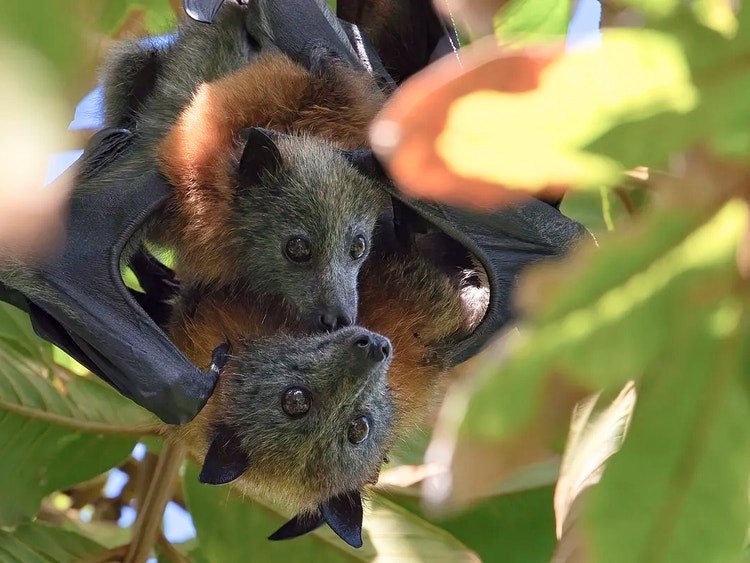
Grey-headed flying-foxes have large wings that allow efficient long-distance flight. Their lightweight bodies and flexible wing membranes help them glide between trees while using little energy. Strong claws allow them to grip branches securely while hanging upside down.
Unlike many smaller bats, flying-foxes rely mainly on eyesight and smell rather than echolocation. Their large eyes help them see in low light, while their strong sense of smell helps them locate flowering trees from far away.
Their social behaviour also helps them survive. Living in large camps provides protection and allows flying-foxes to share information about food sources. During hot weather, flying-foxes fan themselves with their wings and lick their fur to cool down.
Why are grey-headed flying-foxes important?
Grey-headed flying-foxes are vital for healthy Australian forests. As they feed, they pollinate flowers and spread seeds across large distances. Many native trees rely on flying-foxes to reproduce and maintain healthy ecosystems.
By helping forests regenerate, flying-foxes support many other animals that depend on trees for food and shelter. Healthy forests also improve air quality, store carbon and protect waterways.
Grey-headed flying-foxes are protected native animals, but their populations face threats from habitat loss, extreme heat, entanglement in fruit tree netting and loss of flowering forests.

How can you help grey-headed flying-foxes?
People can help grey-headed flying-foxes by protecting native forests and planting local flowering trees that provide nectar and pollen. Wildlife-safe netting placed tightly over fruit trees can reduce the risk of flying-foxes becoming tangled.
Students can also help by respecting flying-fox camps and observing animals from a distance without disturbing them. Healthy bushland corridors and waterways help flying-foxes safely move across the landscape in search of food.
Supporting native habitat conservation around Sydney, including areas connected to Field of Mars Reserve and Lane Cove National Park, helps protect important feeding and roosting sites for flying-foxes and many other native species.
Related fact sheets
More mammal fact sheets
- Mammals fact sheet – Learn about the features shared by Australian mammals.
- Common brushtail possum fact sheet – Find out about another nocturnal mammal found in Sydney bushland.
- Common ringtail possum fact sheet – Explore another tree-dwelling native mammal.
Habitats and ecosystems
- Eucalypt forest fact sheet – Explore forests that depend on pollinators like flying-foxes.
- Field of Mars Reserve fact sheet – Explore local Sydney bushland habitats.
Animals that share this habitat
- Powerful owl fact sheet – Discover a predator that may share bushland habitats with flying-foxes.
- Eastern spinebill fact sheet – Learn about another nectar-feeding pollinator.
Attributions
References
Atlas of Living Australia. Pteropus poliocephalus: Grey-headed Flying-fox. [online] Available at: https://bie.ala.org.au/species/Pteropus+poliocephalus
Australian Government Department of Climate Change, Energy, the Environment and Water. National Recovery Plan for the Grey-headed Flying-fox. [online] Available at: https://www.dcceew.gov.au/environment/biodiversity/threatened/publications/recovery/grey-headed-flying-fox
Australian Government Department of Climate Change, Energy, the Environment and Water. Pteropus poliocephalus: Grey-headed Flying-fox. [online] Available at: https://www.dcceew.gov.au/environment/biodiversity/threatened/conservation-advices/pteropus-poliocephalus
Australian Government Department of Climate Change, Energy, the Environment and Water. Referral guideline for management actions in grey-headed and spectacled flying-fox camps. [online] Available at: https://www.dcceew.gov.au/environment/biodiversity/threatened/species/flying-fox-policy-statement
Australian Museum. Grey-headed Flying-fox. [online] Available at: https://australian.museum/learn/animals/bats/grey-headed-flying-fox/
Australian Museum. Flying-Foxes – The bush refugees. [online] Available at: https://australian.museum/learn/animals/mammals/featured-project-flying-foxes-the-bush-refugees/
Museums Victoria. Pteropus poliocephalus, Grey-headed Flying Fox. [online] Available at: https://museumsvictoria.com.au/discover/collections-pages/grey-headed-flying-fox/
NSW Department of Climate Change, Energy, the Environment and Water. Grey-headed Flying-fox - profile. [online] Available at: https://threatenedspecies.bionet.nsw.gov.au/profile?id=10697
NSW National Parks and Wildlife Service. Grey-headed flying-fox. [online] Available at: https://www.nationalparks.nsw.gov.au/plants-and-animals/grey-headed-flying-fox
Vanderduys, E. P., et al. Population trends in the vulnerable Grey-headed flying-fox Pteropus poliocephalus from the National Flying-fox Monitoring Program. [online] Available at: https://journals.plos.org/plosone/article?id=10.1371/journal.pone.0298530
Image attributions
A grey-headed flying fox. – Field of Mars EEC (original illustration).
Grey-headed flying foxes have a large wingspan. – ‘Grey headed flying fox - skimming water - AndrewMercer - DSC00530.jpg’ by Andrew Mercer. Creative Commons Attribution-Share Alike 4.0 International licence. Available at: https://commons.wikimedia.org/wiki/File:Grey_headed_flying_fox_-skimming_water-AndrewMercer-_DSC00530.jpg

Grey-headed flying foxes live in colonies called camps. – ‘Pteropus poliocephalus colony.JPG’ by Justin Welbergen. Creative Commons Attribution 3.0 Unported licence. Available at: https://commons.wikimedia.org/wiki/File:Pteropus_poliocephalus_colony.JPG

Flowering forests provide important food for grey-headed flying-foxes. – ‘Grey-headed Flying Fox (IMG0526).jpg’ by Andrew Mercer. Creative Commons Attribution-Share Alike 4.0 International licence. Available at: https://commons.wikimedia.org/wiki/File:Grey-headed_Flying_Fox_(IMG0526).jpg
.jpg)
Young flying-foxes cling to their mothers during early development. – ‘Grey headed flying fox with pup - AndrewMercer - DSC10055.jpg’ by Andrew Mercer. Creative Commons Attribution-Share Alike 4.0 International licence. Available at: https://commons.wikimedia.org/wiki/File:Grey_headed_flying_fox_with_pup_-AndrewMercer-_DSC10055.jpg

Large wings help grey-headed flying-foxes travel long distances. – ‘Grey headed flying fox - taking off - AndrewMercer IMG41558.jpg’ by Andrew Mercer. Creative Commons Attribution-Share Alike 4.0 International licence. Available at: https://commons.wikimedia.org/wiki/File:Grey_headed_flying_fox_-taking_off-_AndrewMercer_IMG41558.jpg

Healthy forests depend on pollinators and seed dispersers like flying-foxes. – Field of Mars EEC (original image).
Planting native trees helps provide food for flying-foxes. – Field of Mars EEC (original image).
Learn with us

Book now
Book a curriculum-aligned excursion or incursion where students investigate mammals, pollination, seed dispersal, adaptations and forest food webs.

Learning programs
Explore Field of Mars EEC programs that support learning about flying-foxes, native mammals, pollination, forest ecosystems and biodiversity.

Learning resources
Use the grey-headed flying-fox fact sheet to support classroom learning about bats, wings, roosting, nectar feeding, seed dispersal and threatened species.

Flora and fauna fact sheets
Explore related fact sheets about mammals, birds, native plants, eucalypt forests, tree habitats, flowers and food webs.
Related programs
Adaptations excursion
Investigate structural and behavioural adaptations of native plants and animals and explain how these features support survival.
Ecosystems excursion
Investigate forest habitats, food webs and ecological relationships, including the roles mammals play in healthy forest ecosystems.