
Earth's natural systems excursion | Year 11 - Stage 6 Geography
Program overview
Earth’s natural systems is a Year 11 Geography excursion where students conduct geographical inquiry in the eucalypt forests of Field of Mars Reserve. Students investigate the ecological, atmospheric, hydrological and geomorphic systems operating within the forest and examine how natural processes, cycles and circulations shape forest environments.
Working in small groups, students collect quantitative and qualitative data in dry and wet sclerophyll forests using systematic sampling techniques and specialised fieldwork equipment. They analyse patterns, compare forest productivity, explain interconnections between natural systems and consider how people value and connect with nature in an urban setting.
The fieldwork techniques in this program can also be explored in a 2 hour incursion.
Fieldwork inquiry
- What are the characteristics of the ecological, atmospheric, hydrological and geomorphic systems that make up the eucalypt forest at the Field of Mars Reserve?
- How do natural processes and cycles influence primary productivity of the eucalypt forest at the Field of Mars Reserve?
- How do people value and connect with nature in an urban setting?
Jump to: Program and curriculum | Essential information | Prepare for fieldwork | Location | Extend learning | Related programs


Program and curriculum information
Fieldwork activities
Activities may change to suit student needs, timing and weather conditions.
Meet a tree
Students complete a detailed field journal study of a tree found in eucalyptus forests. They relate observed tree features to biophysical processes to explain how the tree functions as a primary producer.
Dry sclerophyll forest investigation
At a ridgetop dry sclerophyll forest site, students use systematic sampling along a transect to measure biotic and abiotic characteristics including vegetation structure, species, tree dimensions, light, temperature, wind, humidity, soil moisture, slope position, soil depth, texture and pH.
Data analysis and interpretation
Students organise field data within the ecological, atmospheric, hydrological and geomorphic systems. They identify interconnections and processes such as photosynthesis, water movement, weathering, erosion, nutrient cycling, biomass accumulation and carbon sequestration and use these relationships to explain the functioning and productivity of the dry sclerophyll forest.
Wet sclerophyll forest comparison
Students plan their own geographical inquiry to compare the productivity of dry and wet sclerophyll forests. They select and conduct abiotic tests, and use primary data and their understanding of biophysical processes to explain differences in forest productivity and land cover change.
Nature connection
Students compare how they felt about the forest before and after completing the fieldwork. They reflect on how close observation and investigation can influence personal connection with and appreciation of the natural world. Optional activities include guided forest bathing practices in the Field of Mars Reserve valley.
Worksheet and supporting resources
Student worksheet
Secondary worksheets are password protected and available to teachers after booking. Contact Field of Mars EEC to request the password.
Download the Earth’s natural systems student worksheet.
Schools are responsible for printing one worksheet for each student before the excursion.
Teacher and student resources
Complete the learning activities in the Earth’s natural systems Google site.
Download the Eucalypt forest - Digital Book for iPads and Macs
View the Fieldwork techniques learning resource.
Suggested timetable
Time |
Activities |
| 9.30–9.45 | Arrival, introduction and toilets |
| 9.45–10.15 | Meet a tree field journalling |
| 10.15–10.45 | Food break and toilets |
| 10.45–12.30 | Dry sclerophyll forest investigation and data analysis |
| 12.30–1.00 | Food break and toilets |
| 1.00–2.00 | Wet sclerophyll forest comparative investigation |
| 2.00–2.15 | Conclusion and depart |
The timetable may change according to class numbers, student learning needs and weather.
Syllabus outcomes and content
Students will learn to
- investigate ecological, atmospheric, hydrological and geomorphic systems through geographical fieldwork
- observe and explain how a tree functions as a primary producer
- collect quantitative and qualitative primary data using systematic sampling techniques
- use fieldwork instruments to measure biotic and abiotic characteristics
- calculate class means and estimate tree carbon content
- organise and analyse data to identify patterns, relationships and interconnections
- explain how natural processes, cycles and circulations influence forest functioning and productivity
- select and justify abiotic tests for a comparative field investigation
- compare the characteristics, distribution and productivity of dry and wet sclerophyll forests
- use primary and provided data to communicate an evidence-based geographical conclusion
- reflect on how fieldwork can influence personal connection with the natural world
Geography 11–12 Syllabus (2022)
Focus area
Earth’s natural systems
Outcomes
- GE-11-01 – examines places, environments and natural and human phenomena, for their characteristics, spatial patterns, interactions and changes over time
- GE-11-05 – analyses and synthesises relevant geographical information from a variety of sources
- GE-11-07 – applies geographical inquiry skills and tools, including spatial technologies, fieldwork, and ethical practices, to investigate places and environments
- GE-11-08 – applies mathematical ideas and techniques to analyse geographical data
- GE-11-09 – communicates and applies geographical understanding, using geographical knowledge, concepts, terms and tools, in appropriate forms
Content
Overview of the uniqueness and diversity of the Earth
- Nature as a source of wonder
- People’s connection to the natural world
Processes, cycles and circulations connecting natural systems
-
Characteristics of Earth’s natural systems and factors affecting their functioning
-
The processes, cycles and circulations connecting natural systems, including:
- atmospheric systems
- hydrological systems
- geomorphic systems
- ecological systems
Natural systems and land-cover change
- The natural processes, cycles and circulations that have shaped the land and/or water cover of ONE place
Geography 11–12 Syllabus (2022) © NSW Education Standards Authority for and on behalf of the Crown in right of the State of New South Wales, 2022
Vocabulary
Essential information
Cost, class numbers and booking
Cost
DoE $27 per student – GST free
Non-government school $37 per student – GST free, minimum charge $750 per class
Classes
Maximum 2 classes, with up to 30 students per class.
Program costs
Program costs may change. If program costs change after you book, you will be charged at the original cost.
Booking policy
Confirm final student numbers and classes 7 working school days before the program.
Risk assessment and accessibility
Field of Mars Reserve risk assessment and location information – main location
The program includes bushwalking on uneven natural tracks. Some program areas at Field of Mars Reserve may be wheelchair accessible.
Students who are unwell should not attend.
Classroom teachers are expected to attend and actively supervise students throughout the excursion.
Notify Field of Mars EEC before the visit about medical, mobility, sensory, communication or other support needs so reasonable adjustments can be considered.
What to bring and prepare
School preparation
- Print one worksheet for each student
- Ensure students bring writing materials and a clipboard
- Arrange at least one charged mobile device for each working group to record photographs and field data
- Inform Field of Mars EEC if student mobile devices are not permitted
- Review relevant fieldwork techniques or supporting resources
- Advise Field of Mars EEC of learning, medical or access requirements
Students should bring
School sports uniform, backpack, medication, low-waste food, water bottle, sunscreen, raincoat, hat, sturdy closed shoes, pencils, clipboard and a reusable name tag.
Weather, cancellations and rescheduling
The program may be modified, postponed or cancelled because of predicted extreme temperatures, bush fire danger, heavy rainfall, flooding, severe storms, high winds, smoke, poor air quality or dust storms.
Cancellation or rescheduling with less than 30 school days’ notice before the booking date – $650
Cancellation with less than 14 school days’ notice before the booking date – full program cost
Cancellation due to unsafe weather or fire danger – $0
Prepare for secondary fieldwork

Preparing for your excursion
Find information about clothing, equipment, transport, arrival procedures, safety and preparing students for outdoor fieldwork.
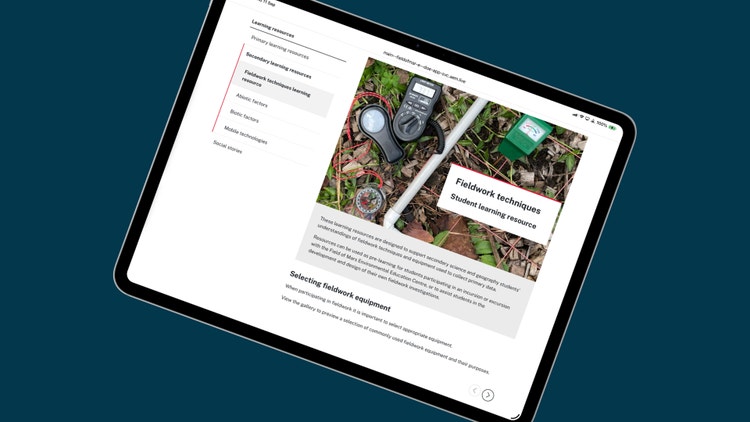
Fieldwork techniques
Help students prepare to use geographical sampling methods, specialised fieldwork instruments, observations and field data-recording techniques.
Location

Field of Mars Reserve
Main location
Find risk assessment information, risk management advice, bus access details and walking track information for Field of Mars Reserve.
Extend student learning
Use these student-friendly fact sheets before or after your Earth’s natural systems excursion to support investigations of atmospheric, hydrological, geomorphic and ecological systems in forest environments.
- Field of Mars Reserve fact sheet – Explore the reserve environment students investigate through field journaling, sampling and system comparisons.
- Eucalypt forest ecosystem fact sheet – Learn about forest layers, habitats, productivity, food webs and living and non-living features.
- Heath ecosystems fact sheet – Compare forest environments with low shrub ecosystems shaped by shallow, sandy or low-nutrient soils.
- Tree habitats fact sheet – Discover how trees interact with light, water, soil, air, animals and other living things.
- Leaf litter habitats fact sheet – Explore the forest floor where nutrients, decomposers, moisture and organic matter connect natural systems.
- Plant fact sheets – Learn about native plants students may observe, measure and compare during forest fieldwork.
Learn with us

Book this excursion
Book this Stage 6 Geography excursion using our online booking form.
Supporting resources
Use Earth’s natural systems learning resources to support fieldwork on ecological, atmospheric, hydrological and geomorphic systems.
Related Year 11 Geography programs
Geography fieldwork incursion
Develop geographical inquiry and fieldwork skills by investigating ecosystems at or near your school.
Place and cultural change excursion
Investigate migration, cultural identity and changing places through fieldwork in Marrickville.