
Features of places excursion | Stage 1 HSIE Geography
Program overview
Features of places is a Stage 1 HSIE Geography excursion where students bushwalk through mangrove and eucalypt forest to the Lane Cove River to identify and describe natural and human features and how these places are used and cared for. Along the way, students use simple fieldwork tools and sensory experiences, such as invertebrate hunts, exploring the mangroves, creating banksia creatures, and (tide permitting) crab hunting.
This program will retire at the end of 2026.
Learning intentions
- We are learning to identify the features of and activities in Sugarloaf Hill and Sugarloaf Point.
- We are learning how we can care for Sugarloaf Hill and Sugarloaf Point.


Book this Stage 1 HSIE Geography excursion
Essential information
Cost, risk assessment and details
Cost |
DoE $27 per student – GST free Non-gov $37 per student – GST free, min charge $750 per class Term 1 – Non-gov weeks 3 to 5 cost = DoE cost – GST free, min charge $750 Program costs may change. Bookings are charged at the cost confirmed when you book. |
Classes |
Maximum 6 classes at Buffalo Creek Reserve with up to 30 students per class. More than 6 classes will run across two sites – Buffalo Creek Reserve and Field of Mars Reserve. Please contact us. |
Risk assessment |
Access the risk assessment for your excursion location. Buffalo Creek Reserve risk assessment - main location Field of Mars Reserve risk assessment - alternative location |
Bring |
Sports uniform, backpack, medication, low-waste food, water bottle, sunblock, raincoat, hat, sturdy shoes, reusable name tag. |
View |
|
Welfare |
Rugged bushwalking, limited wheelchair accessibility. May not suit recently unwell participants. For medical or special needs notify staff prior to program. |
Extreme or wet weather |
Program may be modified, postponed or cancelled due to predicted extreme temperatures, bush fire danger, heavy rainfall, high winds or dust storms. |
Booking policy |
Confirm student numbers and classes 7 days in advance. |
Cancellation or rescheduling |
Cancellation or rescheduling with less than 30 school days’ notice before the booking date – $650 Cancellation with less than 14 school days’ notice before the booking date – full program cost Cancellation due to unsafe weather or fire danger – $0 |
Activities
Activities may vary depending on student needs, timing and weather.
Bushwalk fieldwork and map skills
Students work like geographers to locate Sugarloaf Hill and Sugarloaf Point using a large-scale map, then follow tracks through bushland while using directional language and observations to identify natural and human features.
Mangrove forest exploration
On the mangrove boardwalk, students investigate the unique features of a mangrove forest by looking closely at mud, seedlings and animal evidence (such as trails and burrows), and discuss how built features like boardwalks help people care for sensitive environments.
Pond inquiry
At a freshwater pond, students hear the story of Tiddalick the Frog to explore caring for water places, then use a dip net to observe small water animals and consider how to protect pond habitats.
Invertebrate and crab investigations
Students search for invertebrates using gentle survey techniques (such as tree shakes and leaf litter investigations) and, when conditions allow, explore the creek or river edge for crabs (tide permitting), practising respectful handling and returning animals to where they were found.
Banksia creatures and bush inspiration
Using loose natural materials and visual prompts, students create a banksia creature, building appreciation for bushland features and reinforcing low-impact behaviours such as collecting only fallen items.
Ephemeral nature map
Students collaboratively build a temporary memory map of their journey using loose natural materials to represent key features, routes and activities, then explain their map using geographical vocabulary before leaving no trace.
This program will retire at the end of 2026.
Explore related fact sheets
Use these student-friendly fact sheets before or after your Features of places excursion to introduce natural features, human features, water places and ways people care for environments.
- Field of Mars Reserve fact sheet – Explore local bushland, creeks, tracks, mangroves, saltmarsh and other features students may investigate.
- Mangrove forest ecosystem fact sheet – Learn about tidal forests with mud, breathing roots, seedlings, crabs and boardwalks.
- Grey mangrove fact sheet – Discover a salt-tolerant tree with breathing roots that grows along sheltered tidal waterways.
- River and creek environment fact sheet – Learn how creeks, banks, water, plants and animals form connected environments.
- Water habitats fact sheet – Explore ponds, creeks, wetlands and damp places that support plants and animals.
- Eucalypt forest ecosystem fact sheet – Compare forest features with mangroves, creeks and other local places.
Suggested timetable
Time |
Classes A, B, C |
Classes D, E, F |
| 9.45 - 10.30 | Introduction, toilets and recess | Introduction, toilets and recess |
| 10.30 - 12:00 | Bushwalk and activities | Activities at Buffalo Creek Reserve |
| 12.00 - 12.30 | Lunch and toilets | Lunch and toilets |
| 12.30 - 1.45 | Activities at Buffalo Creek Reserve | Bushwalk and activities |
| 1.45 - 2.00 | Concluding activity | Concluding activity |
| 2.00 - 2.15 | Pack up, toilets and depart | Pack up, toilets and depart |
Tier 2 and 3 vocabulary
Syllabus outcomes and content
Geography K-10 Syllabus (2015)
Features of places
Outcomes
- Describes features of places and the connections people have with places GE1-1
- Identifies ways in which people interact with and care for places GE1-2
- Communicates geographical information and uses geographical tools for inquiry GE1-3
Content
Features of places
-
Investigate features of places and how they can be cared for, for example:
- description of the natural and human features of places
- discussion of the natural features of places identified in Aboriginal Dreaming stories and/or Legends of the Torres Strait
- consideration of how a place can be cared for
Other syllabus links
Learning experiences will also support but not explicitly teach the following outcomes and content:
Science and Technology K-6 Syllabus (2017)
Outcomes
- Describes observable features of living things and their environments ST1-4LW-S
Geography K-10 Syllabus © NSW Education Standards Authority (NESA) for and on behalf of the Crown in right of the State of New South Wales, 2015
Science and Technology K-6 Syllabus © NSW Education Standards Authority (NESA) for and on behalf of the Crown in right of the State of New South Wales, 2017
Location options

Buffalo Creek Reserve
Main location
Find risk assessment information, risk management advice, bus access details and walking track information for Buffalo Creek Reserve.
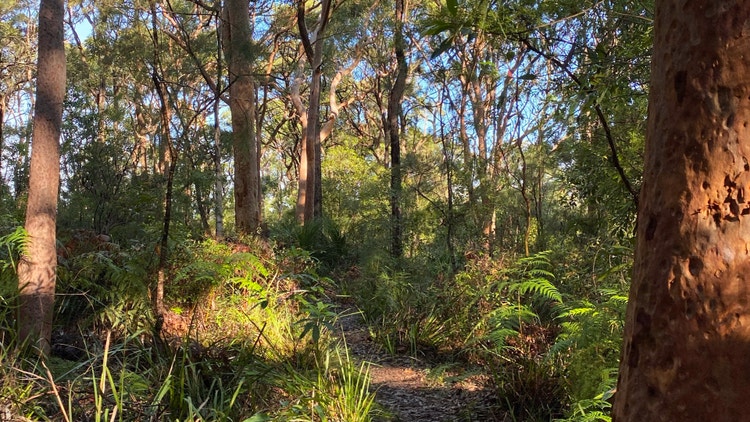
Field of Mars Reserve
Main location
Find risk assessment information, risk management advice, bus access details and walking track information for Field of Mars Reserve.
Learn with us

Book now
Book this Stage 1 HSIE Geography excursion using our online booking form.

Social stories
Help Year 1 and 2 students understand what will happen before, during and after their Features of places excursion.

Learning resources
Use the Features of places learning resources to extend learning beyond the excursion.

Flora and fauna fact sheets
Explore fact sheets about waterways, mangroves, forests, plants, animals and habitats connected to local places.