
Bushland adventure excursion | Stage 1 PDHPE
Program overview
Bushland adventure is a Stage 1 PDHPE excursion where students develop fundamental movement skills, teamwork, fair play and confidence through active games and guided bushland exploration at Field of Mars Reserve.
Students complete sensory movement activities and Aboriginal games inspired by native animals. They practise coordination, spatial awareness, communication and positive participation while learning outdoors on Wallumedegal Country.
Learning intentions
- We are learning to perform fundamental movement skills with control and confidence.
- We are learning to cooperate, communicate and demonstrate fair play during physical activities.
Jump to: Program and curriculum | Essential information | Plan and prepare | Location | Related excursions


Program and curriculum information
Program activities
Activities may change to suit student needs, timing and weather conditions.
Bushland adventure
Students practise selected fundamental movement skills, including static and dynamic balance, through sensory activities and movement challenges in bushland. They adjust their body position and direction to move with control around people, objects and uneven surfaces, follow safety instructions and encourage others while completing activities as a group.
Aboriginal games
Students participate in Aboriginal games and activities that use movements inspired by native animals. They practise selected fundamental movement skills, communicate with teammates and follow agreed rules that support safe, fair participation. Students describe the purpose of the games and respond respectfully to different game outcomes.
Suggested timetable
Time |
Classes A, B, C |
Classes D, E, F |
| 9.45–10.30 | Introduction, recess and toilets | Introduction, recess and toilets |
| 10.30–12.00 | Bushland adventure with fundamental movement skills | Aboriginal games |
| 12.00–12.30 | Lunch and toilets | Lunch and toilets |
| 12.30–2.00 | Aboriginal games | Bushland adventure with fundamental movement skills |
| 2.00–2.15 | Pack up, toilets and depart | Pack up, toilets and depart |
Syllabus outcomes and content
Students will learn to
- demonstrate static and dynamic balance during physical activities
- use spatial awareness to move safely around people, objects and natural features
- explain how rules and fair play support safe participation
- participate in and describe the purpose of Aboriginal games and activities
- communicate and cooperate during group activities
- respond respectfully to different game outcomes
The excursion directly supports the Personal Development, Health and Physical Education K–6 Syllabus (2024) through outdoor movement challenges, Aboriginal games and cooperative physical activities.
Movement skill and physical activity
Outcome
- PH1-MSP-01 – Demonstrates fundamental movement skills and fair play in physical activities
Participate with others safely and fairly in physical activities
Students:
- Demonstrate spatial awareness in relation to people, objects and the environment when participating in physical activities
- Demonstrate and explain how fair play and rules contribute to safety in group activities
- Participate in and describe the purpose of Aboriginal and/or Torres Strait Islander games and activities
Fundamental movement skills support health and wellbeing
Students:
- Demonstrate static and dynamic balances with different body parts
Self-management and interpersonal skills
Outcome
- PH1-SMI-01 – Describes and demonstrates self-management and interpersonal skills in a range of contexts
Interpersonal skills support positive interactions and cooperation
Students:
- Demonstrate interpersonal skills that contribute to positive and respectful interactions
- Demonstrate ways to respectfully win and lose in different contexts
- Demonstrate communication skills in group activities to support cooperation
Personal Development, Health and Physical Education K-6 Syllabus © NSW Education Standards Authority (NESA) for and on behalf of the Crown in right of the State of New South Wales, 2024
Tier 2 and 3 vocabulary
Essential information
Cost, class numbers and booking
Cost
DoE $27 per student – GST free
Non-government school $37 per student – GST free, minimum charge $750 per class
Term 1 non-government weeks 3 to 5 – DoE cost, GST free, minimum charge $750
Classes
Maximum 6 classes, with up to 30 students per class.
Program costs
Program costs may change. If program costs change after you book, you will be charged at the original cost.
Booking policy
Confirm final student numbers and classes 7 working school days before the program.
Risk assessment and accessibility
Field of Mars Reserve risk assessment – main location
The program includes bushwalking on uneven natural tracks. Some program areas at Field of Mars Reserve may be wheelchair accessible.
Students who are unwell should not attend.
Classroom teachers are expected to attend and actively supervise students throughout the excursion.
Notify Field of Mars EEC before the visit about medical, mobility, sensory, communication or other support needs so reasonable adjustments can be considered.
What students should bring
Weather, cancellations and rescheduling
The program may be modified, postponed or cancelled because of predicted extreme temperatures, bush fire danger, heavy rainfall, high winds or dust storms.
Cancellation or rescheduling with less than 30 school days’ notice before the booking date – $650
Cancellation with less than 14 school days’ notice before the booking date – full program cost
Cancellation due to unsafe weather or fire danger – $0
Plan and prepare for your visit

Field of Mars Reserve social story
Help Stage 1 students understand where they will go, what they may experience and how to participate safely during their visit.

Preparing for your excursion
Find information about what students should wear and bring, transport, arrival procedures, safety and preparing classes for outdoor learning.
Location
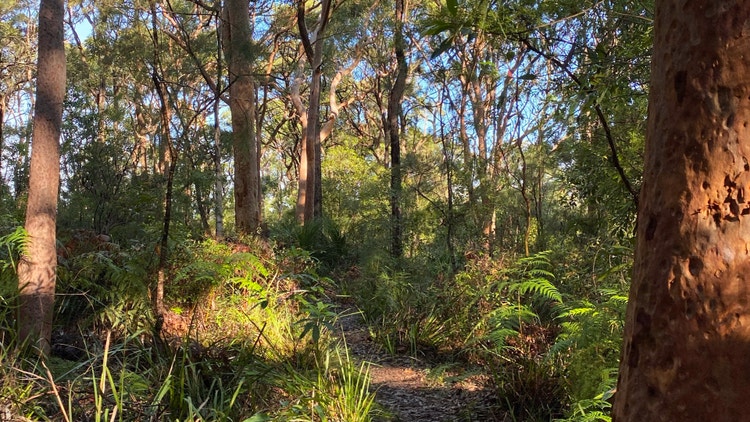
Field of Mars Reserve
Main location
Find risk assessment information, risk management advice, bus access details and walking track information for Field of Mars Reserve.
Extend student learning
Use these student-friendly fact sheets before or after the Bushland adventure excursion to introduce bushland habitats, native animals and environmental features connected to outdoor movement and games.
- Field of Mars Reserve environment fact sheet – Explore the bushland environment where students move, play, cooperate and build confidence outdoors.
- Habitat fact sheet – Learn how food, water, shelter and space help living things survive.
- Tree habitat fact sheet – Discover how trees provide food, shelter, nesting places and movement pathways for animals.
- Ground cover habitat fact sheet – Learn how grasses, ferns and low plants provide shelter, food and protection for small animals.
- Eucalypt forest ecosystems fact sheet – Explore the forest ecosystem where students move among trees, shrubs, leaf litter and habitat features.
- Mammal fact sheets – Learn about native mammals whose movements and behaviours may inspire outdoor games.
Learn with us

Book this excursion
Book this Stage 1 PDHPE excursion using our online booking form.

Learning resources
Explore Stage 1 lessons, digital activities, social stories and classroom resources that support movement, teamwork and environmental learning.
Related Stage 1 excursions
Bush magic excursion
Use imaginative movement, cooperative games and sensory play to develop confidence, coordination and positive participation.
Aboriginal connections to Country excursion
Explore Aboriginal Peoples’ continuing connections to Country, natural materials, significant places and caring for land and waterways.