Pill bug fact sheet | Field of Mars EEC
What are pill bugs?
Pill bugs are small land-living crustaceans called isopods. They are not true bugs or insects. They are more closely related to crabs, prawns and lobsters than to beetles or flies.
This fact sheet focuses on common pill bugs, including Armadillidium vulgare. Pill bugs are a type of slater that can roll into a tight ball when disturbed. Other slaters, such as common rough slaters, have flatter bodies and cannot roll into a ball. Both are land-living crustaceans, not insects.
Pill bugs have a hard segmented exoskeleton, seven pairs of legs and two pairs of antennae. They live in damp places such as under logs, rocks, mulch and leaf litter. Although they live on land, they still need moist conditions to survive.

Fast facts – Pill bugs
Scientific name – Armadillidium vulgare
Scientific group – Pill bugs are crustaceans in the order Isopoda.
Appearance – Pill bugs have a rounded, segmented body, a hard exoskeleton, seven pairs of legs and two pairs of antennae.
Size – Adult pill bugs are usually about 6–18 mm long.
Diet – Pill bugs mostly feed on decaying leaves, rotting wood, fungi, algae and other organic matter.
Habitat – Pill bugs live in damp, dark places such as leaf litter, soil, compost, mulch and under logs or rocks.
Life cycle – Females carry eggs and young in a brood pouch under the body. Young pill bugs moult as they grow and may live for more than one year.
Adaptations – Pill bugs can roll into a tight ball when disturbed and hide in damp places to reduce water loss.

Where do pill bugs live?
Pill bugs live in damp, sheltered habitats. They are often found under logs, rocks, bark, pots, mulch and leaf litter where the air and soil stay moist.
They avoid dry, exposed places because their bodies can lose water quickly. During hot or dry weather they hide in cool, dark spaces and may become more active at night.
At Field of Mars Reserve, leaf litter, fallen logs and rotting plant material provide shelter for many small invertebrates, including decomposers such as pill bugs.

What do pill bugs look like?
Pill bugs have a hard exoskeleton made of overlapping plates. This protects the body and helps them curl into a ball when threatened.
Their body has a head, thorax and abdomen. The thorax is the middle part of the body and carries seven pairs of walking legs. The abdomen is the rear section and includes small structures used for movement, sensing and breathing.
Pill bugs are sometimes confused with pill millipedes because both can be small, rounded and found in leaf litter. Pill bugs have one pair of legs on each body segment. Millipedes usually have two pairs of legs on most body segments.

What do pill bugs eat?
Pill bugs are decomposers. They mostly eat decaying leaves, rotting wood, fungi, algae, bark and other dead plant material.
By feeding on decaying matter, pill bugs help break large pieces of plant material into smaller pieces. This helps fungi, bacteria and other decomposers continue the recycling process.
In very damp gardens, large numbers of pill bugs may sometimes nibble soft seedlings, fallen fruit or plant material touching the ground. Most of the time they are useful recyclers.
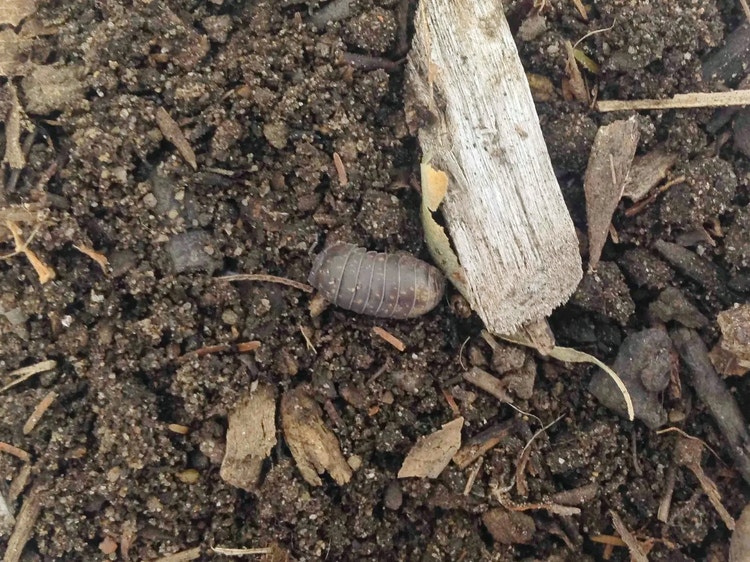
What is the life cycle of a pill bug?
Pill bugs hatch from eggs, grow into young pill bugs and then become adults. They do not go through a butterfly-like life cycle with a larva and pupa.
Female pill bugs carry their eggs in a brood pouch under the body. The young hatch inside the pouch and stay there for a short time before moving out into the soil and leaf litter.
Young pill bugs look like small pale adults. As they grow, they moult by shedding their old exoskeleton. A new soft exoskeleton forms underneath and hardens after moulting.

What adaptations do pill bugs have to help them survive?
Pill bugs are adapted for life in damp hiding places. Their rounded body and hard exoskeleton help protect them from predators.
Their ability to roll into a tight ball is an important defence. It protects their softer underside and can make them harder for predators to grip or eat.
Pill bugs also stay under logs, rocks and leaf litter to avoid drying out. Their breathing structures need moisture, so damp microhabitats help them survive on land.

Why are pill bugs important?
Pill bugs help recycle nutrients in leaf litter, soil and compost. When they feed on dead plant material, they help break it down and return nutrients to the soil.
They are also part of the food web. Centipedes, spiders, ants, birds, frogs and lizards may eat pill bugs.
Pill bugs show why fallen logs, leaf litter and damp soil are important habitats. These places may look messy, but they provide food and shelter for many small animals.

How can you help pill bugs and other leaf litter animals?
You can help leaf litter animals by protecting their habitat. Leave logs, bark, rocks and leaf litter in place where it is safe to do so.
In gardens, compost and mulch can provide habitat for decomposers. Avoid unnecessary pesticide use, especially around soil, mulch and leaf litter where many small animals live.
When investigating pill bugs, handle them gently and return them to the damp place where they were found. Replace logs, rocks and leaf litter carefully so their habitat is not damaged.

Related fact sheets
More invertebrate fact sheets
- Invertebrate fact sheets – Explore more animals without backbones that live in bushland, soil, leaf litter, water and gardens.
- Crustaceans fact sheet – Learn about the animal group that includes pill bugs, slaters, land hoppers, crabs and other crustaceans.
- Common rough slater fact sheet – Compare pill bugs with slaters that have flatter bodies and cannot roll into a ball.
- Land hopper fact sheet – Learn about another small land-living crustacean that shelters in damp leaf litter and mulch.
- Millipede fact sheet – Compare pill bugs with many-legged decomposers that also live in leaf litter and soil.
Habitats and ecosystems
- Leaf litter habitats fact sheet – Explore how fallen leaves provide food, shelter and moisture for small animals.
- Rock and log habitats fact sheet – Learn how logs, bark, rocks and sheltered spaces support invertebrates.
- Field of Mars Reserve fact sheet – Learn about local bushland habitats that support decomposers and leaf-litter animals.
Food webs and ecological relationships
- Centipede fact sheet – Learn about a leaf-litter predator that may hunt pill bugs and other small invertebrates.
- Earthworm fact sheet – Explore another decomposer that helps recycle organic matter and improve soil.
Attributions
References
Animal Diversity Web. 2014. Armadillidium vulgare. [online] Available at: https://animaldiversity.org/accounts/Armadillidium_vulgare/
Australian Museum. 2025. Crustaceans. [online] Available at: https://australian.museum/learn/animals/crustaceans/
Backyard Buddies. n.d. Slaters. [online] Foundation for National Parks & Wildlife. Available at: https://backyardbuddies.org.au/backyard-buddies/slaters/
University of California Statewide IPM Program. n.d. Pillbugs and sowbugs. [online] Available at: https://ipm.ucanr.edu/home-and-landscape/pillbugs-and-sowbugs/
University of New England. 2023. Isopods – Woodlice and Pillbugs. [online] Oz Soils 4. Available at: https://content.une.edu.au/2023/oz_soils/isopods.html
Image attributions
A pill bug – Field of Mars EEC (original illustration).
Pill bugs can roll into a tight ball when disturbed – “Slater rolled up for wiki.jpg” by benjamint444. Creative Commons Attribution-Share Alike 3.0 Unported. Available at: https://commons.wikimedia.org/wiki/File:Slater_rolled_up_for_wiki.jpg

Leaf litter creates cool, damp hiding places for pill bugs and other small invertebrates – “Leaf litter1.JPG” by Team Axe 1. Creative Commons Attribution-Share Alike 3.0 Unported. Available at: https://commons.wikimedia.org/wiki/File:Leaf_litter1.JPG

Pill bugs have a segmented body, armoured plates and seven pairs of legs – “Armadillidiidae - Pill Bug - Roly Poly - Grant Peier.jpg” by MacroGrant. Creative Commons Attribution-Share Alike 4.0 International. Available at: https://commons.wikimedia.org/wiki/File:Armadillidiidae_-Pill_Bug-Roly_Poly-_Grant_Peier.jpg

Rotting leaf litter and damp soil provide food and shelter for pill bugs – Field of Mars EEC (original image).
Female pill bugs carry eggs and young in a brood pouch called a marsupium – “A female woodlouse with offspring.jpg” by Patrick Niemeyer. Creative Commons Attribution-Share Alike 3.0 Unported. Available at: https://commons.wikimedia.org/wiki/File:A_female_woodlouse_with_offspring.jpg

Pill bugs have a hardened exoskeleton to help protect them from predators – “Woodlice 01.JPG” by HTO. Public domain. Available at: https://commons.wikimedia.org/wiki/File:Woodlice_01.JPG

Fallen logs and leaf litter slowly break down and provide habitat for decomposers – Field of Mars EEC (original image).
Leave leaf litter in gardens to provide habitat for pill bugs and other decomposers – “Leaf litter.jpg” by Mokkie. Creative Commons Attribution-Share Alike 3.0 Unported. Available at: https://commons.wikimedia.org/wiki/File:Leaf_litter.jpg

Learn with us

Book now
Book a leaf litter, schoolyard or invertebrate program where students investigate pill bugs, damp habitats, defence and decomposition.

Learning programs
Explore Field of Mars EEC programs that support learning about pill bugs, crustaceans, decomposers, microhabitats and ecosystem recycling.

Learning resources
Use the pill bug fact sheet to support classroom learning about rolling into a ball, body segments, damp places and dead plant material.

Flora and fauna fact sheets
Explore related fact sheets about crustaceans, slaters, land hoppers, leaf litter habitats, rock and log habitats and decomposers.
Related programs
Entomologist HPGE enrichment program
Investigate crustacean structures, adaptations, habitats and ecological roles through detailed invertebrate investigations.
Science animated incursion
Observe invertebrate features, movement and habitat needs, then communicate scientific understanding through stop-motion animation.