
Earth's resources excursion | Stage 6 Earth and Environmental Science
Program overview
Earth’s resources is a Year 11 Earth and Environmental Science excursion where students investigate how Hawkesbury Sandstone has shaped the landscapes, soils and vegetation of Field of Mars Reserve. Students undertake scientific fieldwork across contrasting sites to explore relationships between parent rock, soil properties, environmental conditions and ecosystem characteristics.
Students collect, process and analyse qualitative and quantitative data using rock observations, soil testing and biotic and abiotic measurements. They evaluate fieldwork methods, identify limitations and sources of error, and use evidence to explain interactions between Earth’s systems and consider human impacts and land management.
Fieldwork inquiry
- How has Hawkesbury Sandstone shaped the landscapes and soils of Field of Mars Reserve?
- How do soil properties influence vegetation and other biotic and abiotic conditions?
- What field evidence can be used to evaluate human impacts and future management?
Jump to: Program and curriculum | Essential information | Prepare for fieldwork| Location | Extend learning | Related programs


Program and curriculum information
Fieldwork activities
Activities may change to suit student needs, timing and weather conditions.
Landscape and rock investigation
Students observe landforms, sandstone outcrops, slope and evidence of weathering and erosion. They examine a Hawkesbury Sandstone sample and record mineral type, grain size class, grain roundness and grain sorting using hand lenses, scientific tools and Geoscience reference cards. Students use their observations and supporting information to explain how the local sedimentary rock formed and how parent material and landscape processes influence the formation of local soils. The investigation also introduces Aboriginal quarrying in the sandstone landscape.
Soil investigation
Students examine soil profiles at contrasting sites and compare topsoil and subsoil characteristics. They use consistent fieldwork procedures to investigate soil texture, pH and moisture, record results in structured tables and consider the validity and reliability of their sampling.
Vegetation and environmental factors
Students measure environmental variables such as light, temperature and slope and investigate vegetation structure and habitat features including leaf litter, fallen timber, rocks and moisture. They use their data to explain relationships between soil conditions, environmental factors and vegetation.
Human impacts and management
Students identify evidence of track erosion, exposed soil, vegetation disturbance, stormwater flows, introduced species and other human influences. They use individual and shared class data to construct cause-and-effect flowcharts and connect natural processes, human actions, biotic and abiotic impacts and management needs to a landscape profile of the reserve. Students assess relevant secondary resources and propose evidence-based strategies for future management.
Worksheet and supporting resources
Student worksheet
Secondary worksheets are password protected and available to teachers after booking. Contact Field of Mars EEC to request the password.
Download the Earth's resources student worksheet.
Schools are responsible for printing one worksheet for each student before the excursion.
Teacher and student resources
View the Earth's resources virtual fieldwork site.
View the Fieldwork techniques learning resource.
View the Fieldwork techniques YouTube playlist.
Suggested timetable
Time |
Activities |
| 9.45–10.00 | Introduction at the centre |
| 10.00–10.15 | Food break and toilets |
| 10.15–10.45 | Select equipment and travel to fieldwork sites |
| 10.45–12.45 | Fieldwork at sites 1 and 2 |
| 12.45–1.00 | Landscape discussion and return to the centre |
| 1.00–1.30 | Food break and toilets |
| 1.30–2.15 | Rock–grain analysis and Aboriginal quarrying |
| 2.15 | Depart |
The timetable may change according to class numbers, student learning needs and weather.
Syllabus outcomes and content
Students will learn to
- investigate relationships between parent rock, landscapes and soil formation
- examine the mineral grains and sedimentary characteristics of Hawkesbury Sandstone
- examine and compare soil profiles and soil properties
- collect valid and reliable qualitative and quantitative primary data
- use secondary resources to interpret and evaluate field evidence
- process and analyse data collected at contrasting fieldwork sites
- explain interactions between the geosphere, atmosphere, hydrosphere and biosphere
- evaluate the validity and reliability of fieldwork methods and data
- construct cause-and-effect representations of natural processes and human impacts
- use evidence to propose management strategies
Earth and Environmental Science Stage 6 Syllabus (2017)
Implementation
Current for Year 11 in 2026 and 2027. The Earth and Environmental Science 11–12 Syllabus (2025) is implemented for Year 11 from 2028.
Module 1 Earth’s Resources
Outcomes
- EES11/12-3 – conducts investigations to collect valid and reliable primary and secondary data and information
- EES11/12-4 – selects and processes appropriate qualitative and quantitative data and information using a range of appropriate media
- EES11/12-5 – analyses and evaluates primary and secondary data and information
- EES11-8 – describes the key features of the Earth’s systems, including the geosphere, atmosphere, hydrosphere and biosphere and how they are interrelated
Content
Rocks, Minerals and the Rock Cycle
Inquiry question: What are the components of rocks and soils?
Students:
- Explain the formation of rocks as characteristic assemblages of mineral crystals or grains
- Explain the formation of soil in terms of the interaction of atmospheric, geologic, hydrologic and biotic processes
- Conduct a practical investigation to examine soil types and component materials
Earth and Environmental Science Stage 6 Syllabus (2017) © NSW Education Standards Authority for and on behalf of the Crown in right of the State of New South Wales, 2017
Vocabulary
Essential information
Cost, class numbers and booking
Cost
DoE $27 per student – GST free
Non-government school $37 per student – GST free, minimum charge $750 per class
Classes
Maximum 2 classes, with up to 30 students per class.
Program costs
Program costs may change. If program costs change after you book, you will be charged at the original cost.
Booking policy
Confirm final student numbers and classes 7 working school days before the program.
Risk assessment and accessibility
Field of Mars Reserve risk assessment and location information – main location
The program includes extended bushwalking on uneven natural tracks and is not wheelchair accessible in its standard form.
Students who are unwell should not attend.
Classroom teachers are expected to attend and actively supervise students throughout the excursion.
Notify Field of Mars EEC before the visit about medical, mobility, sensory, communication or other support needs so reasonable adjustments can be considered.
What to bring and prepare
School preparation
- Print one worksheet for each student
- Organise students into suitable working groups
- Ensure students bring writing materials and a clipboard
- Ensure students bring a charged mobile device for recording field data
- Inform Field of Mars EEC if student mobile devices are not permitted
- Review relevant fieldwork techniques or supporting resources
- Advise Field of Mars EEC of learning, medical or access requirements
Students should bring
School sports uniform, backpack, medication, low-waste food, water bottle, sunscreen, raincoat, hat, sturdy enclosed shoes, pencils, clipboard, charged mobile device and a reusable name tag.
Weather, cancellations and rescheduling
The program may be modified, postponed or cancelled because of predicted extreme temperatures, bush fire danger, heavy rainfall, high winds or dust storms.
Cancellation or rescheduling with less than 30 school days’ notice before the booking date – $650
Cancellation with less than 14 school days’ notice before the booking date – full program cost
Cancellation due to unsafe weather or fire danger – $0
Prepare for secondary fieldwork

Preparing for your excursion
Find information about clothing, equipment, transport, arrival procedures, safety and preparing students for outdoor fieldwork.
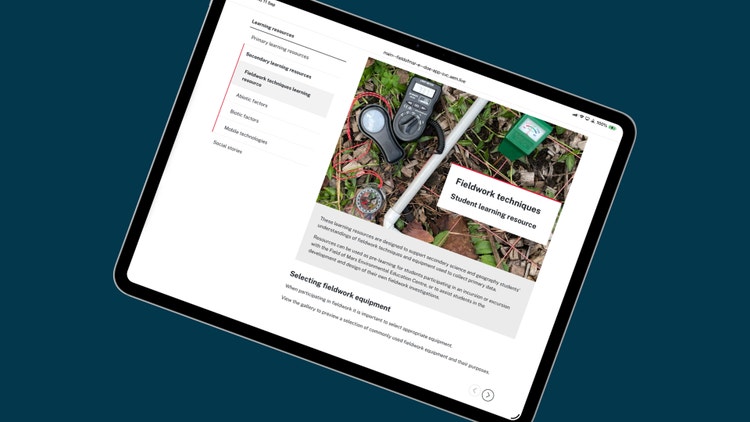
Fieldwork techniques
Help students prepare to use scientific equipment, sampling methods, observations and field data-recording techniques.
Location
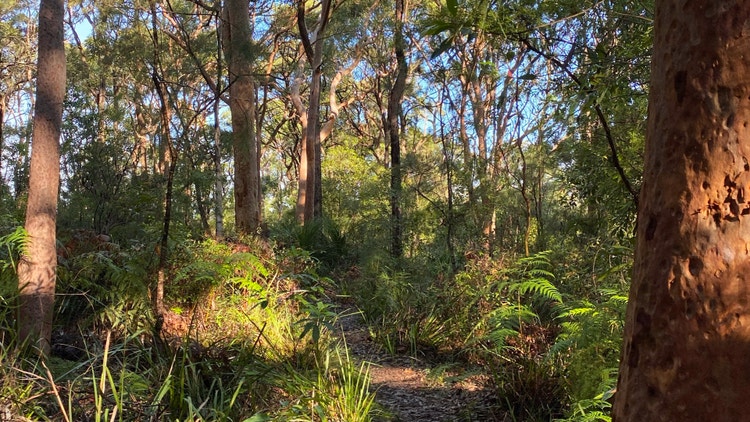
Field of Mars Reserve
Main location
Find risk assessment information, risk management advice, bus access details and walking track information for Field of Mars Reserve.
Extend student learning
Use these student-friendly fact sheets before or after the Earth’s resources excursion to support fieldwork on geology, soils, vegetation, environmental factors and Hawkesbury Sandstone landscapes.
- Field of Mars Reserve fact sheet – Explore a sandstone bushland environment shaped by rocks, soil, water, slope, plants and human impacts.
- Eucalypt forest ecosystem fact sheet – Learn how forest structure, soil, sunlight, water and living things interact.
- Heath ecosystems fact sheet – Compare forest environments with low shrub ecosystems shaped by shallow, sandy or low-nutrient soils.
- Rock and log habitats fact sheet – Learn how rocks, crevices, dead wood, soil, moisture and shelter create microhabitats.
- Ground cover habitats fact sheet – Explore how low plants help protect soil, reduce erosion and provide habitat.
- Plant fact sheets – Learn about native plants students may use as evidence when comparing vegetation and site conditions.
Learn with us
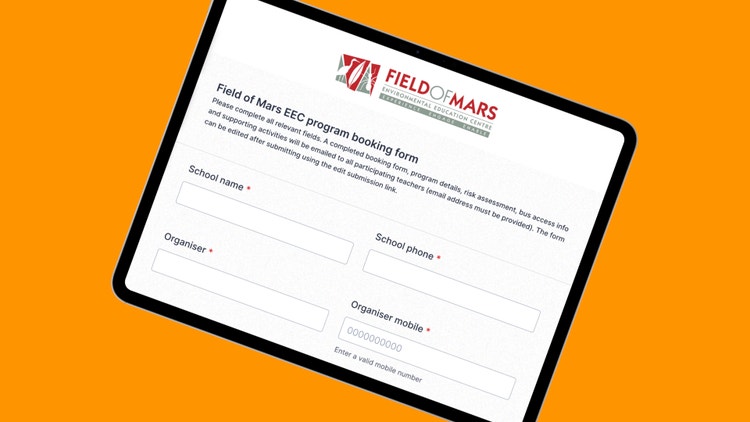
Book this excursion
Book this Stage 6 Earth and Environmental Science excursion using the online booking form.
Supporting resources
Access worksheets, assessment materials, fieldwork techniques, digital resources and classroom learning that support secondary science excursions.
Related Stage 6 Earth and Environmental Science programs
Human impacts and introduced species excursion
Investigate introduced plants and animals, compare affected sites and evaluate ecosystem impacts and current management strategies.
Earth’s resources and human impacts combined excursion
Investigate geology, soils, vegetation, introduced species and human impacts through an integrated Stage 6 fieldwork program supporting Modules 1 and 4.