
Poetic adventures incursion | Stage 3 English
Program overview
Poetic adventures is a Stage 3 English incursion where students build rich environmental vocabulary and create an illustrated five-senses poem from the perspective of a minifigure. Working in pairs with supplied iPads, students explore natural areas in their school grounds, compose descriptive lines and capture macro photographs that communicate a miniature viewpoint.
Students refine their poetry using imagery and selected poetic devices, then use iMovie to sequence photographs, record narration and add titles and audio. Completed multimodal poems are shared with the school through Google Drive.
We have been advised that this program is exempt from the screen use limits under the new screen use guidelines for schools, as the use of technology in this program is purposeful, intensive and curriculum aligned.
This program is also available for Stage 2 and as a Poetic adventures excursion.
Learning intention
- We are learning to compose an illustrated poem from the perspective of a minifigure.
Jump to: Program and curriculum | Essential information | Plan and prepare | Location | Related programs


Program and curriculum information
Program activities
Activities may change to suit student needs, timing, weather and school arrangements.
Poetic adventure
Students collect their poetry toolkit and iPad and learn how to manage equipment while working efficiently with a partner. They are introduced to the planning template and the process for composing, photographing and producing their multimodal poem.
Students complete a guided sensory sit spot in a suitable natural area of the school grounds. They focus on what they can see, hear, touch and smell and build a bank of precise vocabulary, vivid adjectives and descriptive phrases.
Students compose lines from the perspective of a minifigure using a five-senses structure and selected poetic devices. They draft, refine and review their writing so that each line communicates a clear perspective and creates strong imagery.
Students learn to take macro photographs from minifigure eye level. They apply visual literacy techniques including framing, focus, camera position and shot selection to create images that complement the meaning and mood of their poem.
iMovie studio
Students return to the indoor learning space and use iMovie to arrange their photographs in a purposeful sequence. They record a spoken narration and add a title, audio and closing credits to create a cohesive digital poem.
Students export and share their completed multimodal texts and reflect on how effectively their words, photographs and narration communicated a miniature perspective. Completed projects are returned to the school through Google Drive.
Post-production
Where required, the final session may be used to complete editing, narration, credits and exporting.
Suggested timetable
Time |
Activities |
| 9.15–11.00 | Poetic adventure |
| Recess | |
| 11.30–1.00 | iMovie studio |
| Lunch | |
| 2.00–2.30 | Post-production, if required |
Times and session durations may vary depending on the school timetable, available learning spaces, outdoor locations and number of participating classes.
Include your school’s bell times in the notes section of the booking form.
Syllabus outcomes and content
Students will learn to
-
collect and refine precise environmental vocabulary for imaginative writing
-
compose and publish poetry for a specific purpose and audience
-
experiment with imagery, figurative language, perspective and poetic forms to create meaning
-
plan, draft, edit and refine writing by selecting language features for effect
-
use macro photography to communicate viewpoint and support meaning in a multimodal text
-
combine written, spoken, visual and audio elements to create a cohesive digital poem
-
collaborate to plan, review and evaluate creative compositions using agreed criteria
The incursion directly supports the English K–10 Syllabus (2022) through imaginative composition, vocabulary development and the creation of multimodal texts.
English K–10 Syllabus (2022)
Vocabulary
Outcome
- Refines and enhances vocabulary through interacting, wide reading and writing, using evidence, knowledge and word origins to support precise language choices – EN3-VOCAB-01
Content addressed
Learning and using words
- Select and use precise Tier 2 and Tier 3 vocabulary to communicate ideas effectively.
- Investigate how word choice creates imagery, mood and meaning for different audiences and purposes.
Creating written texts – Imaginative purposes
Outcome
- Plans, creates, edits and publishes written texts for imaginative purposes, selecting language features, text structures and literary devices to engage an audience – EN3-CWT-01
Content addressed
- Experiment with a range of poetic forms and structures to communicate ideas and evoke emotion.
- Use imagery, figurative language and descriptive vocabulary to create mood and engage readers.
- Select language features and literary devices to enhance meaning and communicate perspective.
Text features for multiple purposes
- Select and integrate multimodal features that strengthen meaning and audience engagement.
- Create and publish digital texts using appropriate technologies.
Handwriting and digital transcription
Outcome
- Uses digital technologies effectively to plan, create, edit and publish texts for different purposes and audiences – EN3-HANDW-02
English textual concept
Perspective
Students understand that perspective shapes how experiences, ideas and events are represented in texts.
They learn that:
- authors deliberately use language and text choices to position audiences
- different perspectives can be explored through voice, imagery, point of view and multimodal features
English K–6 Syllabus © NSW Education Standards Authority (NESA) for and on behalf of the Crown in right of the State of New South Wales, 2022
English textual concepts © NSW Department of Education, 2016
Tier 2 and 3 vocabulary
Essential information
Cost, class numbers and booking
Cost
DoE school – $27 per student, GST free
Non-government school – $37 per student, GST free, minimum charge $750 per class
A minimum charge of $750 per class applies to non-metropolitan schools.
Classes
A recommended maximum of four classes can participate each day, with up to 30 students per class.
The indoor learning space must comfortably accommodate all participating classes. Schools with more than four classes will need to book an additional program day.
Students work in pairs during the program. Organise students into pairs before the incursion begins.
Program costs
Program costs may change. If program costs change after you book, you will be charged at the original cost.
Booking policy
Confirm final student numbers and classes 7 working school days before the program.
Risk assessment and accessibility
View incursion risk assessments
Notify Field of Mars EEC before the incursion about medical, mobility, sensory, communication or other support needs so reasonable adjustments can be considered.
The school should ensure the selected indoor and outdoor learning spaces, furniture arrangements and movement routes are accessible and appropriate for participating students.
Classroom teachers are expected to attend and actively supervise students throughout the incursion.
Students who are unwell should not attend.
Weather, cancellations and rescheduling
The incursion may be modified, postponed or cancelled if travel or program delivery is unsafe because of extreme weather or fire danger.
Cancellation or rescheduling with less than 30 school days’ notice before the booking date – $650
Cancellation with less than 14 school days’ notice before the booking date – full program cost
Cancellation due to unsafe weather or fire danger – $0
Plan and prepare
Learning space and access
Provide one extra-large indoor learning space, with a screen or projector, for all participating classes. The space must comfortably accommodate all participating students and remain available for the duration of the program day.
Ensure the room, outdoor learning areas, gates and movement routes are unlocked and available when Field of Mars EEC staff arrive.
Provide clear school-entry, visitor sign-in and parking instructions before the incursion. Where possible, arrange parking or an unloading area close to the main learning space.
Ensure the school office and participating teachers know when Field of Mars EEC staff will arrive and where the program will be delivered.
Natural areas and class organisation
The program requires access to natural features in the school grounds or a suitable nearby natural area.
Identify accessible gardens, planted areas, trees, leaf litter, rocks, logs, bark, flowers or other natural features that students can observe and photograph safely. A variety of natural settings will provide richer sensory vocabulary and photographic opportunities.
Inspect the selected areas before the incursion and remove, isolate or manage temporary hazards.
Students should photograph natural features without unnecessarily picking, moving or damaging living plants, animals or habitats.
Organise students into pairs before the program begins. Ensure participating teachers understand the boundaries of the outdoor learning areas and the required supervision arrangements.
Include the school’s bell times and details of the proposed natural areas in the notes section of the booking form.
Location

School incursions
Planning information for incursions delivered at your school, including learning spaces, accessibility, risk management and staff access.
Extend student learning
Use these student-friendly fact sheets before or after your Poetic adventures incursion to build environmental vocabulary, inspire descriptive writing and develop ideas for nature poetry.
- Plants fact sheets – Discover the colours, textures, shapes and structures of native Australian plants to inspire descriptive vocabulary and sensory imagery.
- Leaf litter habitat fact sheet – Explore the miniature world beneath leaves, bark and twigs to develop observations and ideas for poetry from a minifigure's perspective.
- Eucalypt forest ecosystem fact sheet – Learn about forest layers, plants, animals and natural features that can inspire imagery, similes and descriptive language.
- Habitat fact sheet – Discover how living things depend on food, water, shelter and space, providing authentic settings and ideas for environmental poetry.
- Invertebrate fact sheets – Investigate insects, spiders and other small animals that can become the narrator or subject of imaginative poems about the natural world.
Learn with us

Book now
Book this Stage 3 English incursion using our online booking form.
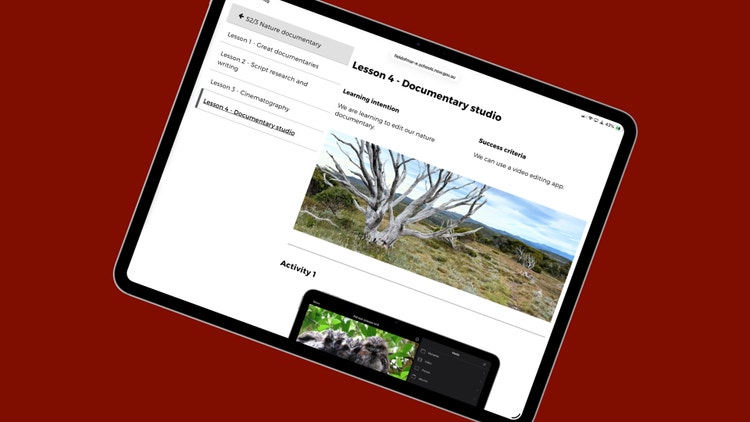
Learning resources
Use online lessons and classroom activities to extend poetry, vocabulary, visual literacy and environmental learning before or after the incursion.
Related Stage 3 programs
Digital woodlands incursion
Use iPads outdoors to photograph natural features, apply composition techniques and create digital artworks and visual stories inspired by nature.
Documentary in a day incursion
Plan, script, film and review a short nature documentary while developing informative writing, speaking, listening and multimodal storytelling skills.