
People, patterns and processes - Study 3: Place and cultural change excursion | Year 11 - Stage 6 Geography
Program overview
Place and cultural change is a Year 11 Geography excursion in Marrickville where students investigate how immigration and gentrification have influenced the cultural identity of an inner-Sydney place. Using observation and field instruments, students examine the suburb’s cultural landscape, collecting collect qualitative and quantitative data about streetscapes, architecture, colour, sound, and street activity. Students use field photograph to identify evidence of cultural continuity and change and conduct street interviews to investigate community perceptions of cultural continuity and change.
Fieldwork inquiry
- What are the cultural characteristics of Marrickville?
- How has the movement of people influenced the culture of Marrickville?
- How is human wellbeing integrated in the culture of Marrickville?
- What are the perceptions of cultural continuity and change in Marrickville?
- What fieldwork methods can be used to investigate the culture of a place?
Jump to: Program and curriculum | Essential information | Prepare for fieldwork | Location | Extend learning | Related programs


Program and curriculum information
Fieldwork activities
Activities may change to suit student needs, timing and weather conditions.
Observing place and culture
Students conduct an urban drift and use sensory observations and epitome words to characterise Marrickville’s place and culture.
Place and cultural change
Students re-photograph selected sites of interest, compare past and present evidence and infer the economic, physical, political, social and technological processes that have influenced cultural change.
Sampling cultural characteristics and human wellbeing features
Students conduct random point sampling to survey for cultural characteristics and human wellbeing features. At each site they use field photography, observations, and digital instruments to record qualitative and quantitative data. Data can be collated to create a class dataset describing Marrickville’s contemporary cultural landscape.
Food and cultural change
During the lunch break, students observe food businesses, signage and dining practices as evidence of immigration and changing food culture. Where selected by the school, students may complete an optional experiential extension examining cultural authenticity, diffusion, adoption and adaptation.
Perceptions of continuity and change
Students conduct a semi-structured interview to investigate respondents’ cultural backgrounds, connections to Marrickville and perceptions of cultural heritage, continuity, change and future directions. Data can be collated to compare perspectives and responses.
Worksheet and supporting resources
Student worksheet
Secondary worksheets are password protected and available to teachers after booking. Contact Field of Mars EEC to request the password.
Download the Place and cultural change student worksheets.
Schools are responsible for printing one worksheet for each student before the excursion.
Teacher and student resources
View the Place and cultural change Google site.
Complete the pre-fieldwork student workbook.
Use the post-fieldwork questions to support discussion, data analysis and evaluation.
View the Fieldwork techniques learning resource.
Suggested timetable
Time |
Activities |
| 9.30–9.45 | Arrival, introduction and toilets |
| 9.45–10.15 | Sensory and discovery fieldwork |
| 10.15–10.45 | Investigating place and cultural change |
| 10.45–11.15 | Food break and toilets |
| 11.15–1.00 | Sampling cultural characteristics |
| 1.00–1.30 | Food break, cultural food investigation and toilets |
| 1.30–2.00 | Perceptions of cultural continuity and change |
| 2.00–2.15 | Conclusion and depart |
The timetable may change according to class numbers, student learning needs and weather.
Syllabus outcomes and content
Students will learn to
- identify and describe the spatial and cultural characteristics of Marrickville
- use sensory observations and geographical terminology to characterise the culture of a place
- compare historical and current evidence to identify cultural change over time
- identify migration as a medium facilitating cultural change
- explain how immigration and gentrification have influenced Marrickville’s cultural identity
- collect qualitative and quantitative primary data using geographical fieldwork methods
- use field photography, re-photography, random sampling, digital instruments, bipolar analysis and interviews to investigate a cultural landscape
- analyse primary and secondary information to identify cultural continuity and change
- apply ethical practices when collecting information from members of the public
- compare community perceptions of cultural continuity, change and gentrification
- investigate opportunities to enhance human wellbeing
- communicate evidence-based geographical conclusions using appropriate concepts, tools and terminology
Geography 11–12 Syllabus (2022)
Focus area
People, patterns and processes
Study 3
Place and cultural change
Outcomes
- GE-11-01 – examines places, environments and natural and human phenomena, for their characteristics, spatial patterns, interactions and changes over time
- GE-11-03 – explains geographical opportunities and challenges, and varying perspectives and responses
- GE-11-05 – analyses and synthesises relevant geographical information from a variety of sources
- GE-11-07 – applies geographical inquiry skills and tools, including spatial technologies, fieldwork, and ethical practices, to investigate places and environments
- GE-11-09 – communicates and applies geographical understanding, using geographical knowledge, concepts, terms and tools, in appropriate forms
Content
Students investigate:
-
Culture of place
-
Influences on the culture of place, including:
- the mediums facilitating cultural change
-
Impacts of, and responses to, change
-
ONE place at a local scale, including:
- the spatial and cultural characteristics of the place
- influences on the cultural identity of the place
- perceptions of, and responses to, cultural continuity and/or change
- opportunities to enhance human wellbeing
Geography 11–12 Syllabus (2022) © NSW Education Standards Authority for and on behalf of the Crown in right of the State of New South Wales, 2022
Vocabulary
Essential information
Cost, class numbers and booking
Cost
DoE $27 per student – GST free
Non-government school $37 per student – GST free, minimum charge $750 per class
Classes
Maximum 2 classes, with up to 30 students per class.
Program costs
Program costs may change. If program costs change after you book, you will be charged at the original cost.
Booking policy
Confirm final student numbers and classes 7 working school days before the program.
Risk assessment and accessibility
View the Marrickville risk management plan and location information.
View the Place and cultural change welfare map.
The program involves walking throughout the day through busy public streets. Students work in small groups and may complete defined fieldwork tasks along Marrickville Road. Classroom teachers are expected to attend and actively supervise students throughout the excursion.
Public toilets are available at the beginning and end of the program and during scheduled food breaks.
Marrickville Station and the surrounding streets are wheelchair accessible. Contact Field of Mars EEC before the excursion to discuss route modifications or other access requirements.
Students who are unwell should not attend.
Notify Field of Mars EEC before the visit about medical, mobility, sensory, communication or other support needs so reasonable adjustments can be considered.
What to bring and prepare
School preparation
- Print one worksheet for each student
- Organise students into suitable working groups
- Arrange at least one charged mobile device for each working group to record photographs and field data
- Inform Field of Mars EEC if student mobile devices are not permitted
- Review the Google site, pre-fieldwork workbook and relevant fieldwork techniques
- Prepare students to conduct respectful and ethical observations and interviews in public places
- Decide whether students may purchase takeaway food and communicate the school’s expectations before the excursion
- Review the welfare map, including approved food locations and public toilets
- Advise Field of Mars EEC of learning, medical or access requirements
Students should bring
School sports uniform, backpack, medication, low-waste food, water bottle, sunscreen, raincoat, hat, sturdy shoes, pencils, clipboard, reusable name tag and a charged mobile device where permitted.
Students may also bring money to purchase takeaway food from approved cafes and restaurants shown on the welfare map.
Weather, cancellations and rescheduling
The program may be modified, postponed or cancelled because of predicted extreme temperatures, bush fire danger, heavy rainfall, high winds or dust storms.
Cancellation or rescheduling with less than 30 school days’ notice before the booking date – $650
Cancellation with less than 14 school days’ notice before the booking date – full program cost
Cancellation due to unsafe weather or fire danger – $0
Prepare for secondary fieldwork

Preparing for your excursion
Find information about clothing, equipment, transport, arrival procedures, safety and preparing students for outdoor fieldwork.
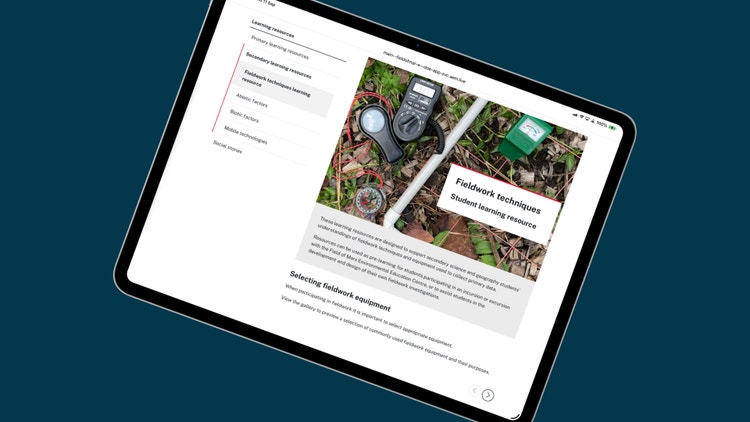
Fieldwork techniques
Help students prepare to use mobile technologies, observations, sampling methods and field data-recording techniques.
Location
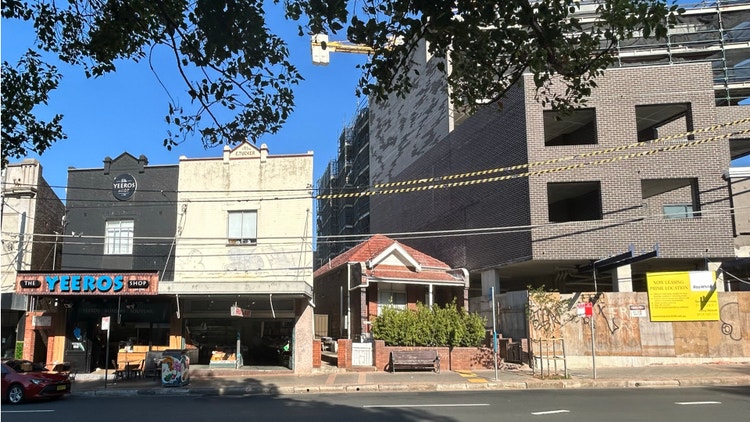
Marrickville
Find risk assessment information, the welfare map, accessibility information, public transport options, bus access details and meeting points for Marrickville.
Extend student learning
Use these student-friendly fact sheets before or after your Place and cultural change excursion to support learning about urban places, cultural landscapes, environmental change and human-environment interactions.
- Urban environments fact sheet – Learn how people, buildings, transport, businesses, green spaces and waterways shape urban places.
Learn with us

Book this excursion
Book this Stage 6 Geography excursion using our online booking form.
Supporting resources
Use Place and cultural change learning resources to support fieldwork on migration, cultural identity, gentrification and place change.
Related Year 11 Geography programs
Geography fieldwork incursion
Develop sampling, measurement and data-analysis skills through geographical fieldwork conducted at or near your school.
Earth’s natural systems excursion
Investigate atmospheric, hydrological, geomorphic and ecological systems through geographical fieldwork in a forest environment.