Red fox fact sheet | Field of Mars EEC
What are red foxes?
Red foxes are introduced mammals that now live across most of Australia. They were brought from England in the 1800s for recreational hunting and have become one of Australia’s most widespread invasive predators.
The scientific name of the red fox is Vulpes vulpes. Vulpes means ‘fox’ in Latin. Red foxes have reddish-brown fur, a pale underside, pointed ears, a narrow muzzle and a long bushy tail with a white tip. They are usually active at night, dawn and dusk, when they hunt, scavenge and move through bushland, farmland, parks and urban edges.
Red foxes are very adaptable. They can shelter in dens, thick vegetation, rock crevices, drains, sheds and other quiet spaces. In Australian ecosystems they can have serious impacts because they prey on native animals including small mammals, reptiles, frogs and ground-nesting birds.
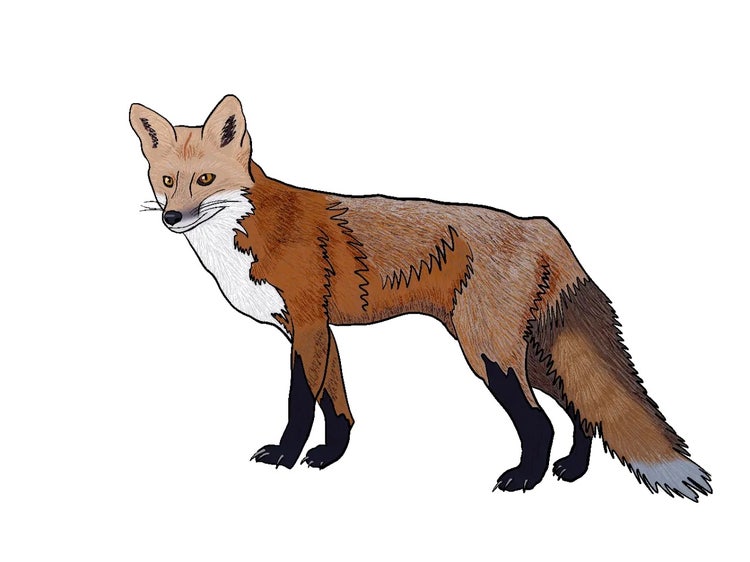
Fast facts – Red fox
Scientific name – Vulpes vulpes
Scientific group – Red foxes are placental mammals in the dog family, Canidae.
Appearance – Red foxes have reddish-brown fur, a pale underside, pointed ears, a narrow muzzle and a bushy white-tipped tail.
Size – Adults are usually 45–90 cm long, not including the tail, and weigh about 5–10 kg.
Diet – Red foxes eat small mammals, birds, reptiles, frogs, insects, fruit, carrion and human food scraps.
Habitat – Red foxes live in forests, woodlands, grasslands, farmland, coastal areas, parks and urban environments.
Life cycle – Red foxes breed once a year, with cubs born in dens after a pregnancy of about 52 days, and many wild foxes live about 3–4 years.
Special behaviour – Red foxes are mostly nocturnal and crepuscular hunters that use sharp hearing, smell and eyesight to find food.
Status in Australia – Introduced from England in the 19th century for recreational hunting; now an invasive pest species.
Where do red foxes live?
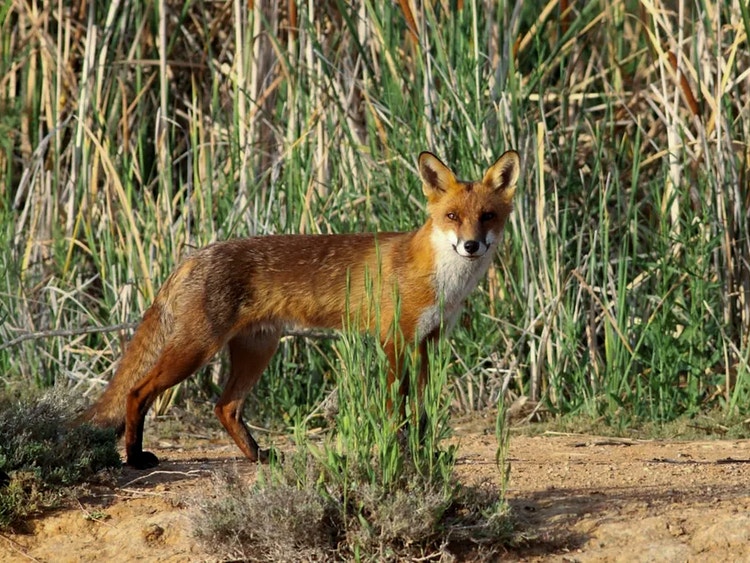
Red foxes are found in every Australian state and territory except some offshore islands where they have not established. They live in many environments, including forests, woodlands, grasslands, farmland, coastal areas, wetlands, parks, gardens and city edges.
In Sydney, red foxes may move through bushland reserves, creek lines, golf courses, school grounds, roadsides and suburban streets, especially at night. They may occur around connected bushland near Field of Mars Reserve and Lane Cove National Park, although students are more likely to notice signs such as tracks, scats or camera-trap images than see a fox during the day.
Red foxes rest and raise young in dens. A den may be dug into soil, hidden under vegetation, placed among rocks or made in a modified rabbit burrow or human-made structure. Their ability to use many shelter types helps them survive in both natural and urban environments.
What do red foxes eat?
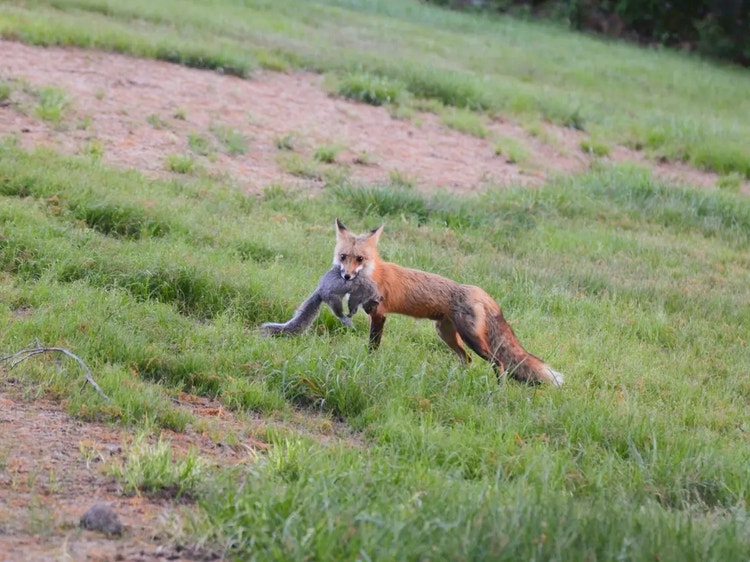
Red foxes are omnivores, which means they eat both animals and plant material. In Australia they hunt small mammals, birds, reptiles, frogs, insects and other invertebrates. They also eat fruit, berries, carrion and food scraps left by people.
Their flexible diet makes them successful in many habitats, but it also makes them a serious threat to native wildlife. Red foxes can prey on small ground-dwelling animals such as bandicoots, frogs, lizards and ground-nesting birds, and they may compete with native predators for food. Foxes can eat about 375 grams of food each night which is the equivalent of over 100 bandicoots or ring-tailed possums a year.
What do red foxes sound like?
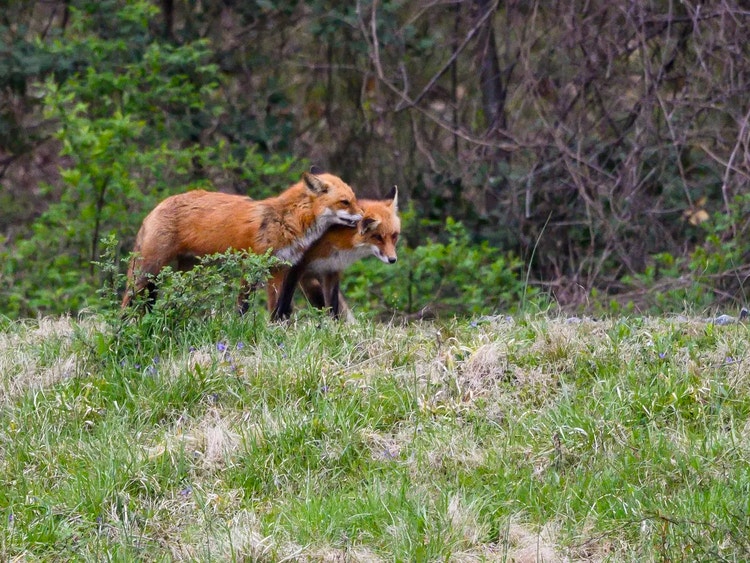
Red foxes use a range of calls to communicate, especially at night and during the breeding season. Their sounds include short barks, high screams, yelps, whines and chattering calls sometimes called gekkering.
Students may hear fox calls in urban areas, farmland or near bushland edges after dark. These calls can help foxes defend territories, find mates, warn other foxes or communicate between adults and cubs.
What is the life cycle of red foxes?
Red foxes usually breed once a year. In Australia, mating often occurs in winter, and cubs are commonly born from late winter to early spring after a pregnancy of about 52 days.
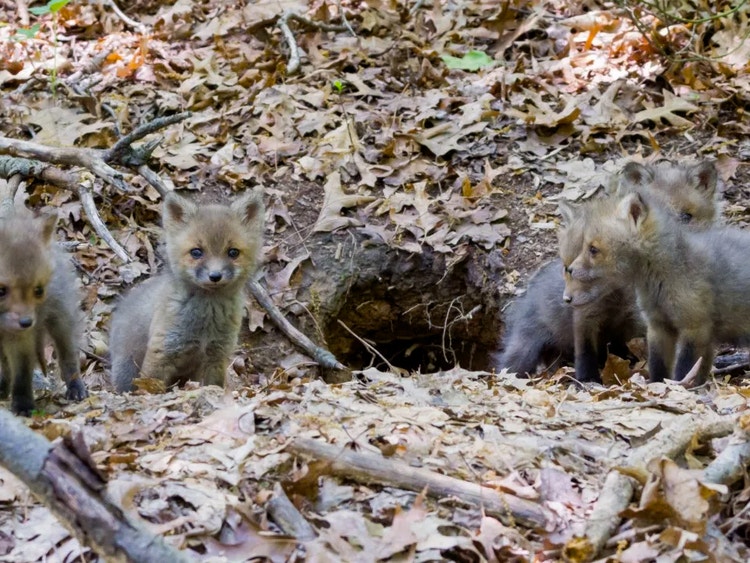
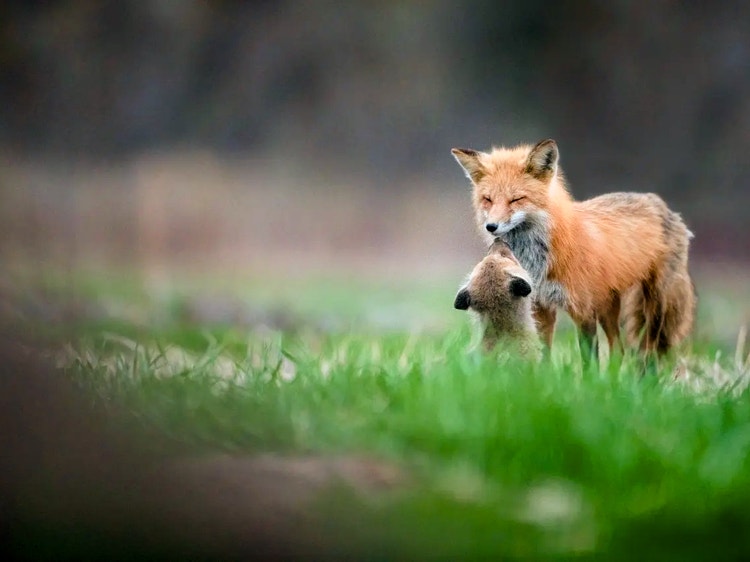
A female red fox usually gives birth in a den. Litters often contain four to six cubs, although the number can vary. Newborn cubs are blind, helpless and depend on their mother for warmth, milk and protection.
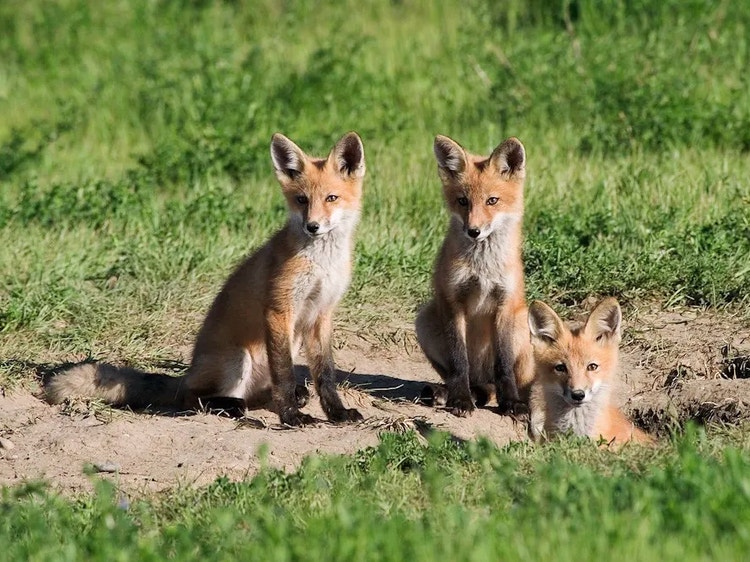
As cubs grow, they begin to leave the den and learn to hunt and forage. By about 12 weeks old they spend more time outside the den, but they may remain near their parents for several months before dispersing. Many wild red foxes live around 3–4 years.
What adaptations do red foxes have to help them survive?
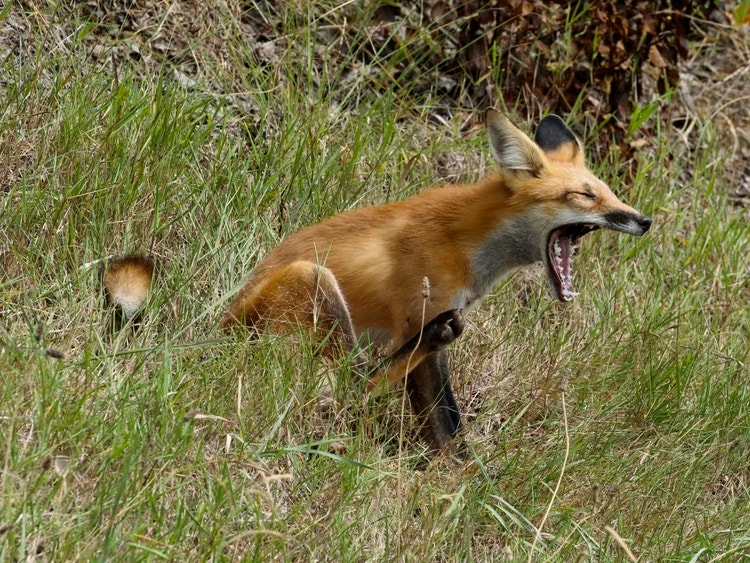
Red foxes have strong senses that help them find food and avoid danger. Their large ears help them hear small animals moving in grass or leaf litter. Their strong sense of smell helps them track food, recognise territories and communicate through scent marking.
Their slim body, long legs and flexible movement help them run, pounce and move through thick vegetation. Sharp teeth and claws help them catch and tear food, while their fur provides insulation and camouflage in grassland, woodland and urban habitats.
Red foxes also survive by changing their behaviour to suit the environment. They can hunt, scavenge, shelter in different places and feed on many foods. This adaptability is one reason they have spread so widely across Australia.
Why are red foxes a problem?
Red foxes are a problem in Australia because they are an introduced predator. Native animals did not evolve with foxes as part of their food webs, so many small mammals, birds, reptiles and frogs are vulnerable to fox predation.
Foxes can hunt wildlife, eat eggs and young animals, and disturb ground-nesting birds. They can also scavenge food scraps and move through bushland edges, farms, parks and urban areas, which helps them survive close to people.
Red foxes are listed as a key threat to Australian biodiversity. Managing fox impacts helps protect native animals, especially small ground-dwelling species such as bandicoots, reptiles, frogs and birds that nest or feed close to the ground.
What management strategies help us control red foxes in Australia?
Red fox management is used to reduce the impact foxes have on native wildlife. It is usually planned by trained land managers, government agencies and conservation groups, because fox control needs to be safe, legal, humane and carefully coordinated.
Different methods may be used in different places. These can include monitoring, baiting, trapping, fencing sensitive habitats and restoring native vegetation so small animals have more shelter. In urban areas, people can also help by keeping food scraps secure, protecting pets and not feeding foxes.
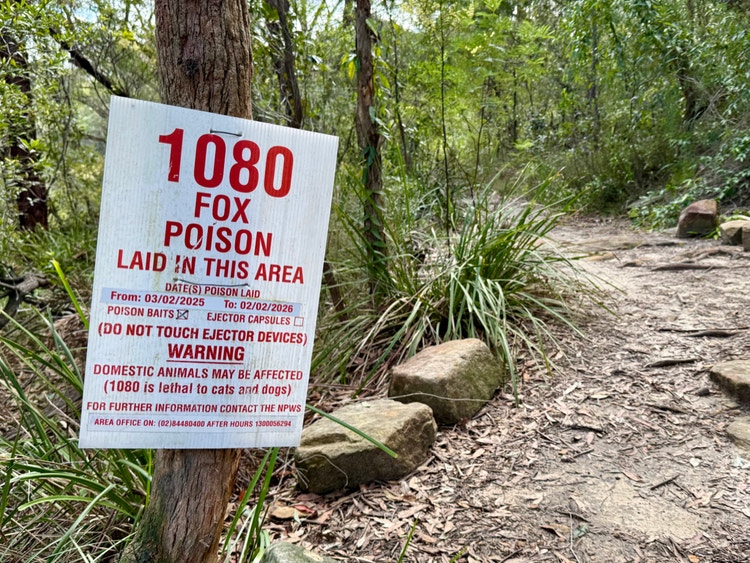
Baiting programs – one of the most common methods is the use of poison baiting, specifically with baits containing 1080 (sodium fluoroacetate) which is effective in reducing fox populations. Baiting programs are carefully managed to minimise risks to non-target species and are often conducted during specific seasons to align with fox breeding patterns and with distance restrictions in place in urban areas.
Trapping – live trapping can be used to capture foxes in specific areas, especially where baiting is not suitable. Captured foxes can be euthanised or relocated, depending on local regulations and policies.
Shooting – used as a targeted control method by licensed hunters in areas where other strategies may not be feasible.
Den fumigation – for active dens where there is a localised fox problem, dens can be sealed with carbon monoxide as a humane way to euthanise cubs.
Fencing – constructing fences around sensitive areas, such as wildlife reserves or breeding sites for endangered species, can help protect native wildlife from fox predation by preventing foxes from accessing critical habitats.
Public awareness and education – raising awareness among the public about the impacts of foxes on native wildlife and promoting responsible pet ownership can help reduce food sources and habitat encroachment. Community involvement in reporting sightings and participating in control programs is also encouraged.
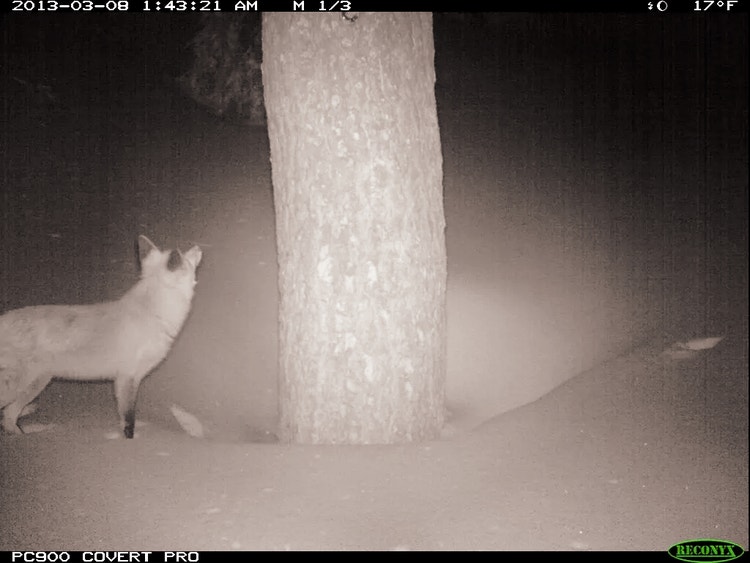
Monitoring and research – continuous monitoring of fox populations and their impact on ecosystems is vital. Research into their behaviour, ecology and interactions with native species can inform more effective management strategies.
Integrated Pest Management (IPM) – combining various control methods such as baiting, trapping, shooting and habitat modification into an integrated approach can enhance the effectiveness of fox management efforts. This strategy ensures that management is adaptable and considers the ecological context.
Habitat restoration – improving the health and resilience of native ecosystems can help support vulnerable species, reducing their susceptibility to fox predation. This includes restoring native vegetation and improving habitat connectivity.
Related fact sheets
More mammal fact sheets
- Mammals fact sheet – Explore the features and life cycles of mammals.
- Long-nosed bandicoot fact sheet – Learn about a native ground-dwelling mammal affected by predators and habitat change.
- Common brushtail possum fact sheet – Discover a nocturnal mammal that shares urban and bushland habitats.
- Common ringtail possum fact sheet – Learn about another nocturnal mammal found in Sydney trees and gardens.
Habitats and ecosystems
- Leaf litter habitats fact sheet – Discover the ground-layer habitat used by many small animals.
- Ground cover habitats fact sheet – Learn about low vegetation that provides shelter for small animals.
- Rock and log habitats fact sheet – Explore shelter habitats used by reptiles, frogs and invertebrates.
- Eucalypt forest fact sheet – Learn about a bushland ecosystem where predator-prey relationships shape food webs.
- Field of Mars Reserve fact sheet – Learn more about local bushland habitats and wildlife.
Animals that share this habitat
- Common eastern froglet fact sheet – Find out about a small frog that lives in damp ground-layer habitats.
- Eastern blue-tongued lizard fact sheet – Learn about a ground-dwelling reptile that may share bushland and garden habitats.
- Eastern water dragon fact sheet – Explore a reptile that lives near creeks and sunny bushland edges.
Attributions
References
Department of Climate Change, Energy, Environment and Water. European red fox (Vulpes vulpes). [online] Available at: https://www.dcceew.gov.au/environment/invasive-species/publications/factsheet-european-red-fox-vulpes-vulpes
Department of Climate Change, Energy, Environment and Water. Threat abatement plan for predation by European red fox. [online] Available at: https://www.dcceew.gov.au/environment/biodiversity/threatened/publications/tap/predation-european-red-fox
NSW Government. Fox control. [online] Available at: https://www.nsw.gov.au/regional-and-primary-industries/biosecurity/pest-animals/vertebrate-pests/foxes
NSW Department of Primary Industries. Foxes. [online] Available at: https://www.dpi.nsw.gov.au/dpi/biosecurity/invasive-plants-and-animals/pest-animals/established-pest-animals/species-information/foxes
NSW Environment and Heritage. Best practice guidelines for fox control for the conservation of biodiversity. [online] Available at: https://www.environment.nsw.gov.au/topics/animals-and-plants/pest-animals-and-weeds/pest-animals/foxes/guidelines-for-fox-control
Wild Ambience. Red fox sound and calls. [online] Available at: https://wildambience.com/wildlife-sounds/red-fox/
Image attributions
A red fox. – Field of Mars EEC (original illustration).
Red foxes have red, orange and brown fur with a pale chest. – “European Red Fox (Vulpes vulpes)” by Harlz_. Creative Commons Attribution 2.0 Generic. Available at: https://www.flickr.com/photos/35169553@N06/7377707596
Red foxes can live in many environments across Australia. – “Three Red Foxes” by Rylee Isitt. Creative Commons Attribution-ShareAlike 2.0 Generic. Available at: https://www.flickr.com/photos/46833584@N04/4296055504
Red foxes are opportunistic and efficient hunters. – “Photo 242282522” by patrickobrien3. Creative Commons Attribution-NonCommercial. Available at: https://www.inaturalist.org/photos/242282522
Red fox cubs live close to their den for several months. – “Photo 54979331” by Ed Hass. Creative Commons Attribution-NonCommercial-NoDerivatives. Available at: https://www.inaturalist.org/photos/54979331
A mother red fox and her cub. – “Photo 120902705” by Kyle Tansley. Creative Commons Attribution-NonCommercial. Available at: https://www.inaturalist.org/photos/120902705
Red foxes use vocalisations and scent markings during courtship. – “Photo 188831343” by Stephen John Davies. Creative Commons Attribution-NonCommercial. Available at: https://www.inaturalist.org/photos/188831343
Red foxes use sharp senses, teeth and claws to hunt and scavenge. – “Photo 147958678” by jefferykarafa. Creative Commons Attribution-NonCommercial. Available at: https://www.inaturalist.org/photos/147958678
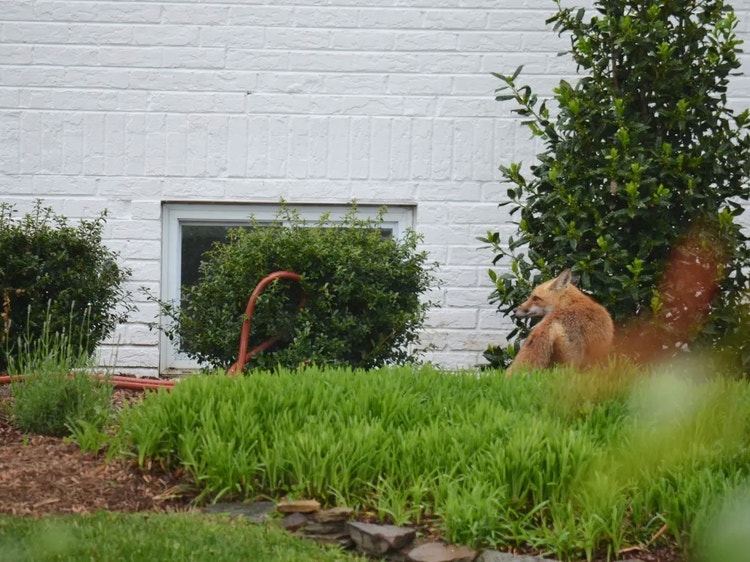
Red foxes can affect ecosystems across Australia, including urban areas. – “Photo 177970635” by tonytony10101010. Creative Commons Attribution-NonCommercial. Available at: https://www.inaturalist.org/photos/177970635
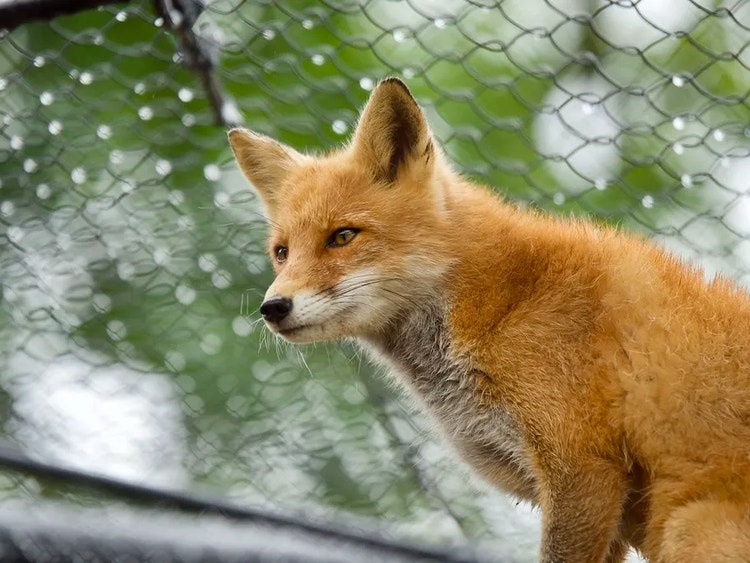
Fencing can help protect sensitive wildlife habitats from foxes. – “Ezo Red Fox” by S.Brickman. Creative Commons Attribution-ShareAlike 2.0 Generic. Available at: https://www.flickr.com/photos/33601370@N00/3803955720
Fox monitoring helps land managers plan population control. – “Sierra Nevada Red Fox: Vulpes vulpes necator” by LassenNPS. Creative Commons Attribution 2.0 Generic. Available at: https://www.flickr.com/photos/lassennps/15666101800
Fox control requires coordinated planning between local and state organisations. – Field of Mars EEC (original image).
Learn with us

Book now
Book a science or ecosystem fieldwork program where students investigate introduced species, predators, food webs, habitat change and biodiversity impacts.

Learning programs
Explore Field of Mars EEC programs that support learning about red foxes, invasive species, ecosystem dynamics, native animal conservation and human impacts.

Learning resources
Use the red fox fact sheet to support classroom learning about introduced predators, sharp senses, prey relationships, habitat disturbance and management.

Flora and fauna fact sheets
Explore related fact sheets about mammals, bandicoots, reptiles, birds, habitats, eucalypt forests and human impacts on ecosystems.
Related programs
Ecosystems excursion
Investigate food webs, biodiversity and ecosystem relationships to understand how changes in animal populations can affect ecosystem health.
Mystery HPGE enrichment program
Analyse wildlife clues, predator and prey evidence, maps and field data to solve an environmental mystery