Sulphur-crested cockatoo fact sheet – garraway | Field of Mars EEC
What are sulphur-crested cockatoos?
Sulphur-crested cockatoos are large white parrots with bright yellow crests, strong curved beaks and loud screeching calls. Their scientific name is Cacatua galerita and in Darug language, garraway. These intelligent birds are found across eastern and northern Australia and are common in Sydney parks, bushland, school grounds and suburban streets.
Students visiting Field of Mars Reserve or Lane Cove National Park may see sulphur-crested cockatoos flying overhead in noisy flocks or feeding in trees and grassy areas. They are social birds that often gather in groups to feed, play and warn each other about danger. Their loud calls and playful behaviour make them one of Australia’s most recognisable birds.
Sulphur-crested cockatoos are well adapted to living near people. They can use their strong beaks to crack seeds, strip bark, open hard fruits and even investigate rubbish bins or outdoor furniture. Their intelligence and curiosity help them survive in changing environments.
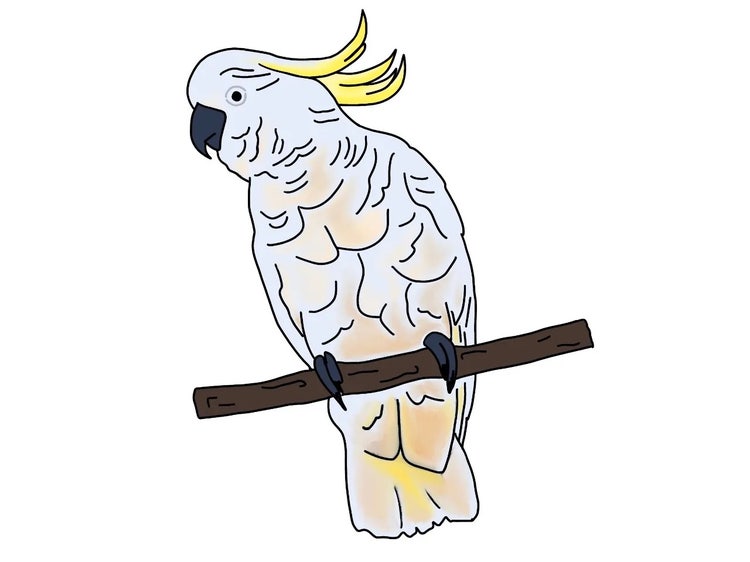
Fast facts – Sulphur-crested cockatoo
Scientific name – Cacatua galerita
Scientific group – Sulphur-crested cockatoos are large parrots in the cockatoo family.
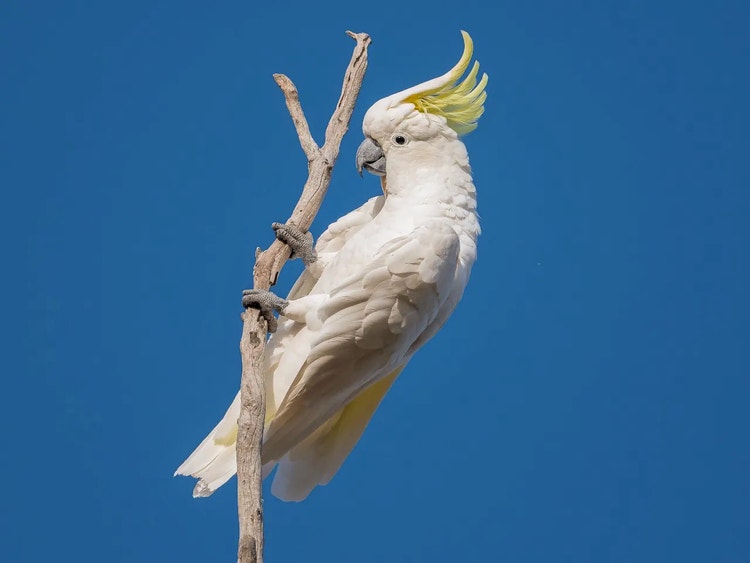
Appearance – Sulphur-crested cockatoos have white feathers, a yellow crest, grey feet and a large black curved beak.
Size – Adults usually grow to about 45–50 cm long with a wingspan over 1 metre.
Diet – They eat seeds, nuts, fruits, flowers, roots and insects.
Habitat – Sulphur-crested cockatoos live in forests, woodlands, wetlands, parks and suburban areas.
Life cycle – Females usually lay 1–3 eggs in tree hollows. Chicks hatch after about one month and stay with their parents for several months. Wild birds may live for more than 40 years.
Special behaviour – Sulphur-crested cockatoos are highly intelligent birds that communicate loudly and often feed or travel in large flocks.
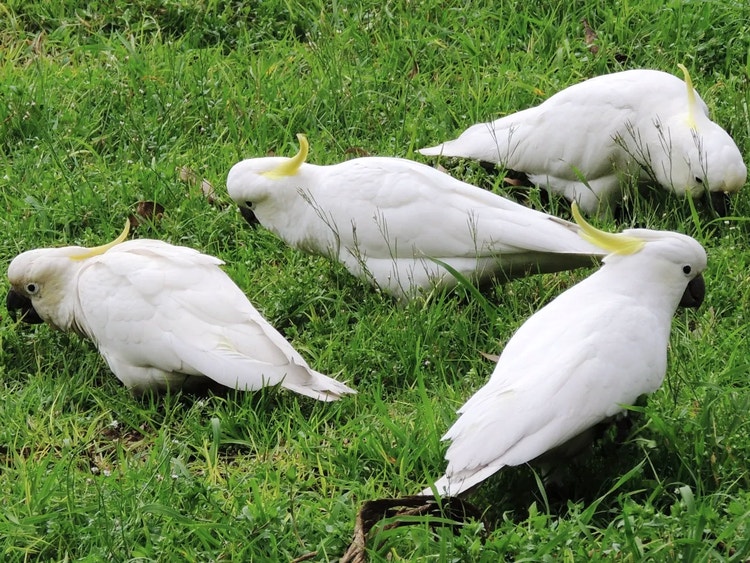
Where do sulphur-crested cockatoos live?
Sulphur-crested cockatoos live across much of eastern and northern Australia. They are found in forests, woodlands, mangroves, farmland, wetlands and suburban areas. In Sydney they are common in parks, gardens, school grounds and bushland reserves where large trees provide food and nesting hollows.
These birds usually sleep and nest in tall trees. They depend on old trees with natural hollows for breeding. Students visiting Field of Mars Reserve or Lane Cove National Park may see them feeding on the ground, flying in noisy groups or resting high in eucalyptus trees.
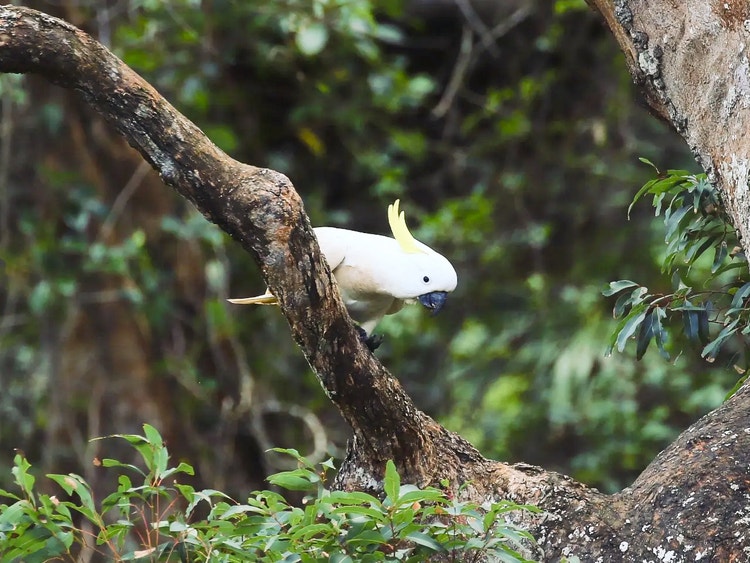
What do sulphur-crested cockatoos eat?
Sulphur-crested cockatoos mainly eat seeds, nuts, fruits, berries, flowers and roots. They also feed on insects and larvae hidden under bark or in the soil. Their strong curved beaks help them crack hard seed pods and tear apart plant material.
These birds often feed in groups on the ground or in trees. In urban areas they sometimes search for food in gardens, picnic areas and rubbish bins. Although they can damage crops and gardens, they also help spread seeds and play an important role in Australian ecosystems.

What do sulphur-crested cockatoos sound like?
Sulphur-crested cockatoos are famous for their loud screeching calls. Flocks often call to each other while flying or feeding, especially early in the morning and late in the afternoon. Their calls help birds stay together and warn the flock about danger.
Cockatoos also make softer sounds when interacting with family members or grooming each other. Their noisy behaviour is one reason they are easy to notice in parks and bushland around Sydney.
What is the life cycle of sulphur-crested cockatoos?
Sulphur-crested cockatoos usually breed between winter and summer depending on local conditions. Pairs nest in deep tree hollows lined with wood dust. Females usually lay 1–3 white eggs, and both parents help incubate the eggs and care for the chicks.
Young cockatoos hatch with very little down and depend completely on their parents for warmth and food. Chicks remain in the nest hollow for several weeks before learning to fly. Juvenile birds often stay with family groups while learning feeding and social behaviours.

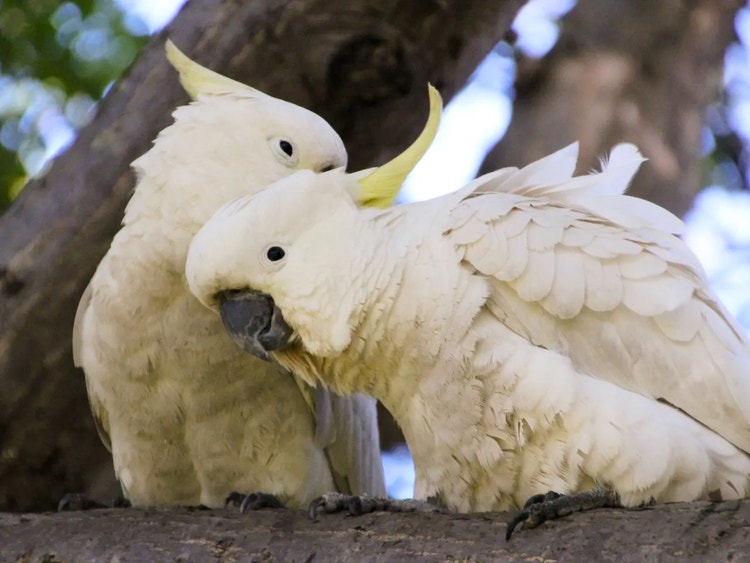
What adaptations do sulphur-crested cockatoos have to help them survive?
Sulphur-crested cockatoos have strong curved beaks that help them crack hard seeds, climb branches and dig for food. Their feet have two toes facing forward and two facing backward, giving them a strong grip when climbing or holding food. They often use one foot to hold food while eating.
Their bright yellow crest helps them communicate with other cockatoos. Birds may raise the crest when excited, alarmed or displaying to other birds. Sulphur-crested cockatoos are also highly intelligent and can learn from experience. Their curiosity and problem-solving skills help them survive in busy urban environments.
Why are sulphur-crested cockatoos important?
Sulphur-crested cockatoos are part of Australia’s complex food webs. They spread seeds while feeding and help recycle nutrients by breaking apart branches, seed pods and bark. Their nesting hollows may later provide shelter for other animals after the cockatoos leave.
These birds are also important cultural and educational symbols in Australia. Many people recognise their loud calls and playful behaviour. Sulphur-crested cockatoos help students learn about bird adaptations, ecosystems and the challenges wildlife face in urban environments.

How can you help sulphur-crested cockatoos?
People can help sulphur-crested cockatoos by protecting bushland and old trees that contain nesting hollows. Planting native trees and shrubs also provides food and shelter for cockatoos and other wildlife.
Students can help by observing birds respectfully, keeping rubbish out of natural areas and avoiding feeding wild cockatoos unhealthy human foods. Healthy bushland habitats support cockatoos and many other native species.

Related fact sheets
More bird fact sheets
- Birds fact sheet – Learn about bird features, life cycles, habitats and adaptations.
- Rainbow lorikeet fact sheet – Compare another noisy parrot found in trees, gardens and urban areas.
- Crimson rosella fact sheet – Discover another strong-beaked parrot that feeds on seeds and plant material.
- Yellow-tailed black cockatoo fact sheet – Learn about another large cockatoo that depends on forests and tree hollows.
Habitats and ecosystems
- Tree habitats fact sheet – Explore how trees provide food, shelter, nesting hollows and perches for wildlife.
- Eucalypt forest fact sheet – Discover a forest habitat that supports cockatoos and other native birds.
- Field of Mars Reserve fact sheet – Learn more about local bushland habitats that support native plants and animals.
Food webs and ecological relationships
- Sydney red gum fact sheet – Learn about a common local tree that provides food, shelter and habitat for wildlife.
- Sydney peppermint fact sheet – Explore a eucalypt forest tree found in Field of Mars Reserve.
- Invertebrates fact sheet – Find out about insects and other invertebrates that form part of bird food webs.
Attributions
References
Australian Museum. Sulphur-crested Cockatoo. [online] Available at: https://australian.museum/learn/animals/birds/sulphur-crested-cockatoo/
BirdLife Australia. Sulphur-crested Cockatoo. [online] Available at: https://birdlife.org.au/bird-profiles/sulphur-crested-cockatoo/
Atlas of Living Australia. Cacatua (Cacatua) galerita: Sulphur-crested Cockatoo. [online] Available at: https://bie.ala.org.au/species/Cacatua%2B%28Cacatua%29%2Bgalerita
Queensland Government. Cacatua galerita: sulphur-crested cockatoo. [online] Available at: https://wildnet.science-data.qld.gov.au/taxon-detail?taxon_id=1191
Australian Museum. Clever cockatoos learn through social interaction. [online] Available at: https://australian.museum/about/organisation/media-centre/cockatoos-learn-through-social-interaction/
NSW Department of Climate Change, Energy, the Environment and Water. Protected species. [online] Available at: https://www.environment.nsw.gov.au/topics/animals-and-plants/native-animals/protected-species
Image attributions
A sulphur-crested cockatoo. – Field of Mars EEC (original illustration).
Sulphur-crested cockatoos often feed together in noisy flocks. – ‘A gang of 4 sulphur-crested cockatoos’ by PsJeremy. Creative Commons Attribution 2.0 Generic licence. Available at: https://www.flickr.com/photos/psjeremy/7849957578
Sulphur-crested cockatoos rely on large trees for shelter and nesting hollows. – ‘A gang of 4 sulphur-crested cockatoos’ by PsJeremy. Creative Commons Attribution 2.0 Generic licence. Available at: https://www.flickr.com/photos/psjeremy/7849957578
A sulphur-crested cockatoo uses its strong beak to crack open seeds and nuts. – ‘Sulphur-crested Cockatoo’ by Andrew Mercer. Creative Commons Attribution-Share Alike 4.0 International licence. Available at: https://commons.wikimedia.org/wiki/File:Sulphur-crested_Cockatoo_(28210497970).jpg
.jpg)
Sulphur-crested cockatoos use large tree hollows for nesting. – ‘Sulfur-crested Cockatoos.jpg’ by Spotted gum. Creative Commons Attribution-Share Alike 4.0 International licence. Available at: https://commons.wikimedia.org/wiki/File:Sulfur-crested_Cockatoos.jpg

Sulphur-crested cockatoos form strong, enduring bonds with their mating partner. – ‘Sulphur-crested Cockatoo. Caratua galerita’ by Alison Klein. Creative Commons CC0 1.0 Universal Public Domain Dedication. Available at: https://www.flickr.com/photos/72212116@N04/10748696424
Strong beaks and gripping feet help sulphur-crested cockatoos climb and feed. – ‘Sulphur-crested Cockatoo: Does this qualify as “Exercise”?’ by I Am birdsaspoetry.com . Creative Commons Attribution 2.0 Generic licence. Available at: https://commons.wikimedia.org/wiki/File:Sulphur-crested_Cockatoo_Does_this_qualify_as_%22Exercise%22%3F_(49730515187).jpg
.jpg)
Large flocks of sulphur-crested cockatoos are part of woodland and forest food webs. – ‘158 sulphur-crested cockatoos (Cacatua galerita), Glenbrook NP, NSW (15307342529).jpg’ by John Jennings. Creative Commons Attribution 2.0 Generic licence. Available at: https://commons.wikimedia.org/wiki/File:158_sulphur-crested_cockatoos_(Cacatua_galerita),_Glenbrook_NP,NSW(15307342529).jpg
,_Glenbrook_NP,NSW(15307342529).jpg)
Protecting bushland helps sulphur-crested cockatoos and other native wildlife. – ‘Sulphur-crested cockatoos use their toes to hold food’ by Andrew Mercer. Creative Commons Attribution-Share Alike 4.0 International licence. Available at: https://commons.wikimedia.org/wiki/File:Sulphur-crested_Cockatoo_(28210497970).jpg
Learn with us

Book now
Book a birdwatching or curriculum-aligned excursion where students investigate parrots, strong beaks, tree hollows, seeds and urban wildlife.

Learning programs
Explore Field of Mars EEC programs that support learning about sulphur-crested cockatoos, parrot adaptations, tree habitats and urban ecosystems.

Learning resources
Use the sulphur-crested cockatoo fact sheet to support classroom learning about crests, loud calls, strong beaks, seeds, hollows and flock behaviour.

Flora and fauna fact sheets
Explore related fact sheets about birds, tree habitats, eucalypt forests, native plants, urban environments, insects and food webs.
Related programs
The secret life of birds excursion
Observe local birds, investigate their features and behaviours, and explore the habitats birds need to survive.
Junior birder HPGE enrichment program
Observe bird features, calls, feeding behaviour and habitat use and identify species using field evidence.